Iran Proposes Reopening Strait of Hormuz: Potential Market Impacts



Iran has signalled its readiness to reopen the Strait of Hormuz if the United States eases military pressure and lifts the blockade on its ports, according to multiple reports. A senior Iranian official conveyed to news agency Reuters that the reopening could occur within a week should the US adjust its stance.
Following this announcement, crude oil prices experienced a significant decline, with Brent crude dropping by more than 2%, trading near $98 per barrel. The Iranian proposal was reportedly communicated to the US through intermediaries on September 16.
The Strait of Hormuz is a vital maritime corridor that facilitates the transportation of a significant portion of the world's oil supply. Approximately 20 million barrels of oil per day, equating to around one-fifth of global consumption, and a similar proportion of global liquefied natural gas trade pass through this narrow channel connecting the oil-rich Persian Gulf to the Indian Ocean.
Analysts highlight that reopening this crucial waterway could lead to lower oil prices, which would provide substantial economic relief for India, the world's third-largest crude oil importer. V K Vijayakumar, Chief Investment Strategist at Geojit Investments, remarked, "Iran's opening of the Strait of Hormuz will be a major positive for the domestic market. Key indices may see a healthy upswing, breaking their consolidation phase."
Ajit Mishra, Senior Vice President of Research at Religare Broking, echoed this sentiment, stating, "The domestic market may see a healthy upside if the Strait is opened. A positive development in this direction can help the market break out of its recent consolidation."
However, Mishra noted that for any sustained upward trend in the markets, oil prices must fall below $90 per barrel and remain low. The Nifty index has struggled in recent times, with a decline of nearly 11% year-to-date and a trend of being in the red for the past two years.
A decrease in oil prices due to the potential reopening of the Strait of Hormuz would likely alleviate inflation concerns and diminish the likelihood of further tightening measures by the US Federal Reserve and other major global central banks. This scenario can also have a positive influence on gold prices. Anuj Gupta, a SEBI-registered research analyst, indicated that a significant drop in oil prices would mitigate fears of interest rate hikes, potentially driving gold prices upwards. He noted that gold prices on the Multi Commodity Exchange could rise to between ₹1,53,000 and ₹1,54,000 per 10 grams.
To sustain gains, Gupta stated that gold prices must close above ₹1,54,000. Jateen Trivedi, Vice President of Research at LKP Securities, added that market participants would closely monitor geopolitical events, including speeches by notable figures and developments surrounding the Strait.
Trivedi anticipates volatility in gold prices amid these political triggers and forecasts a trading range between ₹1,51,000 and ₹1,54,500. The broader markets are awaiting clarity from US policy and global economic indicators that may arise in the coming weeks.
Overall, the potential reopening of the Strait of Hormuz could reshape both oil prices and market dynamics in India, presenting opportunities for investors amid changing geopolitical circumstances.
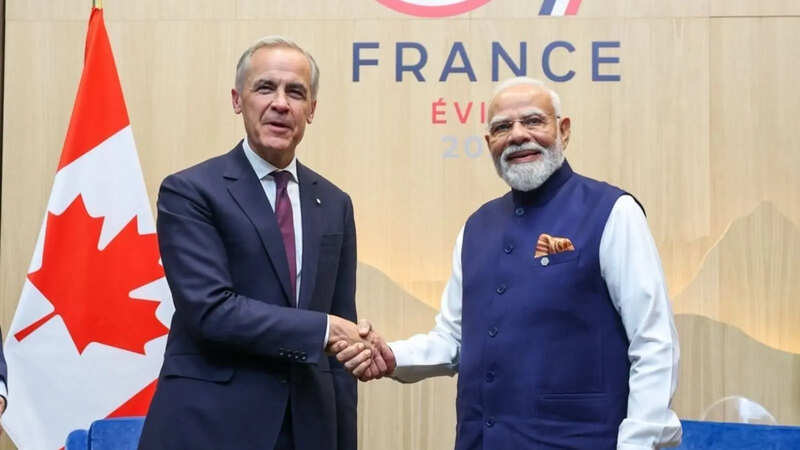
Canada and India Accelerate Trade Talks Ahead of December Visit

Richa Chadha Commends Salman Khan's Stand Against Body-Shaming

Delhi University Students Express Concerns Over Safety After Assault

Legal Dispute Arises Over 'Vande Mataram' in Supreme Court Hearing