Indian Rupee Declines Amid Foreign Outflows and Market Pressures


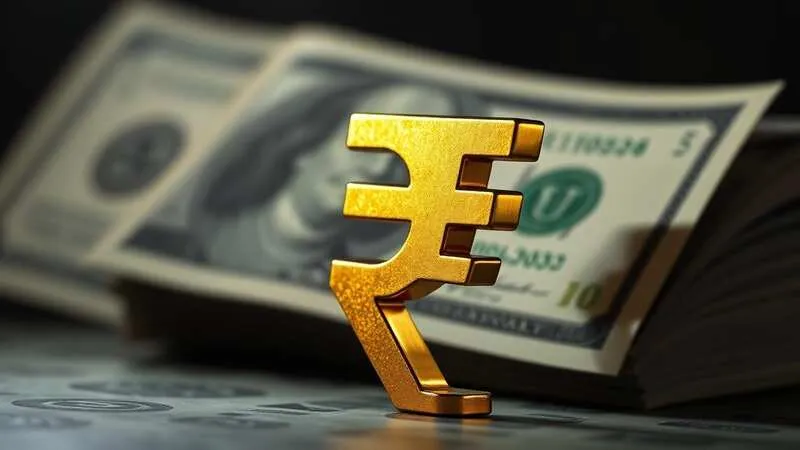
The Indian rupee experienced a decline on Friday, closing at 89.86 against the US dollar, down by 15 paise from the previous session. This drop occurred amid ongoing foreign fund outflows and a slump in domestic equities, which have been impacted by higher crude oil prices.
At the interbank foreign exchange market, the currency opened at 89.84 and fell to an intra-day low of 89.94, marking a significant drop of 23 paise at one point. Despite this, it managed to recover slightly by the end of the trading day. On Wednesday, the rupee had closed at 89.71, reflecting a trend of decline as market conditions worsened.
Forex traders indicated that the rupee's performance is being adversely affected by a risk-averse sentiment in global markets. This sentiment has led to increased demand for dollars from importers and persistent capital outflows from foreign investors. The uncertainty surrounding international trade agreements has further compounded these challenges.
The dollar index, which measures the value of the US dollar against a basket of six major currencies, increased by 0.10% to reach 98.07. Concurrently, Brent crude oil prices also saw an uptick, rising by 0.26% to $62.41 per barrel in futures trading.
In the equity markets, Indian stock indices closed significantly lower, with the Sensex dropping 367.25 points to settle at 85,041.45 and the Nifty declining by 99.80 points to close at 26,042.30. The downturn in equities is attributed to continued selling by foreign institutional investors (FIIs), who sold equities worth ₹1,721.26 crore on Wednesday, according to exchange data.
Analysts believe that the pressures on the rupee may continue if foreign outflows persist and if crude oil prices remain elevated. With the current economic climate, many are watching for any signs of recovery or intervention from the Reserve Bank of India (RBI). As one trader noted, “The market is reacting to a combination of factors, and it remains to be seen how these will unfold in the coming weeks.”
As of December 12, India's foreign exchange reserves stood at approximately $689 billion, which could play a crucial role in stabilising the rupee in the future, should the RBI decide to intervene.
The ongoing situation reflects a complex interplay of domestic and international economic factors, with traders and investors alike keeping a close eye on developments in both the foreign exchange and equity markets.

Kerala Initiates Probe into 2006 Suicide Case Involving CEC

Extradition of Sheikh Hasina Feasible, Says Indian High Commissioner

Punjabi Makeup Artist Mad Sandhu Shot Dead in Amritsar

India Achieves Fourth Place at Asian Games 2026 Through Late Success