India Projects Steady 7% Growth Amid Global Economic Challenges


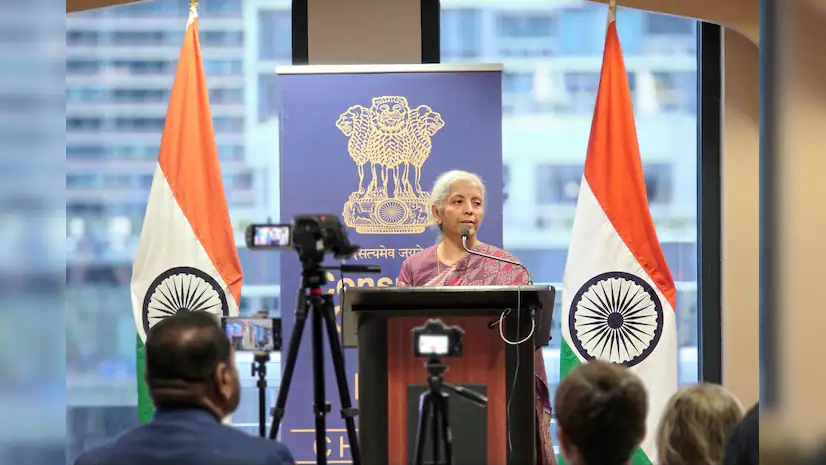
India’s economy is expected to sustain a growth rate of 7% or higher, according to Union Finance Minister Nirmala Sitharaman. Speaking to the Indian diaspora in Chicago, she expressed confidence that the nation has effectively rebounded from the COVID-19 pandemic and is well-positioned to navigate ongoing global uncertainties. These uncertainties include geopolitical tensions, tariff disputes, and disruptions in energy and fertiliser supplies, particularly through the strategic Strait of Hormuz.
Sitharaman reflected on the challenges posed by the pandemic, stating, "We thought, we saw the worst when we went through Covid. This year too, our growth will be at that range." She pointed out that despite global challenges, India's economy has demonstrated resilience.
In context of the global supply context, she referenced conflicts and supply chain disruptions that have made it difficult to source necessary resources. India has historically relied on imports for nearly 80% of its fertiliser needs, including urea and diammonium phosphate (DAP), much of which passes through the Strait of Hormuz. The Finance Minister described this situation as a significant challenge for farmers, who were at risk of fertiliser shortages.
To counteract these challenges, the Indian government has arranged the procurement of fertilisers from diverse sources and ensured adequate supplies. Sitharaman mentioned that the government continues to provide urea at ₹300 per bag, despite the procurement cost being around ₹3,000, indicating a substantial subsidy of ₹2,700 per bag for farmers.
While discussing future economic strategies, she stressed the importance of maintaining a path of reforms, with a focus on fostering bilateral trade and strengthening investment cooperation with various economies. She also highlighted efforts to accelerate domestic growth through capital investments.
On fiscal management, Sitharaman stated that India aims to reduce its borrowing to 50% of its Gross Domestic Product (GDP) by 2030. Drawing comparisons with advanced economies, she noted that some still have debt levels above 200% of their GDP.
The Finance Minister asserted that India's path towards fiscal discipline has been successful, as demonstrated by improved credit ratings, which she attributes to sound economic management rather than cuts to social welfare resources. She aims for India to become a 'Viksit Bharat' (developed India) by 2047, urging support from talented individuals and necessary capital to achieve the nation's aspirations.
Sitharaman's remarks follow recent growth projections released by the Reserve Bank of India, which estimated the country's GDP growth rate for 2026-27 at 6.7%. This represents a slight increase from previous estimates and reflects the resilience of the Indian economy amidst a challenging global landscape.
As the world continues to face uncertainties, India's commitment to structural reforms and prudent fiscal management underscores the government's determination to sustain economic progress.
Kerala Initiates Probe into 2006 Suicide Case Involving CEC

Extradition of Sheikh Hasina Feasible, Says Indian High Commissioner

Punjabi Makeup Artist Mad Sandhu Shot Dead in Amritsar

India Achieves Fourth Place at Asian Games 2026 Through Late Success