India's GDP Data Sparks Debate Among Economists and Politicians


The recent release of India's gross domestic product (GDP) figures has ignited a contentious debate regarding the state of the nation's economy. Questions have been raised about the validity of the statistics, particularly following comments from former Finance Secretary Subhash Chandra Garg regarding alterations to previous GDP calculations.
The controversy escalated when Garg highlighted that the initial GDP figures for the first quarter of the previous year were reported at approximately Rs 86 lakh crore but were later adjusted to about Rs 80 lakh crore. He suggested that these revisions played a role in producing the current growth rate of 7.8%. Garg noted that, based on the latest estimates, the nominal GDP growth for the first quarter was below 2.5%, contrasting sharply with the more advantageous figures presented by the government.
In response to this scrutiny, the Indian National Congress party has cast doubt on the government's methodology, particularly concerning the GDP deflator and the revisions incorporated in the new 2022-23 base series. According to Congress party officials, the new series has effectively diminished India's GDP by Rs 43 lakh crore across a four-year span.
However, government representatives have firmly rejected these accusations, defending the double-deflation method employed to evaluate output in core sectors such as manufacturing and agriculture. Union Minister Piyush Goyal remarked, "Former finance secretary, former Reserve Bank Governor, both of whom could not complete their time in India, are trying to mislead the public by comparing growth rates of an old series with a new series."
The overarching question remains: Are the GDP figures reliable? Have the challenges facing the Indian economy been resolved? During a discussion on India Today TV hosted by journalist Rajdeep Sardesai, economists Surjit Bhalla, Montek Singh Ahluwalia, and Neelkanth Mishra reached a consensus over the validity of the GDP data, asserting that there is no substantiation that it has been politically manipulated.
Nonetheless, they cautioned that seemingly strong quarterly growth does not necessarily imply that India’s economic adversities have dissipated. Neelkanth Mishra, who represents India at the World Bank, dismissed claims that the economy had actually grown by only 2.6% or 2.8%. He explained that such calculations arise from using disparate statistical series, and periodic adjustments are vital for an economy as expansive and informal as India’s.
He elaborated, stating, "When you reset your base and methodology, you acquire new insights, and your GDP figures can shift upwards or downwards. You cannot compare data from the old and new series as they derive from different methodologies and data sources."
Mishra also noted that when the new series was published, nominal GDP saw a downward revision of around 4%. This drastic change does not align with any intent to present a more favourable economic outlook. Surjit Bhalla, a former Executive Director at the International Monetary Fund (IMF), corroborated that he found no evidence of inflation in the GDP numbers, pointing out that consumption figures have actually been revised downward in the new data.
Moreover, Bhalla mentioned, "If the government aimed to magnify GDP, there are various strategies to achieve that. However, the revised data shows consumption is lower, while there is considerable independent evidence indicating a rise in investment, which contributes positively to GDP."
Montek Singh Ahluwalia, former deputy chairman of the Planning Commission, agreed that the alternative GDP calculations presented by critics were not valid when premised on different statistical series. Nevertheless, he acknowledged that the discussion around these revisions warranted careful examination. Ahluwalia stated, "All quarterly figures should be interpreted cautiously as they are founded on preliminary resources. One cannot derive annual growth rates from first-quarter data alone."
Ahluwalia raised an intriguing query regarding the tendency for India's GDP to face downward revisions when the statistical base is changed, contrasting this with trends seen in other nations, which have experienced upward adjustments. He commented, "This raises a pertinent question. Once the statistics are fully disclosed, economists should investigate why this discrepancy exists."
Mishra proposed that the old estimation system, which often lacks detailed records on India's expansive informal economy, typically assumes that informal sector growth parallels that of the formal sector. This can lead to significant overestimations if the informal economy is performing less robustly.
He indicated that much of the recent downward revision stemmed from service sectors, with informal areas such as trade and hospitality being particularly affected, noting a 12% shift in GDP measurements between the old and new series. "Although base adjustments occur every five years, detailed yearly data on the informal economy remains limited. As a result, revisions may reflect more accurate economic conditions," Mishra concluded.
Kerala Initiates Probe into 2006 Suicide Case Involving CEC

Extradition of Sheikh Hasina Feasible, Says Indian High Commissioner

Punjabi Makeup Artist Mad Sandhu Shot Dead in Amritsar
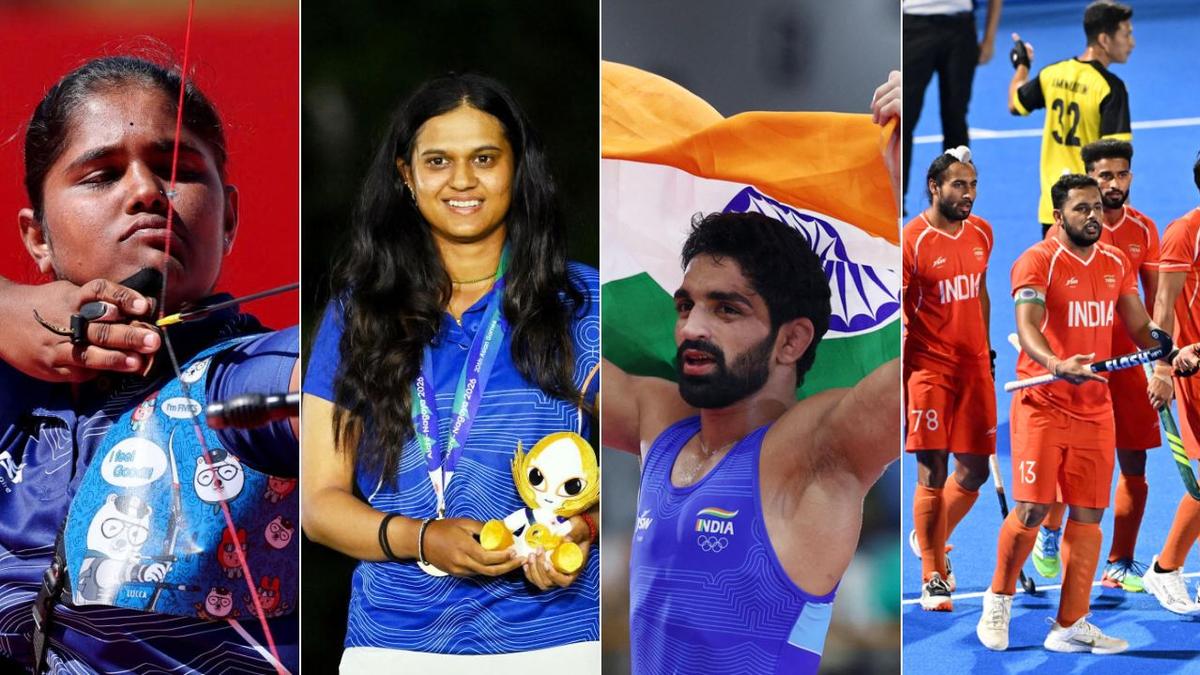
India Achieves Fourth Place at Asian Games 2026 Through Late Success