India Declines US Offer for F-35 Fighter Jet Acquisition


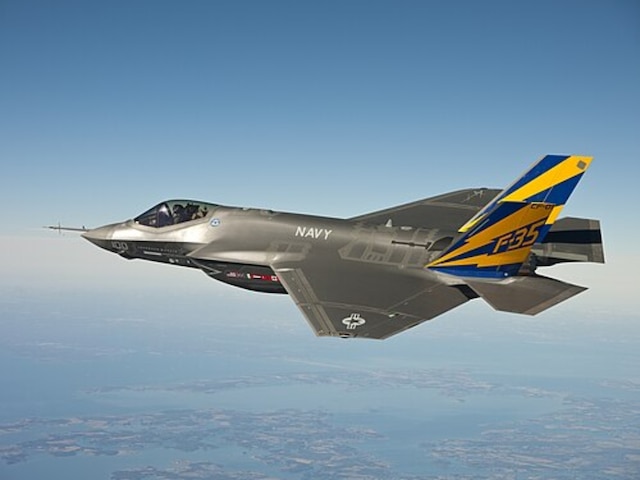
India has recently declined an offer from the United States to acquire F-35 stealth fighter jets, opting instead to concentrate on its domestic defence projects and enhance indigenous capabilities. Reports suggest that New Delhi's decision aligns with its long-term objectives to boost self-reliance in military technology.
The US government has been in discussions to sell F-35 aircraft to various nations, including Saudi Arabia and Turkey, amidst rising geopolitical tensions. Saudi Arabia is reportedly considering acquiring up to 48 F-35 fighters to bolster its air force against perceived regional threats. Similarly, Turkey has been advocating for reinstatement in the F-35 programme following its removal due to the procurement of Russia’s S-400 missile defence system. A renewed diplomatic push may allow Turkey to discuss its involvement in the programme once more.
During a 2025 visit by Indian Prime Minister Narendra Modi to the US, the then-President Donald Trump announced a substantial increase in military sales to India, which included the F-35s on the agenda. However, some analysts perceived these remarks as more beneficial to the US defence industry rather than a genuine offer to India.
According to the U.S. Congressional Research Service, India is expected to invest over $200 billion over the next decade in military modernisation. Despite this, officials from the Indian government, including Foreign Secretary Vikram Misri, have clarified that the US proposal is at a 'proposal stage', and no acquisition process has commenced.
Criticism of the F-35 offer has also come from opposition parties within India, who argue against the high costs associated with the acquisition. In line with Prime Minister Modi’s vision for an 'Aatmanirbhar Bharat' or self-reliant India, India has entered into a significant agreement worth approximately $7.03 billion to procure indigenous fighter aircraft from Hindustan Aeronautics Limited, contributing to the development of its domestic aerospace sector.
Furthermore, analysts caution that accepting the F-35 could impose strict American oversight over software, source codes, and data-sharing systems, limiting India’s military operational independence. Financial commitments on the F-35's steep acquisition and ongoing maintenance may detract from funding local initiatives such as the Advanced Medium Combat Aircraft (AMCA) and the Tejas Mk II projects.
The decision to turn down the F-35 offer underscores India's strategic shift towards strengthening its own defence production capabilities rather than relying on imported military hardware. This approach not only seeks to enhance operational autonomy but also aims to foster greater resilience in the wake of evolving regional security dynamics.
US Approves Visa for Iranian Delegation Amid Ongoing Conflict

Election Commission Restricts TMC Use of Name and Symbol in Bypolls
India Revises Passport Rules for Minors Under 15 Years Old

World's Highest Flower Fields Open in Leh, Ladakh at 10,600 Feet