India Charges Militant Groups Over Pahalgam Tourist Attack


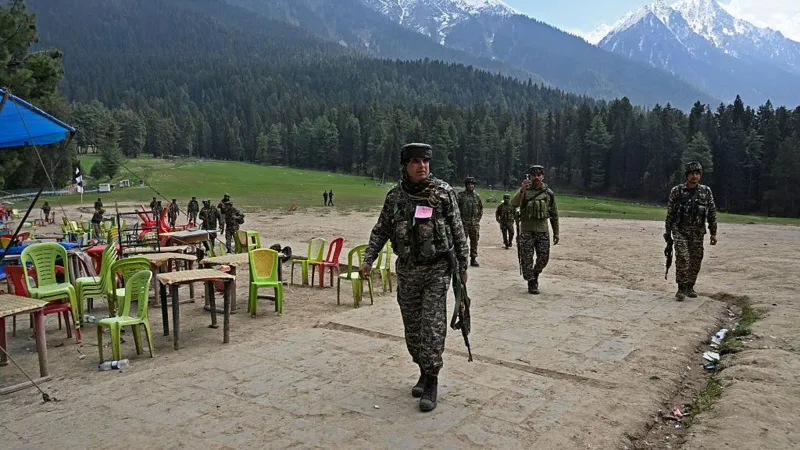
India's National Investigation Agency (NIA) has filed charges against two militant organisations based in Pakistan along with six individuals in connection with an attack on tourists in Kashmir earlier this year, which resulted in 26 fatalities.
The incident occurred in the tourist destination of Pahalgam and significantly heightened tensions between India and Pakistan, both of which possess nuclear arms. India has accused Pakistan of being complicit in the attack, a claim that has been firmly denied by Islamabad.
The groups implicated include Lashkar-e-Taiba (LeT), which is recognised as a terrorist organisation by the United Nations, and The Resistance Front (TRF). The NIA has stated that these groups were involved in the "planning, facilitating, and executing" of the attack.
As of now, the government of Pakistan has not issued any official response regarding the charges. The TRF initially claimed responsibility for the attack but subsequently retracted its statement.
The comprehensive chargesheet, spanning 1,597 pages, was submitted to a special court in Jammu on Monday. It identifies the militant organisations and the six individuals, three of whom were killed by security forces shortly after the attack occurred.
One of the individuals named is Sajid Jatt, identified by the NIA as a "Pakistani terrorist handler." Additionally, two other men have been in NIA custody since June and have provided information regarding the identities of the three armed assailants, confirming their connections to the banned LeT.
The NIA's statement indicated that the accused individuals are facing charges under various sections of India's criminal law and its stringent anti-terrorism legislation. They are also accused of waging war against the state, according to the agency.
The NIA has indicated that its investigation, which has spanned nearly eight months, traced the conspiracy back to Pakistan, and further inquiries are ongoing.
Kashmir has long been a contentious region between India and Pakistan. Both nations claim the territory in full but only administer portions of it, having engaged in two wars over the area.
The Pahalgam attack is deemed one of the most lethal militant incidents in Indian-administered Kashmir since 2019. On 22 April, a popular tourist area known as Baisaran, approximately seven kilometres from Pahalgam, became the scene of a brutal attack where militants specifically targeted and killed 25 male Hindu tourists. A local Muslim pony handler who attempted to assist the victims was also among those murdered.
In the immediate aftermath of the attack, India rescinded the Indus Waters Treaty of 1960. Pakistan responded by withdrawing from the 1972 Simla Agreement, which was aimed at resolving bilateral disputes.
In the weeks that followed the Pahalgam incident, the two nations exchanged missile and drone strikes, culminating in a brief four-day conflict that resulted in a fragile ceasefire.

Impact of Trump's Tariff Law on India's Oil Imports and Trade
United Russia Party Secures Supermajority Despite Ukraine Conflict
Xi Jinping's US Visit Planned Amid Economic Tensions with Trump
India's External Affairs Minister to Address UNGA Amid US Tariff Changes