India to Become 6 GW Data Centre Hub by 2029, Report Indicates


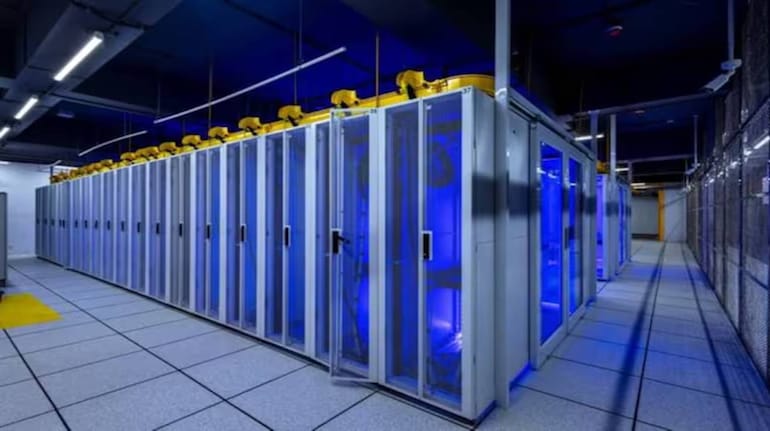
India's data centre sector is poised for a significant transformation, with a projected growth in capacity from 1.6 gigawatts (GW) in June 2026 to 6 GW by 2029. This development positions India as Asia's fastest-growing market for digital infrastructure, according to a recent report from JLL India, a leading real estate consultancy.
The report highlights that major contributors to this growth will be artificial intelligence (AI) workloads and the deployment of hyperscale cloud services. Cities such as Mumbai and Hyderabad are expected to dominate the supply landscape, which will require approximately USD 110 billion in capital investment.
In the first half of 2026, the sector exhibited robust momentum, with absorption rates reaching 101 megawatts (MW), significantly surpassing the three-year average for the same timeframe. During this period, 85 MW of new supply was added, primarily in Mumbai and Chennai, resulting in a record low vacancy rate of 2.8%.
Looking ahead, the 4.4 GW supply pipeline leading to 2029 is strategically distributed: Mumbai is projected to account for 35% of the capacity mainly through colocation facilities, followed by Hyderabad with 24%, Visakhapatnam with 14%, and Chennai with 9%. The expansion is expected to require about USD 4 billion for real estate construction, USD 18 billion for mechanical, electrical, and plumbing infrastructure, and an estimated USD 88 billion for IT equipment such as servers and racks.
Rachit Mohan, Managing Director for Data Centre Leasing at JLL in the Asia Pacific, commented on the transformative potential of this expansion. He stated, “India's data centre landscape is undergoing a fundamental transformation unprecedented in scale and ambition. The convergence of landmark tax incentives with massive hyperscale investments for AI-driven infrastructure requirements positions India as a strategic global hub for digital innovation.”
The report also notes that global hyperscale operators are reshaping the market dynamics by committing to self-building nearly 30% of the new capacity. By 2029, these facilities are expected to add 1.4 GW of capacity, especially in cities like Hyderabad and Visakhapatnam.
The Indian Union Budget for 2026-27 has introduced a 20-year tax holiday for foreign cloud service providers, which will be effective until March 31, 2047. This policy is anticipated to expedite investment commitments in the sector, attracting over USD 50 billion in foreign capital.
This initiative is seen as a key component of positioning India as a global hub for AI and cloud services, facilitating long-term capital deployment with reduced risks. As the sector evolves, it is expected to contribute significantly to India's broader economic goals and technological landscape.
Overall, the rapid expansion of India's data centre capacity underscores the country's growing importance in the global digital economy, driven by advancements in AI and cloud technology.
Kerala Initiates Probe into 2006 Suicide Case Involving CEC

Extradition of Sheikh Hasina Feasible, Says Indian High Commissioner

Punjabi Makeup Artist Mad Sandhu Shot Dead in Amritsar

India Achieves Fourth Place at Asian Games 2026 Through Late Success