India Advocates for Veto Powers for All UN Security Council Members


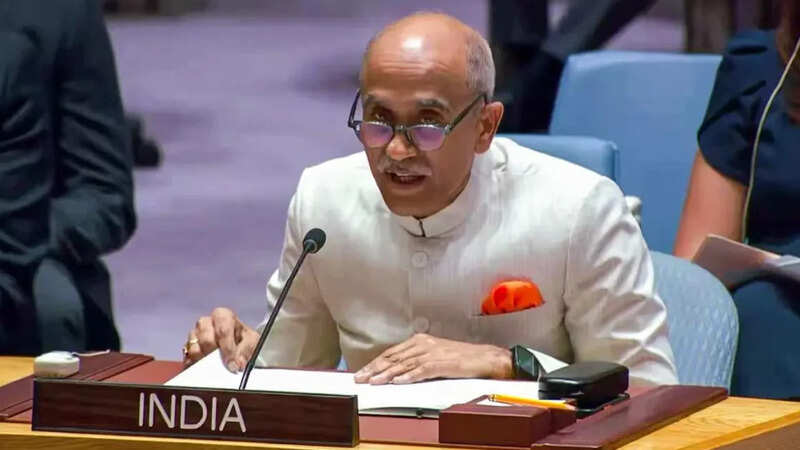
India has reiterated its call for significant reforms in the United Nations Security Council (UNSC), particularly emphasising the need for all member states to have the right to exercise veto powers. The Permanent Representative of India to the United Nations, Parvathaneni Harish, stated that limiting the veto is intrinsically linked to broader issues, including categories of membership and regional representation.
In his address, Parvathaneni emphasised, "Limiting the veto cannot be separated from the questions of categories of membership, regional representation, size and working methods. We need to move forward on all five clusters together." His remarks reflect a growing sentiment among various nations that the current structure of the UNSC does not adequately represent global realities.
At present, the veto power is held by five permanent members of the UNSC: the United States, the United Kingdom, France, Russia, and China. Parvathaneni pointed out that the privilege of exercising veto power carries significant responsibility. He remarked, "The veto must be exercised with great restraint, particularly on matters concerning international peace and security. It should not become a tool of narrow political expediency."
The UN Security Council has employed its veto power a total of 331 times throughout its history, often leading to concerns regarding its credibility. Parvathaneni highlighted that only three of the five permanent members have predominantly used the veto, undermining the Council’s integrity.
To foster a fairer approach, India proposed that the extension of veto powers should be uniformly applicable to all permanent members of the UNSC. Parvathaneni stated, "Fairness and justice demand that all permanent members enjoy the same rights and responsibilities. A new category of permanent members, with or without the veto, would only complicate an already challenging discussion."
India has aligned itself with the Common African Position (CAP), a policy instituted by the African Union advocating for a united stance on critical global issues.
In light of ongoing discussions, the call for reforms in the UNSC is gaining traction, as nations advocate for a more inclusive and equitable decision-making process. The Indian envoy’s statements are seen as pivotal amid growing calls for transparency and accountability in the power dynamics of international governance.
Indian Defence Acquisition Council Approves Major Procurement Deals

Violence Erupts in Arunachal Pradesh Over Proposed Dam Project
Six Uttar Pradesh Officials Suspended Over Election Irregularities
BRICS Parliamentary Forum Discusses Cross-Border Terrorism