Impact of North Korean Nuclear Tests Linked to Increased Seismic Activity


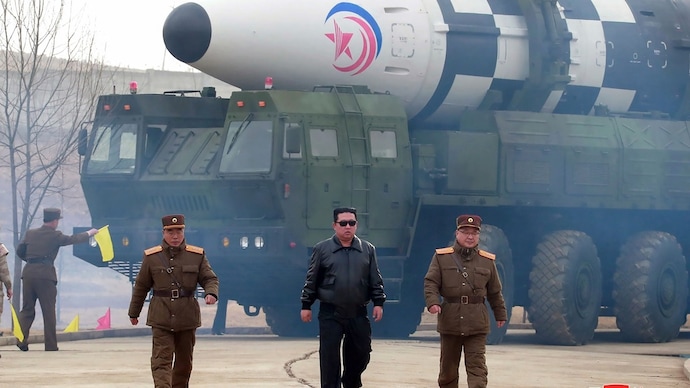
A new study highlights the long-lasting effects of North Korea's underground nuclear tests on the Earth's crust surrounding Mount Mantap. The research indicates that seismic activity in the area has continued to rise significantly since the final test occurred in 2017, suggesting that the impacts of these nuclear explosions are far-reaching and enduring.
The Punggye-ri nuclear test site, located under Mount Mantap, has been the site of six underground nuclear detonations from 2006 to 2017. The last of these tests, conducted in September 2017, was reported to have a yield equivalent to between 100 to 250 kilotons of TNT. This test generated a seismic event detected by the US Geological Survey, registering at a magnitude of 6.3. Additionally, satellite radar observed notable deformation of the mountain following the explosion.
The research team, led by Xingli Fan, examined seismic records from various locations in China and South Korea, focusing on data from stations approximately 80 to 200 kilometres from Mount Mantap. From this analysis, they recorded 1,399 local earthquakes between 2008 and 2025, a figure substantially higher than what had been documented in previous listings.
A striking observation noted in the study is the unusual pattern of seismic activity following the 2017 nuclear test. Rather than witnessing a typical decline in tremors over time, as usually expected, the earthquake frequency around Mount Mantap began to rise approximately three weeks post-detonation. This trend continued to escalate in both occurrence and intensity until 2025.
Highly precise seismic data indicated that these earthquakes were concentrated along two prominent fault lines, suggesting that the earthquakes were not random but rather part of a systematic reactivation of geological faults. The researchers propose that the series of nuclear detonations may have progressively weakened the shallow crust, thereby changing the stress distribution in the area and leading to the activation of previously dormant faults.
This study sheds light on the broader implications of nuclear testing, arguing that the seismic effects from underground detonations may extend considerably beyond the immediate vicinity of the explosion. Such findings could be critical for international monitoring of former nuclear test sites, as they suggest that the seismic footprint of these tests complicates the differentiation between earthquakes caused by natural tectonic activity and those resulting from previous nuclear detonations. The implications for future monitoring efforts are significant, as seismic activity could interfere with efforts to verify compliance with nuclear test bans and track genuine seismic events from other sources.

Mamata Banerjee Challenges Election Commission in Supreme Court

Abu Dhabi Crown Prince Thanks Indian Driver at BRICS Departure

HAL Strengthens India's Aerospace Sector with New Deliveries

US Approves Over $27 Billion in Arms Sales to Saudi Arabia and Israel