ICE Agents to Assist TSA Amid Ongoing DHS Funding Crisis


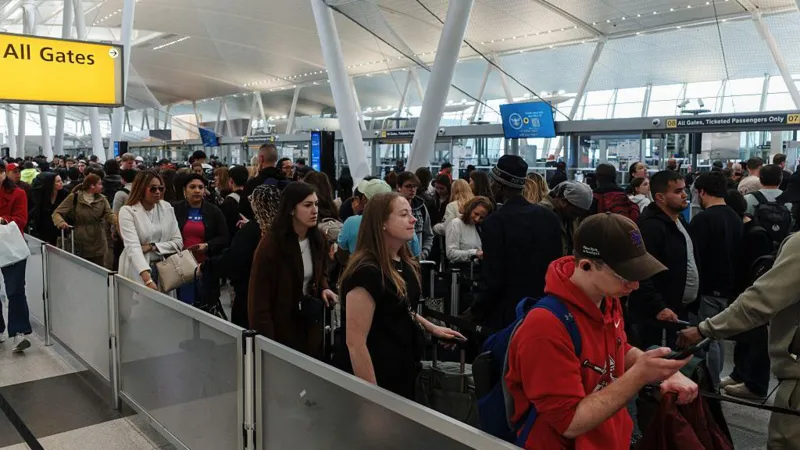
In response to significant delays at airport security checkpoints, United States Immigration and Customs Enforcement (ICE) agents will be deployed to assist Transport Security Administration (TSA) agents. This action was confirmed by the Trump administration following prolonged queues that have exacerbated during a partial government shutdown affecting the Department of Homeland Security (DHS).
On social media, President Donald Trump announced that ICE would begin operations at airports on Monday. The assistant to the president on border security, Tom Homan, elaborated on CNN that his team is finalising details regarding the deployment of these agents. The move comes amid increasing frustration from travellers who have endured hours of waiting due to understaffed security checkpoints.
The union for TSA officers has expressed criticism regarding this plan, asserting that TSA personnel "deserve to be paid, not replaced by untrained, armed agents". This statement reflects wider concerns about the implications of deploying ICE in a security role, particularly given their lack of training in that specific context. As a result of the ongoing shutdown, many TSA employees have been working without compensation, leading to higher rates of absenteeism and even job resignations, with over 400 agents leaving since the crisis began.
Trump indicated via his Truth Social platform that the deployment of ICE is necessary to ensure public safety and alleviate security delays. He suggested that ICE could take up roles covering entry and exit points in airports, thereby allowing TSA officers to focus on the screening duties for which they are specifically trained. Homan reiterated this strategy, emphasising that ICE will not directly screen passengers but will instead help the TSA manage workflow at security checkpoints.
In an effort to bolster the narrative about the preparedness of ICE, Transport Secretary Sean Duffy highlighted the agency's prior experience with security processes at checkpoints along the southern border, claiming that their agents are well-equipped to provide assistance even though they have a different primary function.
Countering the administration’s claims, House Minority Leader Hakeem Jeffries told CNN that the involvement of ICE agents in security roles is problematic. He argued that deploying individuals not specifically trained for sensitive airport duties could pose safety risks.
The issue of the DHS shutdown has remained contentious, with funding halted since mid-February after Congress failed to agree on a budget. The ongoing funding crisis has not only impacted airport security but has also raised significant questions about immigration policy and the operational mandates of ICE. Following incidents involving federal agents and civilian casualties, Democrats have raised calls for reform to ensure better oversight of immigration enforcement actions.
The lack of a resolution in Congress continues to fuel concerns about the viability of airport security amidst longer and longer wait times observed across numerous major airports in the United States. The administration has vowed to utilise all available resources to maintain safety and operational efficiency at airports, as frustration grows among both travellers and TSA employees alike.
As the situation develops, the public and key stakeholders will be watching closely to see how ICE's involvement impacts airport security protocols.
This article draws upon reporting from multiple sources including statements from the Department of Homeland Security and comments made by public officials, providing a comprehensive overview of the ongoing issue regarding airport security amid a financial stalemate in Congress.

Concerns Rise Over Delhi Voter Registration Discrepancies

Controversy Erupts Over Rahul Gandhi's PM Modi Mimicry at Event

Father of IIT Bombay Student Calls for Action Against Discrimination

India and Japan Conduct Joint Air Exercise 'Veer Guardian-2026'