Houthi Rebels Strike Vessel, Escalating Conflict in Yemen


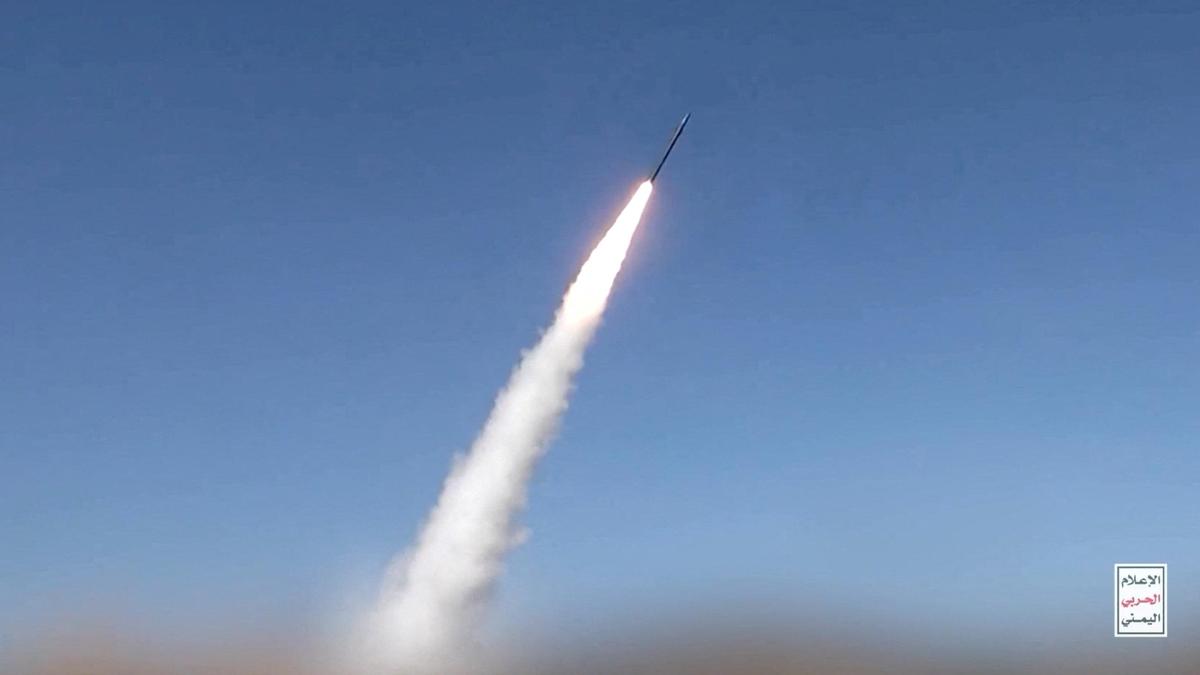
Yemeni authorities reported that six individuals lost their lives when Houthi rebels launched missiles at a commercial vessel in the Bab el-Mandeb strait on August 11, 2026. The casualties included four crew members and two members of the government-allied National Resistance Forces.
According to the Yemen Transportation Ministry, the Houthis fired three ballistic missiles at the ship. This incident marks the first documented fatalities from Houthi attacks on maritime vessels during the latest escalation in the region.
With Iran having effectively shut down the Strait of Hormuz, the Bab el-Mandeb strait has garnered increased attention as an alternative route for Saudi Arabia’s oil shipments. The deadly missile strike coincided with ongoing Houthi offensives against the government-held port city of Mokha and other strategic locations across Yemen.
Reports indicate that dozens of Yemeni troops and civilians have been killed in various attacks since the previous week. This surge in violence is part of a broader escalation by the Houthis against both the Yemeni government and oil facilities in neighbouring Saudi Arabia, which backs the Yemeni government.
Mohammed Abdul-Salam, chief negotiator and spokesperson for the Houthis, accused Saudi Arabia of taking advantage of a ceasefire established in 2022 to reinforce its blockade of Yemen, which has been in effect since 2015. While the Houthis expressed a willingness to engage in negotiations, they stipulated that any agreement must include the lifting of the blockade.
In a related development, the United States military stated it intercepted a Panamanian-flagged ship in the Gulf of Oman, which allegedly attempted to circumvent an American blockade aimed at Iranian ports. U.S. Central Command reported that the ship ignored multiple warnings, leading to an American helicopter firing missiles into the ship's engine room, effectively disabling it. While the statement did not disclose any casualties among the crew, it noted that U.S. forces have redirected 55 commercial vessels attempting to breach the blockade.
U.S. President Donald Trump asserted that the military has 'total control' over the Strait of Hormuz, despite ongoing Iranian attacks on vessels in the area, which has significantly disrupted maritime traffic. The president commented, "Iran is going fine, going just absolutely fine. We totally control the Strait of Hormuz. We have control over it. Nobody else. Only us."
Currently, more than 15 U.S. warships, including two aircraft carriers and an amphibious assault ship, are stationed in the Arabian Sea to enforce the blockade.
Iran continues to demand an end to the U.S. blockade and sanctions, alongside other conditions. The Strait of Hormuz, crucial for global oil shipment, has remained a focal point in understanding the ongoing geopolitical tensions.
Meanwhile, Pakistani Interior Minister Mohsin Naqvi visited Tehran for discussions aimed at encouraging Iran to return to negotiations with the U.S. regarding a tentative peace agreement brokered by Pakistan in June. Naqvi's visit marks his sixth trip to Iran in an effort to mediate the escalating tensions.
On a different front, concerns have been raised regarding escalating violence in the West Bank. The five European nations on the U.N. Security Council held a meeting to address the situation. British U.N. Ambassador Sarah MacIntosh described the violence as 'appalling,' referring to settler attacks on Palestinian villages. Palestinian U.N. Ambassador Riyad Mansour urged international intervention to promote Palestinian self-determination.
In Syria, a court sentenced former President Bashar Assad and his brother to death for crimes against humanity amid the country’s continuing conflict, which has claimed around half a million lives since its onset in 2011.
BJP Allies Urge Election Commission to Address Public Concerns

Thousands of Ganesh Idols Immersed in Telangana Festivities
Jaishankar Calls Attacks on Civilian Shipping ‘Indefensible’
Indian Prime Minister Urges Integration of Social Reforms in Governance