Houthi Attacks Target Saudi Capital and Energy Sites


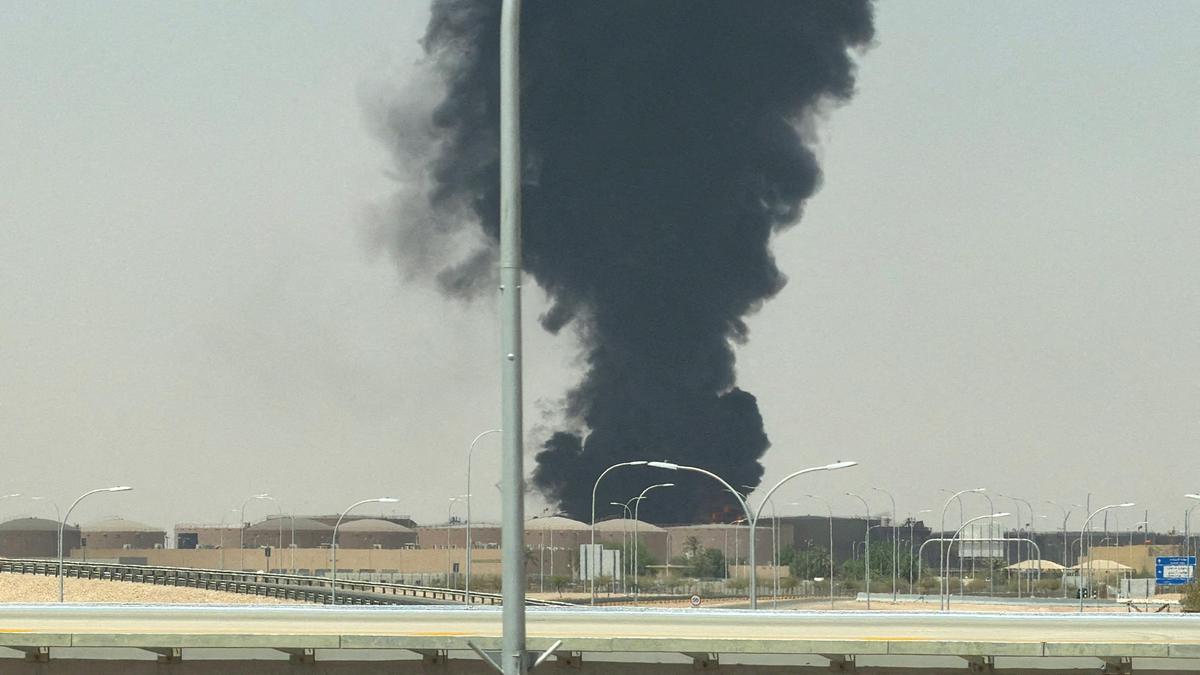
Houthi militants, backed by Iran, have declared that they executed drone and ballistic missile strikes against the Saudi capital, Riyadh, and its energy infrastructure along the Red Sea. Saudi officials reported intercepting a missile aimed at Riyadh on Saturday, although they did not verify any further assaults or casualties.
Witnesses observed columns of black smoke emanating from fuel tanks adjacent to the international airport in Riyadh, leading to temporary flight disruptions. This incident marked the first air raid alerts in the capital since the Houthi attacks on Saudi Arabia escalated in July.
The United States Department of State has advised American citizens in the Middle East to maintain caution, prepare for possible flight cancellations, and be alert for other travel disruptions. The department characterised the events, stating, "Iranian-supported Houthis have engaged in hostilities against Saudi Arabia, including civilian airports. This military conflict has the potential to escalate rapidly."
Additionally, air defence systems successfully thwarted attempts to target civilians in various Saudi cities, including Bish and Taif, as reported by an official spokesperson for the Saudi-led coalition. Yahya al-Sarea, the Houthi military spokesperson, claimed that numerous ballistic and cruise missiles, alongside drones, were deployed to strike sensitive locations within Riyadh and facilities related to the state oil company, Aramco, located in Yanbu.
Al-Sarea asserted that these attacks were in retaliation for what he termed "the Saudi enemy's criminal attempts" that targeted the Yemeni capital, Sana'a, which is under Houthi control. He accused Saudi Arabia of conducting 300 airstrikes across Yemen in the past week.
The Houthis are entrenched in a civil conflict with Yemen's internationally recognised government, which Saudi Arabia supports. The group has repeatedly targeted Saudi Arabia and claimed responsibility for downing a Saudi fighter jet in recent days. According to unverified reports from France’s AFP news agency, clashes between Houthi forces and Saudi-aligned government troops resulted in at least 48 fatalities on Saturday, with the Houthis reporting the deaths of 31 of their members and government sources confirming the loss of 17 soldiers.
In a related development, the International Organization for Migration, a United Nations agency, indicated that recent confrontations had displaced over 104,796 individuals. Meanwhile, on Saturday morning, explosions were reported in Riyadh, causing significant disruptions at King Khalid International Airport. The flight tracking service FlightRadar24 noted numerous delays and cancellations coinciding with the aforementioned alerts.
An AFP journalist on the scene observed firefighters attempting to extinguish flames from a damaged Aramco fuel tank. Prior to the explosions, the Saudi Civil Defence had issued mobile alerts warning of potential dangers in Riyadh and surrounding areas, later declaring an all-clear. Local residents recounted experiencing the sounds of explosions throughout the city, with one 27-year-old resident remarking, "I heard the alarm, then my windows shook. It was definitely scary. I was not expecting this."
The Houthis have recently taken control of the crucial port city of Mokha and Perim Island, a strategic point for shipping that is instrumental for Saudi oil exports to Asia and Europe. They claimed the naval blockade was a response to a Saudi blockade affecting Houthi-controlled ports and airports.
This stretch of the Red Sea has become vital for Saudi vessels since increased tensions with Iran hindered access to the Strait of Hormuz. Investment bank JP Morgan conveyed its difficulties in forecasting oil price reactions due to the conflict. They mentioned in a rare advisory, "we simply don't know how to model the endgame," suggesting uncertainties surrounding economic thresholds that the United States may be reluctant to breach.
Saudi Arabia has been strongly advocating for procurement of advanced fighter jets like the F-35 from the U.S., as evidenced by their strategic military goals in the region. Furthermore, the Houthis denied accusations of targeting the Islamic holy city after a Saudi-led coalition condemned their actions as disgraceful. This situation continues to develop, as tensions remain high in the region.
Trump Extends $100,000 H-1B Visa Fee Until September 2027
Donald Trump Announces Creation of AI Force Amidst Rising Concerns
Iran Outlines Conditions for Diplomatic Talks with US
The Ongoing Houthi Conflict: Implications for Saudi Arabia