Flooding in Nepal Linked to Major Landslide in the Himalayas


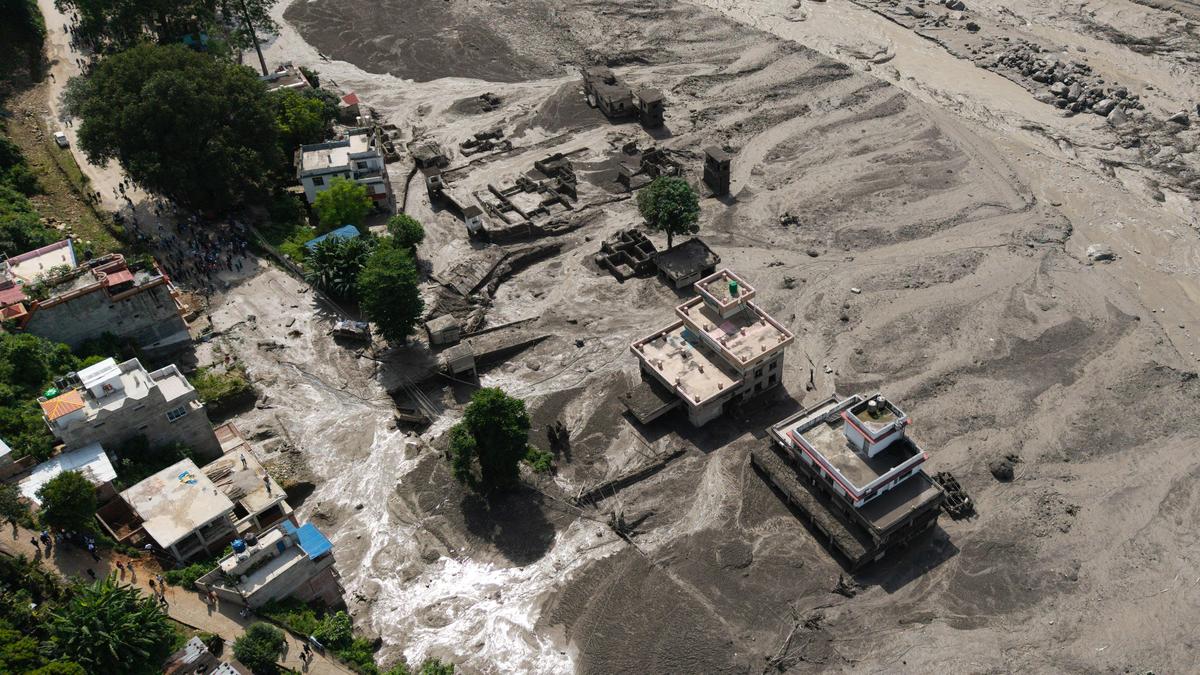
Severe flooding in Nepal has resulted in at least 157 fatalities and left hundreds of individuals unaccounted for. The disaster was set in motion by a substantial geophysical event in the Himalayas. Göran Ekström, a geophysicist from the Lamont-Doherty Earth Observatory at Columbia University, informed ABC News that the sequence began with a landslide in a mountain pass, leading to the dislodgement of a large glacier or parts of it.
Ekström characterised the occurrence as a "massive geophysical event," notable enough to register as a magnitude 5.2 earthquake detected by seismographs globally. Such events have happened in the Himalayas previously; however, the scale of this incident distinguishes it.
As the rocks descended the mountain, they generated significant energy, causing the glacier to melt rapidly. This reaction likely contributed to the tremendous volume of water that inundated the valley below. Ekström assessed that floodwaters reached heights of between 130 to 160 feet and could have surged at speeds nearing 44 miles per hour.
According to Ekström, while these landslides can occur without the influence of climate change, increasing temperatures globally might exacerbate their frequency. "In general, these landslides in these mountainous regions are becoming more frequent and that is linked to the melting of glaciers," he stated.
Reports from local authorities indicate that beyond the fatalities, there are 384 individuals missing in the affected regions, which includes 291 foreign nationals and 93 local residents. Notably, 47 American tourists are reported among the missing. The situation remains critical as recovery efforts continue amidst adverse conditions.

Kerala Initiates Probe into 2006 Suicide Case Involving CEC

Extradition of Sheikh Hasina Feasible, Says Indian High Commissioner

Punjabi Makeup Artist Mad Sandhu Shot Dead in Amritsar

India Achieves Fourth Place at Asian Games 2026 Through Late Success