Escalation in Yemen: Saudi Airstrikes Target UAE-Backed Forces


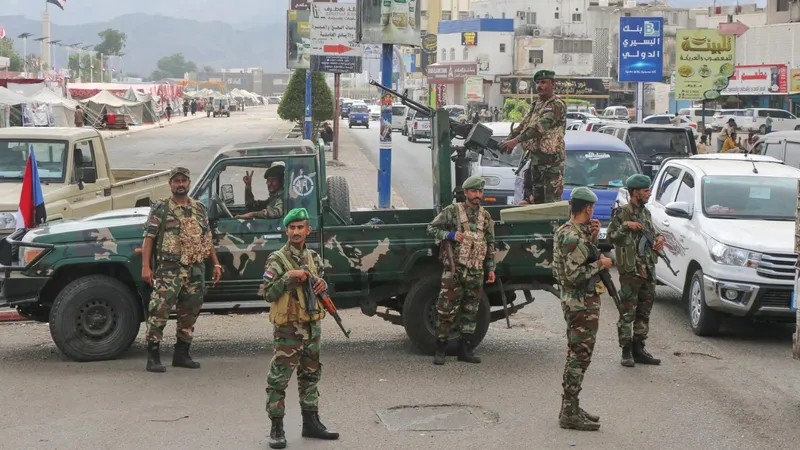
Fighting has intensified in eastern Yemen as Saudi-led coalition airstrikes targeted camps held by the Southern Transitional Council (STC), a group supported by the United Arab Emirates. The escalation follows a series of conflicts that have arisen due to diverging interests between Saudi Arabia and the UAE in the region.
On January 2, 2026, at least seven individuals were reported killed and over 20 others injured when Saudi warplanes struck a military camp in the Al-Khasah area of Hadramout province. Mohammed Abdulmalik, the head of the STC in Wadi Hadramaut, confirmed that seven airstrikes hit the site, and said that STC forces had managed to repel a ground advance by Saudi-backed troops.
This latest round of violence comes on the heels of previous airstrikes carried out by Saudi Arabia on the port city of Mukalla. These strikes were reportedly in response to the arrival of two ships from the UAE port of Fujairah, which Saudi Arabia claimed were delivering weapons and military vehicles intended for the STC. Saudi officials have labelled these shipments as an “imminent threat” to their national security, warning that such actions by the UAE could have dangerous repercussions.
The relationship between Saudi Arabia and the UAE has become increasingly strained, particularly concerning control over military operations in Yemen. The STC, which seeks to establish a separate state in southern Yemen, has resisted demands from Saudi Arabia to withdraw from Hadramout and the neighbouring Mahra province.
Salem al-Khanbashi, the governor of Hadramout appointed by Yemen's internationally recognised government, described the recent military operations as necessary for maintaining order. He stated, “This operation is not a declaration of war and does not seek escalation. It is a responsible pre-emptive measure aimed at removing weapons and preventing chaos.” Despite these assurances, tensions remain high as the STC continues to hold its positions.
The situation has drawn the attention of regional powers, with Omani Foreign Minister Badr Al Busaidi visiting Riyadh for discussions with Saudi Foreign Minister Prince Faisal bin Farhan. The two ministers addressed the escalating violence and explored ways to support a political resolution in Yemen, aiming to address the underlying issues of the conflict.
The ongoing conflict in Yemen has roots tracing back to the Arab Spring in 2011, leading to a civil war that has drawn in regional powers. Originally, the conflict was primarily national in scope, but it has evolved into a complex web of regional rivalries, with Saudi Arabia and the UAE backing different factions within the country.
Experts have noted that the current situation reflects broader geopolitical tensions, with various countries vying for control over key regions. Elisabeth Kendall, a Yemen expert at Girton College, Cambridge, remarked that the eastern regions of Yemen represent a significant concern for Saudi Arabia, stating, “For Saudi Arabia, any southern entity cannot occupy territory that is directly on its border.”
The conflict has also prompted diplomatic disputes, with Saudi Arabia accusing the STC of obstructing mediation efforts. The Saudi ambassador to Yemen, Mohammed al-Jaber, claimed that the STC leadership had blocked a Saudi mediation delegation from landing in Aden, which has raised further concerns about the prospects for peace.
The ongoing violence in Yemen continues to draw international concern, with calls for de-escalation and dialogue among all parties involved. As the situation unfolds, the implications of the conflict extend beyond Yemen, impacting regional stability and international relations in the Middle East.
Kerala Initiates Probe into 2006 Suicide Case Involving CEC

Extradition of Sheikh Hasina Feasible, Says Indian High Commissioner

Punjabi Makeup Artist Mad Sandhu Shot Dead in Amritsar

India Achieves Fourth Place at Asian Games 2026 Through Late Success