Escalating Tensions: US Strikes Iranian Tankers Amid Retaliation


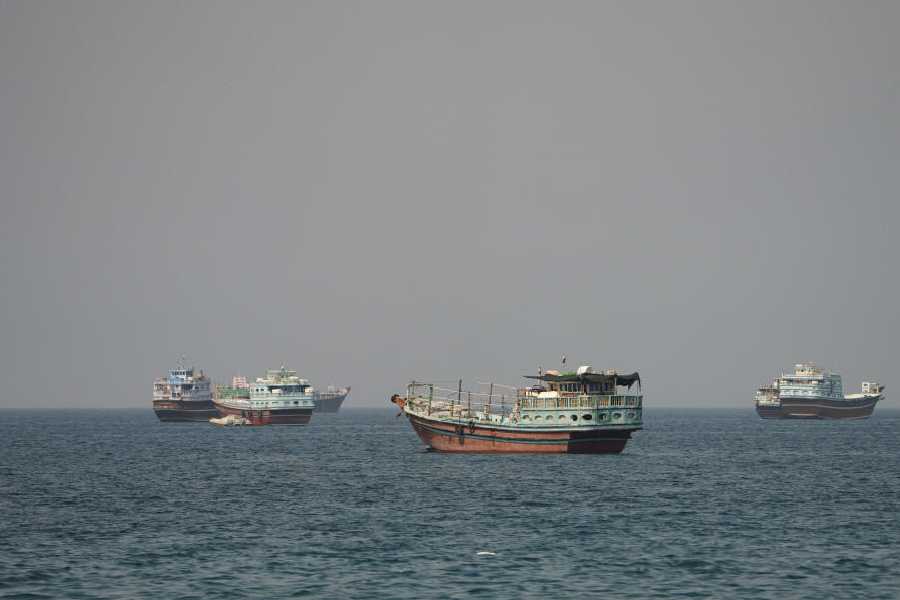
The United States military has announced the destruction of five Iranian oil tankers in the Gulf of Oman, amidst rising tensions between the US and Iran. This action was prompted by what the US describes as aggressive maneuvers by Iran’s Islamic Revolutionary Guard Corps (IRGC), which reportedly attempted to target a US warship on two occasions within a span of two days.
Iran swiftly condemned the US military actions, asserting that it had launched missile strikes against US forces stationed at the Al-Azraq base in Jordan. This exchange of attacks unfolded following the US’s announcement regarding the Iranian tankers, escalating the conflict significantly within the region six months into the ongoing war between the US and Israel against Iran.
The situation intensified further when oil prices surged above $100 a barrel as these events escalated. The IRGC confirmed the targeting of five tankers and claimed responsibility for the missile strikes on US installations in Jordan, stating that it had destroyed hangars used by US aircraft during the attack.
According to the US Central Command, the vessels destroyed included the M/T Kaviz, M/T Charminar, M/T Horizon 1, and M/T Riesco, with another tanker, M/T Derya, targeted near Kharg Island. An accompanying video released by CENTCOM purportedly displayed the sinking of the M/T Riesco. The Central Command reassured that the crews aboard the tankers were safely directed to abandon ship before the strikes.
In a statement, the IRGC warned of more attacks against ships in the region. It also announced a maritime exclusion zone extending from Chabahar in Iran into parts of the Gulf of Oman and the Arabian Sea, with further coordinates to be disclosed.
On the ground, Iran’s military reported that its forces had successfully intercepted numerous ballistic missiles aimed at the Al-Azraq base. It stated that 20 missiles were fired, with 18 being intercepted successfully, while two landed in unpopulated areas with no casualties reported. The Jordanian Armed Forces confirmed the military's engagement with the incoming missiles, emphasizing the lack of injuries or damages to populated regions.
Prior to the missile exchanges, Iranian officials had issued warnings against US military actions, indicating that targeting Iranian vessels would lead to retaliation. US Secretary of State Marco Rubio defended the strikes, indicating that as long as Iran continues its aggressive actions against US naval vessels, retaliatory measures would persist.
Analysts have indicated that these recent attacks represent a significant escalation in the conflict, suggesting a shift in targets from Iran to US operations and economic interests. The geopolitical ramifications are expected to impact oil markets and security dynamics across the Gulf region.
In related developments, the IRGC also highlighted the capture of a malfunctioning US submarine drone in the Strait of Hormuz, though the US military clarified that no sensitive data had been compromised through this incident.
The continued military exchanges reflect a fragile situation, with both sides expressing their readiness to escalate actions based on the other's maneuvers, further complicating an already tense geopolitical landscape.

Kerala Initiates Probe into 2006 Suicide Case Involving CEC

Extradition of Sheikh Hasina Feasible, Says Indian High Commissioner

Punjabi Makeup Artist Mad Sandhu Shot Dead in Amritsar

India Achieves Fourth Place at Asian Games 2026 Through Late Success