Donald Trump Reports Progress in US-Iran Negotiations Amid Conflict


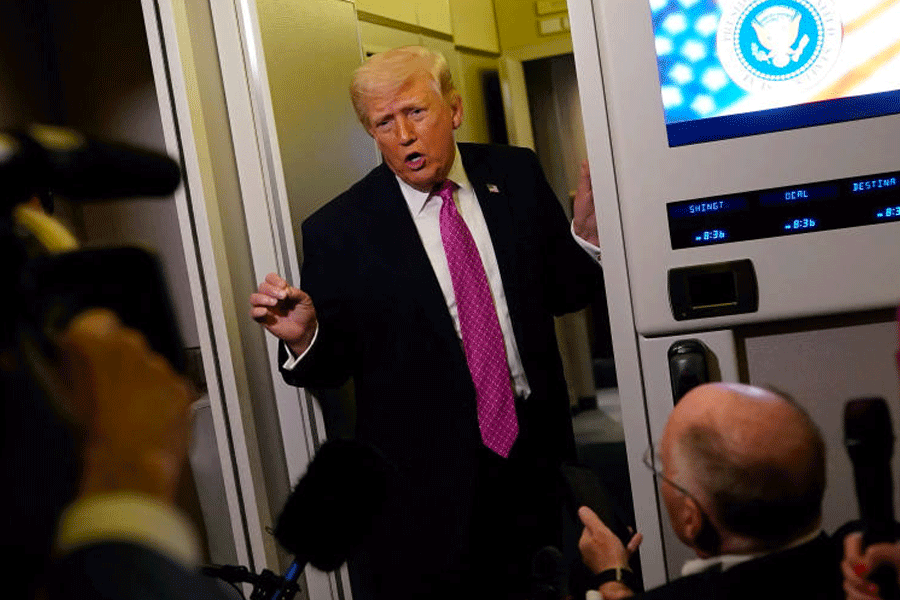
US President Donald Trump announced that Iran has consented to permit 20 oil-laden vessels to navigate through the Strait of Hormuz starting on 30 March 2026. This development is seen as a gesture of goodwill amid ongoing negotiations between the two countries. Speaking to reporters on Air Force One, Mr. Trump remarked, "I would only say that we're doing extremely well in that negotiation but you never know with Iran because we negotiate with them and then we always have to blow them up."
During a press encounter, Mr. Trump responded to inquiries about a proposed 15-point ceasefire plan from the US. He stated that Iran had acknowledged most points of the proposal, though he refrained from disclosing further specifics. “They’re agreeing with us on the plan,” he told the media on 29 March.
Additionally, Trump mentioned that Iran's new Supreme Leader, Ayatollah Mojtaba Khamenei, may be in a precarious situation. “He’s obviously, very seriously in trouble. He’s seriously wounded,” he noted.
Simultaneously, Iran executed strikes on Kuwait and Saudi Arabia following attacks on its electrical infrastructure, which left parts of Tehran without power. On the ground in Lebanon, an ongoing conflict involving Israeli forces and Iranian-backed Hezbollah has intensified, resulting in casualties among United Nations peacekeepers, as a projectile struck a UNIFIL position.
Reflecting on the ongoing conflict, Mr. Trump stated, “We’ve had regime change,” suggesting that new Iranian leadership could offer a more reasonable negotiating partner compared to previous administrations. He expressed optimism regarding a potential agreement with Iran in the near future, saying, “I do see a deal in Iran. Could be soon.”
In a concerning development, Mr. Trump also hinted at a strategy involving US military forces potentially seizing Kharg Island, Iran's main oil terminal located in the Persian Gulf. In an interview with The Financial Times, he elaborated, “Maybe we take Kharg Island, maybe we don’t. We have a lot of options.” He further claimed that American forces could easily overpower whatever defences Iran has there.
Meanwhile, Mr. Trump acknowledged that the Iranian parliament's speaker, Mohammad Bagher Qalibaf, had granted permission for oil tankers to traverse the Strait of Hormuz, indicating a significant shift in diplomatic relations. He described Qalibaf's role as crucial, highlighting recent exchanges of tankers bearing Pakistani flags as a sign of progress in negotiations.
Despite the apparent advancements, the political landscape in Iran remains tense, with Qalibaf's previous threats against the US still influencing the atmosphere of ongoing talks. This series of events marks a significant moment in US-Iran relations, as military actions and diplomatic engagements continue to play out on the global stage.
BJP Allies Urge Election Commission to Address Public Concerns
Thousands of Ganesh Idols Immersed in Telangana Festivities
Jaishankar Calls Attacks on Civilian Shipping ‘Indefensible’
Indian Prime Minister Urges Integration of Social Reforms in Governance