Collision Between Indian and Pakistani Naval Vessels Raises Concerns


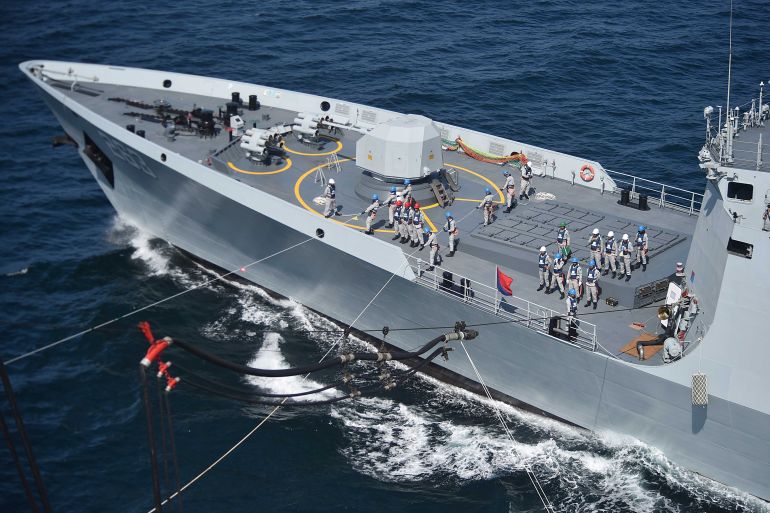
A collision between naval vessels from India and Pakistan in the Arabian Sea has prompted significant diplomatic tensions between the two countries. This incident occurs more than 16 months after their last military conflict, which saw aerial confrontations involving missiles and drones.
On Tuesday, an Indian Navy warship reportedly collided with a Pakistani vessel, leading to mutual accusations regarding the circumstances of the event. The Pakistani government claimed that the Indian warship, identified as INS Kolkata, intruded into its Exclusive Economic Zone (EEZ), while the Indian Ministry of External Affairs stated that the collision occurred in international waters.
Following the incident, both nations summoned each other’s diplomats to lodge formal protests. The Pakistan Foreign Office clarified that its navy had been conducting the SEASPARK-26 exercise within its EEZ since the start of September. The EEZ, which extends up to 200 nautical miles (370 kilometres) from the coast, allows coastal nations exclusive rights to economic activities, while vessels from other countries can freely pass through its international waters.
According to the Pakistani Foreign Office, the INS Kolkata had previously attempted to enter the exercise area and made a dangerous course change just prior to the collision. They labelled this action as a violation of a 1991 agreement mandating a minimum distance of three nautical miles (5.5 kilometres) between military vessels in international waters.
On the other hand, Indian officials claimed that the warship was engaged in routine surveillance when it was approached by the Pakistani vessel at high speed, leading to the incident. Both sides have yet to disclose detailed evidence, such as video footage or tracking data, resulting in ongoing disputes over the facts.
Analysts have suggested that this collision highlights the risks of unintended military encounters between the two nuclear-armed neighbours, particularly as they lack robust mechanisms to manage and de-escalate tensions at sea. The last comparable naval encounter occurred in June 2011, when a Pakistani frigate brushed against an Indian counterpart in the Gulf of Aden.
Retired Vice Admiral Ahmad Saeed of the Pakistan Navy articulated the grim potential for escalation stemming from such incidents. He noted that without strategic agreements similar to those between the US and USSR during the Cold War, there are limited avenues for managing disputes. The absence of a navy-to-navy hotline compounds this issue, leaving both nations primarily reliant on accusations.
Contrasting this situation, maritime analysts cautioned against immediate fears of military escalation. Muhammad Shareh Qazi, a security expert based in Lahore, pointed out that the 1991 agreement requires written notification of military exercises and emphasised that adequate procedures exist to avert military confrontations. He speculated that if the collision posed a genuine threat of escalation, tangible indications would have emerged by now, mentioning protocols such as signalling via chaff to inform the other vessel of potential aggression.
Sandeep Unnithan, a defence commentator, expressed scepticism about the accidental nature of the incident. He compared it to aggressive tactics exhibited by Chinese naval forces against vessels in the South China Sea and raised concerns regarding the increasingly close military cooperation between Pakistan and China. As both nations drill together and share technology, there exists a possibility of adopting confrontational maritime tactics.
The current situation underscores the delicate balance of military relations between India and Pakistan, who remain embroiled in conflicts over Kashmir and other issues. Both governments demonstrated readiness to engage diplomatically over the incident, which might hint at a recognition of the need to manage interactions carefully at sea to prevent wider conflicts.
As tensions continue to mount in the region, observers will be watching closely for diplomatic responses and further developments arising from this incident.
Andhra Pradesh Chief Minister Commends Modi on Economic Progress
BRICS Summit Highlights India's Growing Global Influence
Bangladesh's Prime Minister Extends Birthday Wishes to PM Modi

Bengaluru Kidnapping Case Reveals In-Laws' Involvement in Plot