Canada Raises Financial Requirements for International Students


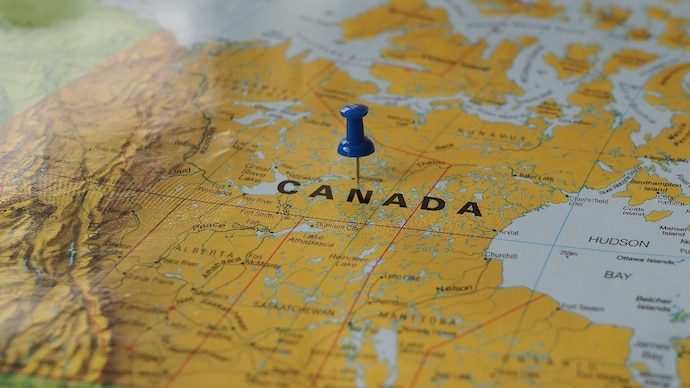
Canada has updated its financial requirements for international students applying for study permits, taking effect from September 1, 2026. Indian students hoping to study in Canada will now need to demonstrate higher funds for living costs as part of their applications. According to Immigration, Refugees and Citizenship Canada (IRCC), a single student aiming to study in any province or territory outside Quebec must now show CAD 23,448 for one year of living expenses. This is an increase from the previous requirement of CAD 22,895, marking a rise of CAD 553.
This new financial threshold is distinct from tuition fees and transportation costs that students also need to cover. The IRCC stated that these financial adjustments are made annually to align with the rising cost of living and to safeguard international students from potential exploitation during their studies in Canada.
For students who plan to travel with family, the financial requirements are significantly higher. For example, the annual living expense requirement increases to CAD 29,192 for two family members—including the applicant. The costs further escalate to CAD 35,888 for three family members, CAD 43,572 for four, CAD 49,419 for five, CAD 55,736 for six, and CAD 62,054 for seven family members. Additionally, for each additional family member beyond seven, an extra CAD 6,318 is required.
IRCC mandates that applicants must provide proof of sufficient funds to cover their tuition, living expenses, and travel costs for themselves and any family members accompanying them. Documents such as bank statements, educational loan proof, scholarship documentation, and financial records related to employment can be used to substantiate financial capability. The IRCC emphasizes that both the amount and the source of the funds will be assessed as part of the application process.
It is important to note that the new CAD 23,448 requirement applies exclusively to provinces and territories outside Quebec, where distinct financial criteria are enforced by provincial authorities.
Furthermore, this adjustment comes at a time when Canada is limiting new temporary residents to a total of 385,000 for the year, with only 155,000 of these slots available for new international students. This cap aims to maintain the percentage of temporary residents below 5 per cent of Canada's population by the end of 2027. The tightening of these regulations has led to a decrease in the number of international students, with only 22,405 arrivals recorded during the first half of this year, well below the target.
Colleges in Ontario are responding to these regulations by suspending numerous programmes, as student enrolment declines. Some institutions have reported significant reductions in course offerings to adapt to the changing landscape. In light of this, student advocacy groups and universities are urging the Canadian government to increase the issuance of study permits to facilitate student mobility.
In parallel to these developments, IRCC held an Express Entry draw on September 1, inviting individuals with previous Canadian work experience, further highlighting the evolving dynamics of immigration policy in relation to educational and employment opportunities within Canada.

Kerala Initiates Probe into 2006 Suicide Case Involving CEC

Extradition of Sheikh Hasina Feasible, Says Indian High Commissioner

Punjabi Makeup Artist Mad Sandhu Shot Dead in Amritsar

India Achieves Fourth Place at Asian Games 2026 Through Late Success