Brent Crude Oil Surpasses $100 Amid Escalating Middle East Tensions


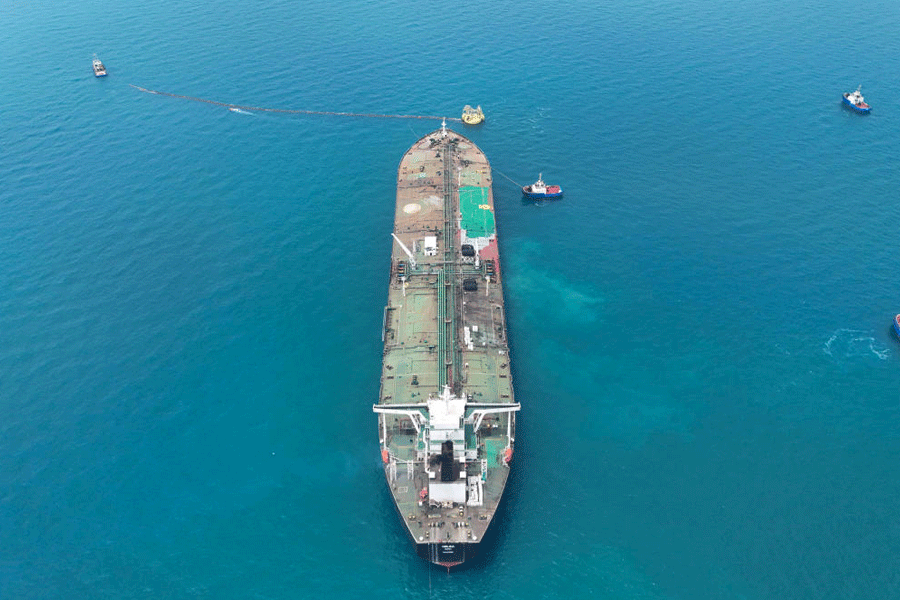
Brent crude oil has surpassed the $100 per barrel mark, reaching $100.19 on Wednesday, marking its highest level since July 24. This increase is attributed to heightened military activities in the Middle East, raising concerns over energy-driven inflation across global markets. The recent spike follows retaliatory strikes between the United States and Iran, following US military actions against five Iranian oil carriers. These developments have led to increased fears regarding inflation and potential monetary policy tightening by central banks worldwide.
Wall Street witnessed declines across its three main stock indices—the S&P 500, Dow Jones Industrial Average, and Nasdaq—each experiencing minor losses. European stocks have fallen to a one-week low, notably impacting industrial and banking sectors. Canadian blue-chip stock futures also saw a slight decrease. In contrast, Asian markets displayed volatility, with technology shares still gradually recovering from a July low, buoyed by a surge in artificial intelligence investments.
Ipek Ozkardeskaya, a senior analyst at Swissquote, shared insights with Reuters, stating that the market's risk appetite has diminished significantly due to rising oil prices driven by ongoing conflicts. "Summer was full of hope that a peace agreement could be achieved. This optimism is fading as we enter September," Ozkardeskaya remarked.
Manish Kabra, a multi-asset strategist at Societe Generale, has labelled the $100 oil price as a "psychological threshold," lacking significant economic implications. He noted that a more critical price point would need to be $150 to trigger a major downturn in demand. Furthermore, Kabra cautioned that rising diesel prices could significantly affect inflation and service industries.
As oil prices escalate, concerns about inflation have prompted speculation that central banks may adopt more cautious monetary policies. The European Central Bank is expected to raise interest rates on Thursday, while the United States Federal Reserve is set to convene next week to discuss similar measures. This has placed added pressure on bond markets; rising inflation fears have led to an increase in yields as the market anticipates central bank tightening in response.
Since hostilities between the US and Iran resumed late August, bond yields in the United States, Japan, and various European nations have reached levels not seen in several decades, heightening concerns regarding government borrowing costs and the overall health of global financial institutions. The intersection of geopolitics and economic factors continues to create uncertainty for investors as they navigate the complex landscape of inflation and stock market volatility.

Ceasefire Agreed in Oleshky Amid Ukraine's Humanitarian Crisis
Donald Trump Hints at US Interest in Cuba After Conflict in Iran

UK Court Rules Against India in RAKIA Investment Dispute

India Raises Concerns Over Chinese Border Patrolling Deviations