Bomb Threats Prompt Searches of Seven Flights Across Europe


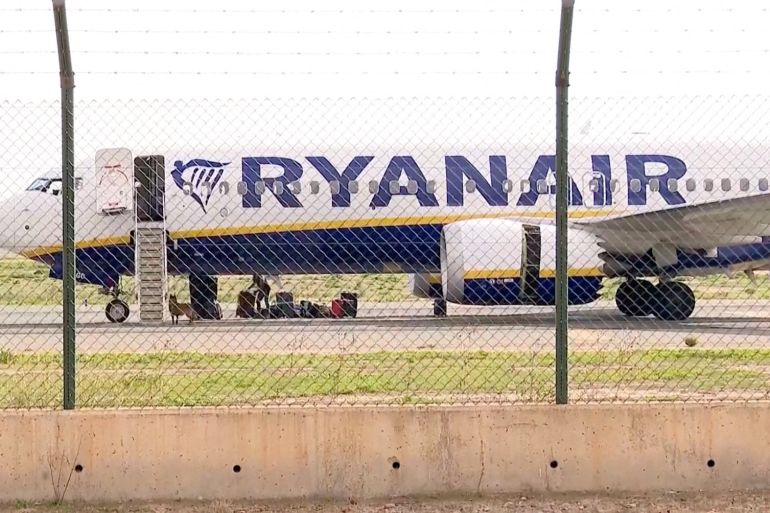
A wave of bomb threats directed at passenger flights across Europe has resulted in thorough inspections of seven planes. The incidents occurred on Tuesday, prompting swift action from aviation authorities in multiple countries.
Two Ryanair flights that landed in Rome following threats were escorted by the Italian Air Force. Though landing safely, these flights were subjected to heightened security protocols as officials investigated the threats.
In Warsaw, two planes were also inspected; one flight was diverted from London Heathrow to Modlin Airport due to the threat. Another aircraft, arriving from Copenhagen operated by Scandinavian Airlines, landed at Warsaw Chopin Airport and was examined. Polish border security confirmed that no explosives were found on any of the inspected flights.
Further inspections took place in Bulgaria, including on a Wizz Air flight that arrived from Bergamo. Both this flight and a Ryanair flight from Dublin that landed at Sofia Airport were thoroughly searched by the Specialised Counter-Terrorism Unit and local police, yielding no explosives.
The UK government has labelled the incidents as "malicious hoax threats" and asserted that their established protocols for managing threats have proven effective. A government spokesperson reaffirmed the robustness of the UK's aviation security system, stating, "Our world-leading police and intelligence agencies work closely every day to keep us safe."
The airline industry faced further disruption when, on Monday, a Wizz Air flight from London Luton was forced to make an emergency landing in Budapest following a bomb threat. Hungarian authorities deployed fighter jets to escort the aircraft safely after the alert was raised.
Authorities in various countries are collaborating to establish whether these incidents are interconnected, although no claims of responsibility for the threats have emerged. As air travel security heightens in Europe, such disruptions are being treated with serious consideration in light of recent events.
Aviation experts noted that bomb threats, while often hoaxes, are considered genuine until resolved. Former pilot Marco Chan emphasised that when threats are received, flight crews will carry out discreet searches of their aircraft before deciding one's next steps in collaboration with authorities.
Despite the absence of credible explosive devices, the rapid response strategy exemplifies the aviation sector's commitment to safety. The efficiency of ongoing investigations will inform whether future threats arise and how they might be handled effectively. Today’s threat level has prompted a precautionary state within European airspace as officials remain vigilant against potential coordinated disruptions that could affect air travel.
As airspace remains under increased scrutiny, passengers are urged to comply with security protocols and report any suspicious activity. The travel community continues to navigate through these unsettling developments, which highlight the ongoing challenges of ensuring safety in a complex and interconnected aviation network.

Supreme Court Addresses Right to Protest and Impact on Livelihoods

Cyclone Murasu Causes Destruction in Andhra Pradesh

India's Economic Growth Resilient Amidst Global Challenges

Shift in Indian American Support from Republicans Ahead of Midterms
