Bangladesh Political Violence: Student Leader Muhammad Motaleb Shikder Shot


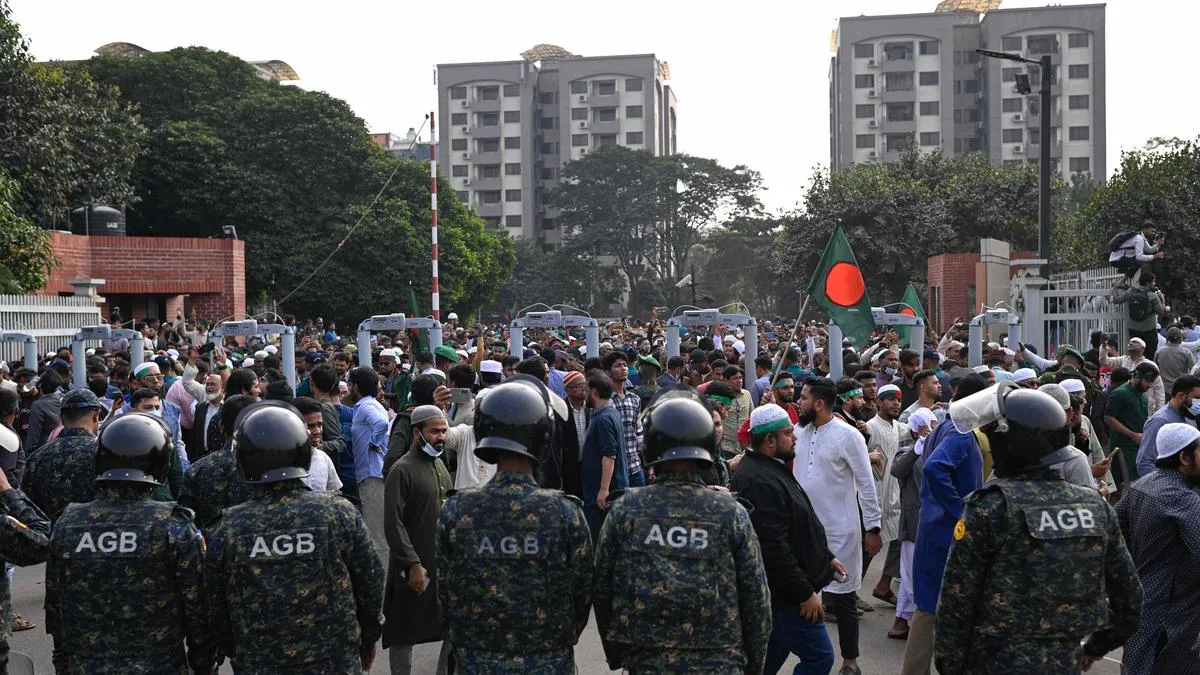
Muhammad Motaleb Shikder, a prominent figure in Bangladesh's National Citizen Party, was hospitalised after sustaining gunshot wounds in Khulna district on December 22. Shikder, who serves as the head of the party's labour wing, Jatiya Sramik Shakti, was attacked during a period of escalating tensions following the recent assassination of student leader Sharif Osman Bin Hadi.
The violence in Bangladesh has intensified following the death of Hadi, who succumbed to injuries sustained from a shooting in Dhaka. Hadi was a key leader in the student protests against the government of Sheikh Hasina and was widely regarded as a significant voice of dissent. His death on December 18 sparked protests across the nation, leading to clashes and vandalism.
In an interview with the news agency ANI, Hasina condemned the interim government led by Muhammad Yunus, attributing the rising violence to its policies. Hasina warned that the deteriorating law and order situation could negatively impact relations with India, highlighting the broader implications of domestic unrest.
Shikder was shot at around 11:45 a.m. near Gazi Medical College Hospital in Khulna. Reports indicate that the gunmen targeted his head, and he was rushed to Khulna Medical College Hospital in critical condition. Hospital officials reported that the bullet entered through one ear and exited through the other, but he is now out of danger.
Local officials from the Bangladesh National Citizen Party expressed concerns over the attack, which occurred while Shikder was preparing for a rally. Animesh Mondol, officer-in-charge of Sonadanga Model Police Station, confirmed the details of the incident and stated that investigations are underway.
This incident is part of a broader narrative of violence impacting Bangladesh's political landscape. Following Hadi's assassination, thousands of protesters took to the streets demanding justice, reflecting widespread frustration with the current regime.
In a related incident, the Kerala government in India has accused the Rashtriya Swayamsevak Sangh (RSS) of hate politics following the lynching of a migrant worker from Chhattisgarh, Ramnarayan Baghel, in Palakkad. Local officials have alleged that Baghel was targeted after being wrongfully identified as a Bangladeshi national. The state’s Local Self Government Minister, M.B. Rajesh, attributed the violence to a growing climate of intolerance fueled by political factions.
The Kerala Police have arrested five individuals connected to the lynching, charging them with murder amidst allegations of political motivation behind the attack.
In Uttar Pradesh, a court sentenced five individuals to life imprisonment in a 2016 gang-rape case that had previously drawn national outrage. The incident involved armed assailants who held a family hostage, leading to widespread condemnation and a demand for justice. The Allahabad High Court had assigned the investigation to the Central Bureau of Investigation, which has been scrutinising the case since its inception.
Amid these developments, the Supreme Court of India has taken notice of alleged large-scale encroachments on forest land in Uttarakhand. The court has directed state authorities to establish a fact-finding committee to assess the situation and report on the encroachments, highlighting the need for immediate action to protect forested areas.
The escalating violence in both Bangladesh and India underscores the complex interplay of politics, social unrest, and the struggle for justice in the region. As the situation evolves, many are calling for accountability and a return to peace in the face of growing tensions.
Concerns Rise Over Delhi Voter Registration Discrepancies
Controversy Erupts Over Rahul Gandhi's PM Modi Mimicry at Event

Father of IIT Bombay Student Calls for Action Against Discrimination

India and Japan Conduct Joint Air Exercise 'Veer Guardian-2026'