Australia Introduces Gun Buyback Scheme Following Bondi Beach Attack


The Australian government has unveiled a comprehensive gun buyback initiative in response to the tragic shooting at Bondi Beach, marking the deadliest mass shooting in the country in several decades.
This new scheme represents the most significant government action on firearms since the Port Arthur massacre in 1996, which resulted in 35 fatalities and led to the establishment of some of the world's most stringent gun control laws.
On Sunday, the shooting claimed the lives of fifteen individuals and left many others injured when two gunmen opened fire during a Jewish festival at the popular beach venue. Authorities believe the attackers were driven by ideologies linked to Islamic State.
In a separate development, police confirmed on Friday there were no further grounds to continue detaining a group of men arrested in Sydney in connection with extremist ideologies.
The police have classified the Bondi Beach incident as a terrorist attack, allegedly perpetrated by a father-son pair. Naveed Akram, aged 24, has been charged with 59 offences, including 15 counts of murder and one charge of committing a terrorist act. His father, Sajid, was reportedly killed during the attack.
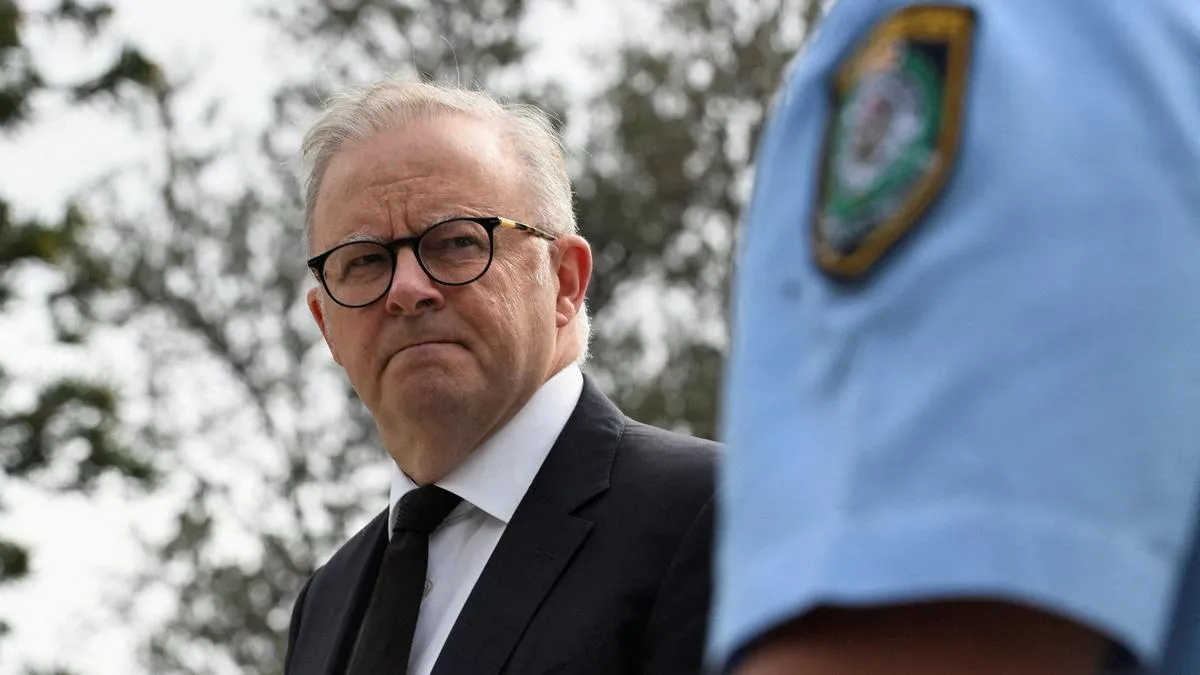
Following the incident, the national cabinet, comprising representatives from the federal government and state leaders, convened to discuss tightening gun regulations. Prime Minister Anthony Albanese addressed the media on Friday, highlighting that Australia currently has over four million firearms in circulation, a figure that exceeds the number present at the time of the Port Arthur massacre.
"We understand that one of these terrorists possessed a firearm licence and owned six guns, despite residing in a suburban area of Sydney. There is no justification for such an individual to require that many firearms," Albanese stated.
Australian Federal Police Commissioner Krissy Barrett emphasised the importance of the buyback scheme as a crucial element in reducing the overall number of guns. She remarked, "If you're going to reduce the number of guns, then a buyback scheme has to be a piece of that puzzle."
The proposed buyback will focus on acquiring surplus, newly prohibited, and illegal firearms, with funding provided on a 50-50 basis by both state and federal governments. The government anticipates the collection and destruction of hundreds of thousands of firearms under this initiative.
In addition to the buyback scheme, the national cabinet has agreed to implement stricter regulations on the number of firearms an individual can possess, impose limits on open-ended firearm licensing, and restrict the types of firearms that are legally available. Moreover, holding Australian citizenship will now be a prerequisite for obtaining a firearm licence.
Efforts to establish a national firearms register will be expedited, allowing firearm regulators enhanced access to criminal intelligence.
On Friday, New South Wales Police indicated plans to release seven men associated with extremist ideologies but assured the public that these individuals would continue to be monitored. Tactical officers had previously detained the group in the suburb of Liverpool, where they found a knife but no firearms or additional weapons.
NSW Police Commissioner Mal Lanyon stated during a press briefing that there was "no confirmed link" between the suspected terrorists and the group that had been detained, although Bondi Beach was one of several locations they planned to visit. "While the precise threat posed by these individuals remains uncertain, we were not willing to accept any risk of potential violence," Commissioner Lanyon added.
Kerala Initiates Probe into 2006 Suicide Case Involving CEC

Extradition of Sheikh Hasina Feasible, Says Indian High Commissioner

Punjabi Makeup Artist Mad Sandhu Shot Dead in Amritsar

India Achieves Fourth Place at Asian Games 2026 Through Late Success