AMD Launches Helios AI Rack System to Compete with Nvidia


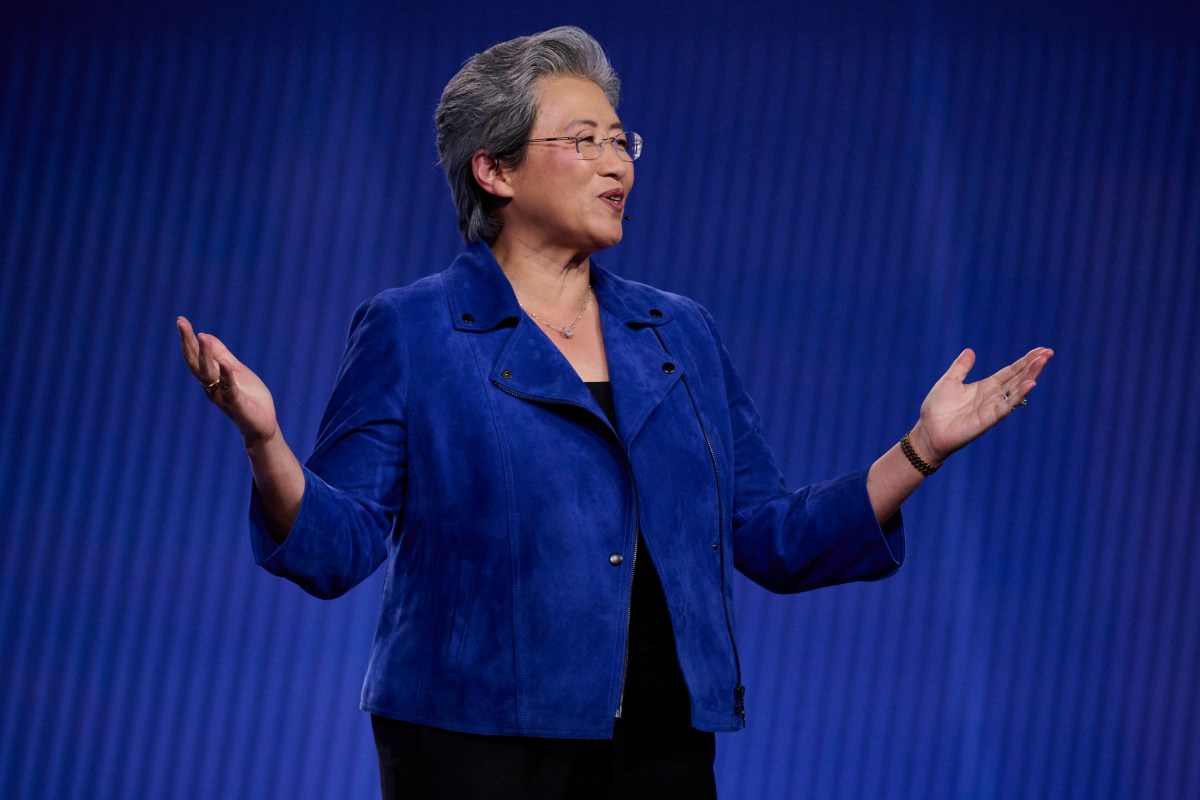
Chipmaker Advanced Micro Devices (AMD) has announced the full-scale production of its latest AI-focused equipment, the Helios AI rack-scale system. This new system is positioned to compete directly with Nvidia's well-established products. During the company's Advancing AI conference held in San Francisco, AMD Chair and CEO Dr. Lisa Su highlighted the capabilities of Helios, which is set to ship later this year. The Helios system is designed specifically for the needs of major AI labs, combining multiple processors to operate as a single, high-capacity unit. This is particularly vital in data centres that handle AI model training and other complex workloads.
Dr. Lisa Su referred to Helios as the technology sector's 'highest-performance AI rack,' stating that it has been engineered to handle some of the most sophisticated AI models globally at substantial scales. AMD's introduction of Helios comes as it aims to carve out a share of a market historically dominated by Nvidia with its Vera Rubin and Grace Blackwell rack systems. Initial performance benchmarks suggest that Helios may outperform its competitors on several fronts, as reported by The Register.
The new system already has a range of notable customers lined up for deployment, including OpenAI, Meta, Oracle, and Microsoft, with Microsoft CEO Satya Nadella confirming plans to expand its Azure infrastructure using Helios. Additionally, a strategic partnership was formed between AMD and Anthropic to facilitate the deployment of up to two gigawatts of graphics processing units (GPUs) through Helios.
Alongside the announcement of Helios, AMD introduced its Venice-X central processing unit (CPU), optimised for high computing workload environments in data centres. Venice-X is anticipated for release in 2027. Dr. Su provided insights on the overall trajectory of the chip industry, predicting that by 2030, chips that power AI will constitute a significant portion of the computing market. She noted a 'step change in compute demand' attributed to the emergence of agentic AI systems, which require extensive computational resources for their operation.
"When you ask the agent to do something, it has to reason and access data continuously until the problem is resolved; thus, extensive GPU resources are essential," Dr. Su explained. According to her estimates, the AI accelerator market could grow to approximately $1.4 trillion by the end of the decade, nearly matching the size of the entire semiconductor market today. She emphasised that GPUs would dominate this market due to the ongoing evolution of algorithms and workloads, which favour programmability within the silicon ecosystem.

Kerala Initiates Probe into 2006 Suicide Case Involving CEC

Extradition of Sheikh Hasina Feasible, Says Indian High Commissioner

Punjabi Makeup Artist Mad Sandhu Shot Dead in Amritsar

India Achieves Fourth Place at Asian Games 2026 Through Late Success