8th Pay Commission Set to Revise Salaries for Central Employees


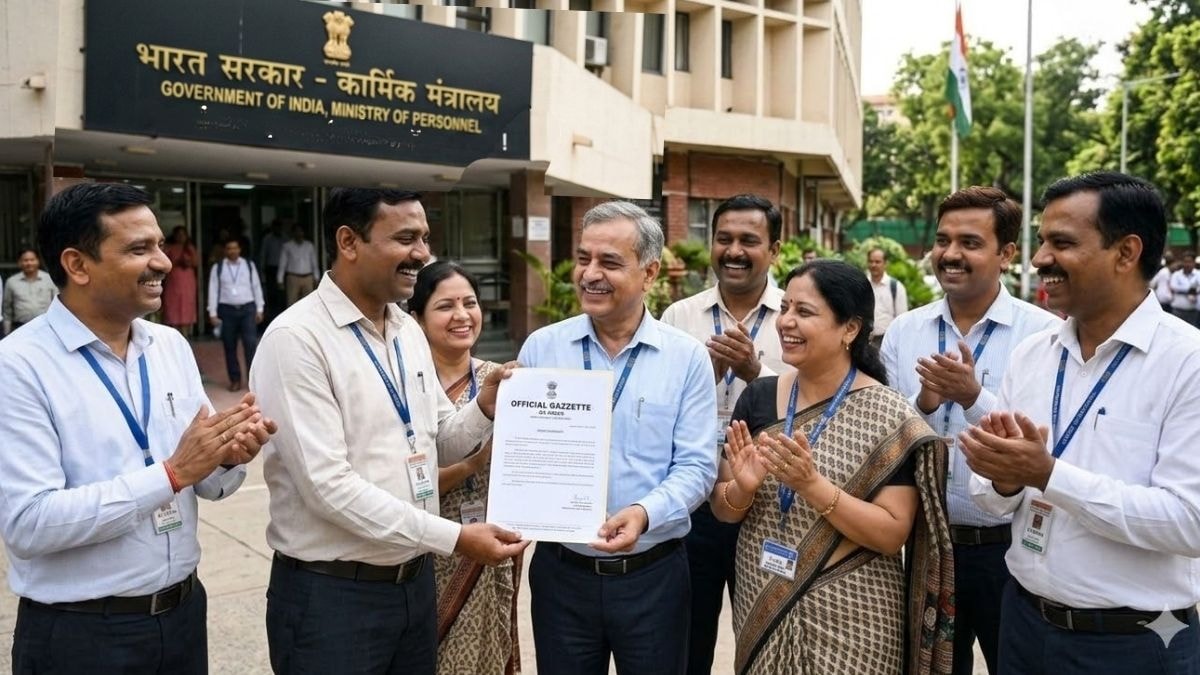
The 8th Pay Commission, formed under the leadership of Indian Prime Minister Narendra Modi, is preparing to implement significant salary adjustments and salary structures for central government employees and pensioners. The Commission was launched in January 2024, with its Terms of Reference released later that year in November. Following its establishment, anticipation has been mounting regarding revisions to salaries, pension adjustments, and other financial elements relevant to employees and pensioners.
Typically assembled every decade, Pay Commissions are tasked with modifying salary scales, allowances, and pensions for central government personnel and retired military members. Moreover, these commissions assess the broader effects of their recommendations on factors such as government expenditure related to employee remuneration. This current iteration is the eighth commission initiated since India gained independence in 1947.
Former Supreme Court Justice Ranjana Prakash Desai heads the Commission, with Professor Pulak Ghosh, a tenured Finance professor and member of the Economic Advisory Council to the Prime Minister, and Pankaj Jain, a former Indian Administrative Service official, serving as member-secretary. The panel is set to collect feedback from unions, labour bodies, ministries, pension organisations, and other stakeholders, analysing these inputs to formulate salary structures and pension formulas for impacted groups.
Formal invitations for memorandum submissions were extended in March and April 2026, coinciding with scheduled consultations, including a significant meeting in Dehradun on 24 April 2026. Officially notified on 17 January 2025, the Commission is anticipated to come into effect by 1 January 2026. However, comprehensive recommendations are still awaited. Historical context suggests that past commissions required approximately two years for complete implementation; the seventh took two and a half years, while the sixth required two years, and the fifth lasted three and a half years.
The fitment factor is critical, serving as a multiplier that adjusts an employee's existing basic pay into a revised amount. Should this factor increase, employees’ and pensioners’ salaries would see a more substantial increase. For example, a fitment factor in the range of 2.60 to 2.85 could result in overall salary hikes of between 24% to 30%. Current salaries ranging from ₹20,000 to ₹22,000 could consequently rise to approximately ₹46,600 to ₹57,000. Employee groups have advocated for a fitment factor between 3.0 and 3.25, aligning with inflation trends and recent economic contexts, which could dramatically shape the revised pay structure.
Another crucial aspect of this impending revision is the management of arrears, typically calculated from the completion date of the preceding commission. The adjustments have historically varied widely and have been dependent on the timelines involved.
The Dearness Allowance (DA), a component included to counteract inflation and maintain employees' purchasing power, is under review. This allowance is revised biannually. Over time, the share of basic pay within total salary structures has decreased—from approximately 65% to around 50%, while allowances have conversely increased. There are discussions regarding the potential merging of the DA into the basic salary, leading to a restructured salary framework. "This would mean that the DA, currently a separate allowance, would be integrated into the employee's base salary, causing a recalibration of other salary components and retirement benefits," commented CA Chandni Anandan, a Tax Expert at Clear Tax.
The last adjustment to the DA occurred in October 2025, with a rise of 3%, based on the recommendations of the 7th Central Pay Commission. As the fitment factor is revised, salary scales are also expected to rise accordingly. The salary adjustments from the 8th Pay Commission will directly stem from the proposed fitment factor established by its members. This development could see around 5 million central government employees, including military personnel, and approximately 6.5 million retired government pensioners experiencing a significant increase in their base salaries, potentially rising from ₹18,000 to ₹51,480.
The individual increments will be based on the specific employee levels, with 18 classifications recognised, leading to salary increases ranging from approximately ₹38,500 to more than ₹2 lakh, depending on employee tier. Similarly, pension payouts for former government employees are also likely to rise proportionately with the new salary structure. The current minimum pension, around ₹9,000, could be elevated to between ₹22,500 and ₹25,200 contingent on the final set fitment factor and subsequent changes from the Commission.
Individuals interested in these updates should remain informed about official announcements as they become available.
Kerala Initiates Probe into 2006 Suicide Case Involving CEC

Extradition of Sheikh Hasina Feasible, Says Indian High Commissioner

Punjabi Makeup Artist Mad Sandhu Shot Dead in Amritsar

India Achieves Fourth Place at Asian Games 2026 Through Late Success