Xi Jinping Hosts Landmark Summit with Trump and Putin in Shenzhen


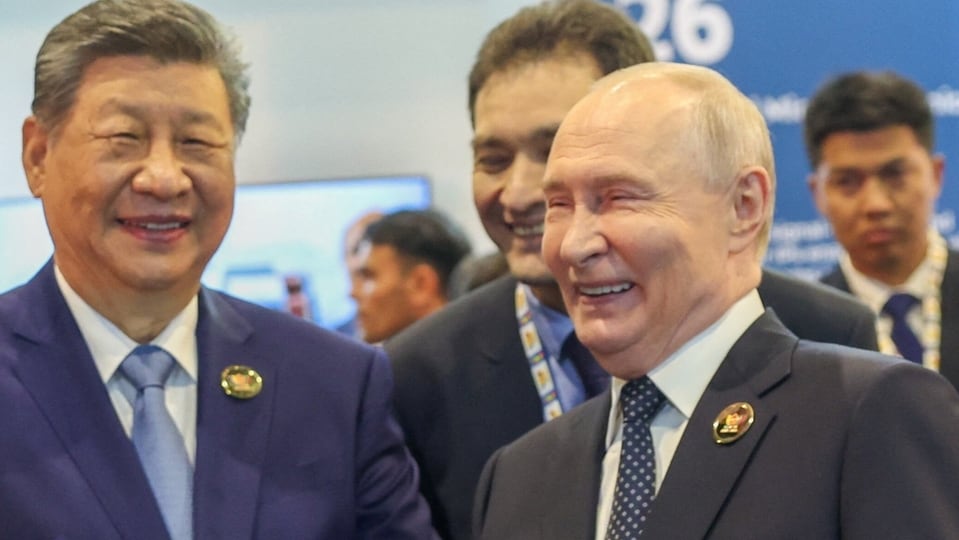
Chinese President Xi Jinping hosted a significant diplomatic summit in Shenzhen, bringing together key global leaders Donald Trump and Vladimir Putin. This unprecedented gathering has been viewed as a strategic move by Xi to position China at the forefront of international discourse, reflecting its evolving role in global politics.
The summit was part of the Asia-Pacific Economic Cooperation (APEC) gathering, where Xi advocated against trade protectionism, calling for enhanced cooperation among nations. As the opening day unfolded, Xi welcomed Trump at the airport with an unusual hug, a gesture highlighting a warm but complex relationship amid rising tensions between the two nations.
In his keynote address, President Xi emphasised the importance of a rules-based multilateral trading system. “We must firmly uphold the WTO-centred, rules-based multilateral trading system,” he stated, highlighting that global supply chains and free trade are essential for collective economic growth.
In stark contrast, President Putin delivered remarks that underscored Russia's defiance against Western sanctions imposed after its invasion of Ukraine. He characterised these sanctions as ineffective, asserting that they had ultimately bolstered Russia's resolve. “Experience has shown that the traditional tools of economic dominance... have largely run their course,” he declared.
Trump, meanwhile, expressed a desire for discussions on nuclear weapons limits, drawing attention to China's expanding arsenal. The urgency for arms control came into sharper focus as the New START treaty, the last major arms control agreement between the US and Russia, expired earlier this year.
The ongoing war in Ukraine loomed large over the discussions. China has attempted to maintain a careful stance of neutrality, advocating for negotiations without condemning Russia's actions. This delicate position presents challenges for Xi, as he aims to keep a favourable relationship with Moscow while avoiding fallout with European markets and preserving China's economic interests.
Economically, China is currently facing significant domestic hurdles, including a property crisis that has dampened consumer confidence and a youth unemployment rate that hovers at alarming levels. The country has been grappling with local government debts and a slowdown in manufacturing, raising concerns about stability within Xi's administration.
As the world watches the summit closely, Xi's challenge will be to balance his nation's growing influence without alienating key trading partners, particularly in Europe. Furthermore, while the expectant outcomes from the meetings of the three leaders remain uncertain, the significance of this summit cannot be overstated.
Ultimately, the summit could enhance Xi's domestic credibility, reinforcing the narrative that China is no longer merely responsive to Western actions. As he seeks to secure a historic fourth term at next year's Communist Party Congress, a successful appearance alongside Trump and Putin may help alleviate some of the internal pressures faced by his administration.
The trilateral meeting, held on the final day of the summit, draws significant attention as it reflects not only the current geopolitical landscape but also the shifting dynamics of power among the world's most influential leaders. Analysts speculate on whether this assembly will yield any actionable agreements, but its symbolic value in showcasing Xi's leadership is already clear.
Counter-Terrorism Efforts Reduce Recruitment in Jammu and Kashmir

Islam Set to Surpass Christianity as Largest Religion by 2035
US Secretary of State Marco Rubio Applauds Recent Quad Meeting

IndiGo Suspends Flights to Saudi Arabia Amid Security Concerns