World Food Programme Reduces Gaza Aid Amid Funding Shortages


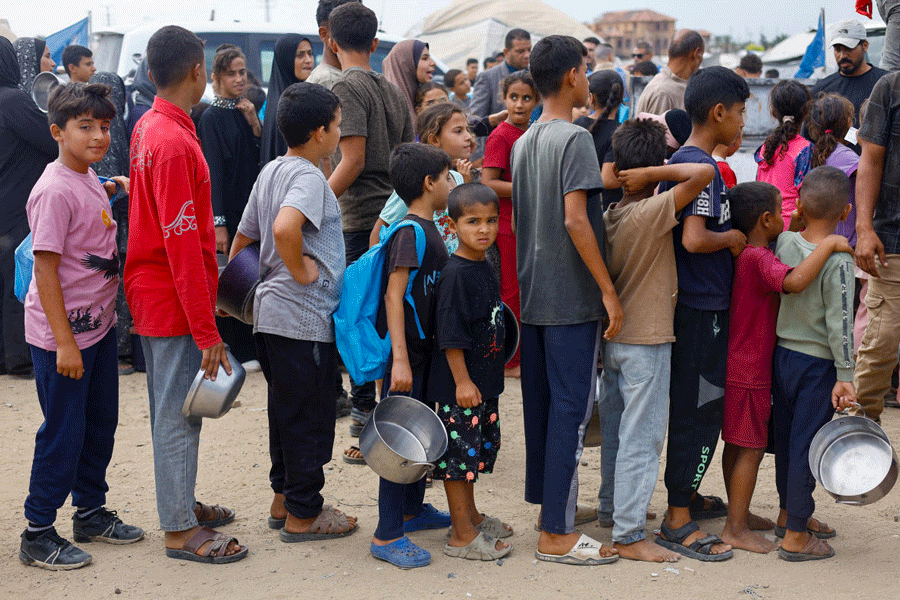
The World Food Programme (WFP), a key provider of food aid to the Gaza Strip, has announced it will significantly decrease its lifesaving assistance due to insufficient funding. Approximately 1.1 million people will now receive support, down from 1.6 million. This comes as winter approaches and amid ongoing struggles for many families in the territory.
Currently, the number of daily hot meals provided by community kitchens will be reduced from 250,000 to 150,000. Residents in remote areas near the Yellow Line, which separates Israeli-controlled zones from others, will now receive meals every other day, rather than daily.
Displacement remains widespread across Gaza, where nearly all of the 2.1 million residents are affected. Two-thirds depend on food aid for survival. "It’s a disaster! What will we do with these reduced rations? How will we provide for the little ones?" expressed Mervat al-Satari, a mother of five in a camp in the al-Mawasi area of Khan Younis, regarding the WFP’s announcement. Another resident, Sawsan Bahloul, noted the severity of the situation as her family faces reduced portions from community kitchens.
According to Shaun Hughes, the WFP's Palestine director, the cuts are driven by financial constraints rather than a decrease in need or accessibility. In recent months, cash transfers to about half a million individuals have already diminished, impacting their purchasing power in local markets. Monthly recipients of flour and ration boxes from the WFP will now decrease from 1.1 million to 600,000.
The WFP reported a drastic drop in funding for its operations in Palestine, with less than half the resources available compared to previous years. The agency is urgently seeking $450 million (£338 million) to sustain crucial operations over the next six months. Despite a ceasefire established between Hamas and Israel last year, ongoing violence, including frequent Israeli strikes, has exacerbated the humanitarian crisis, hindering reconstruction efforts.
Food markets may appear well-stocked; however, many families are unable to afford the essentials. Over 80% of Gaza's population faces unemployment, rendering them reliant on aid. Families reliant on WFP’s assistance have previously expressed concern that their current provisions are insufficient for proper nutrition, noting limited variety and quantity.
Dalal al-Dahdouh, living among the ruins of her home in Gaza City with her eight-member family, described the dire conditions, reflecting on the stark difference from their previous quality of life. "Now we live entirely on aid, including WFP vouchers," she stated. Additionally, the absence of cooking gas has forced many families to seek alternative fuel sources, such as burning plastic and cardboard, which are not ideal for food preparation.
"It’s a very concerning humanitarian situation: people living in brutal conditions, mostly without proper homes, lacking access to water, sanitation, and healthcare," Hughes remarked. He cautioned that reduced food assistance would worsen hardships experienced by families over the past three years.
Though there has been a slight improvement in conditions since last year, acute food insecurity remains a critical concern, with experts warning of potential famine. The Integrated Phase Classification (IPC) indicated that two-thirds of the population—that is 1.4 million individuals—might experience crisis levels of food insecurity during the latter half of 2026.
For the time being, the WFP will continue to assist bakeries that supply a third of the bread consumed in Gaza and provide nutritional support to approximately 300,000 women and children, alongside delivering healthy snacks to 200,000 children. In the occupied West Bank, around 200,000 Palestinians continue to receive aid, although the WFP cut the number of recipients by half in September. Rising food insecurity in that territory is attributed to increased violence and displacement among Palestinian communities.

Ceasefire Agreed in Oleshky Amid Ukraine's Humanitarian Crisis

Donald Trump Hints at US Interest in Cuba After Conflict in Iran

UK Court Rules Against India in RAKIA Investment Dispute

India Raises Concerns Over Chinese Border Patrolling Deviations