US Revisits Naval Blockade on Iran Amid Rising Tensions in Gulf


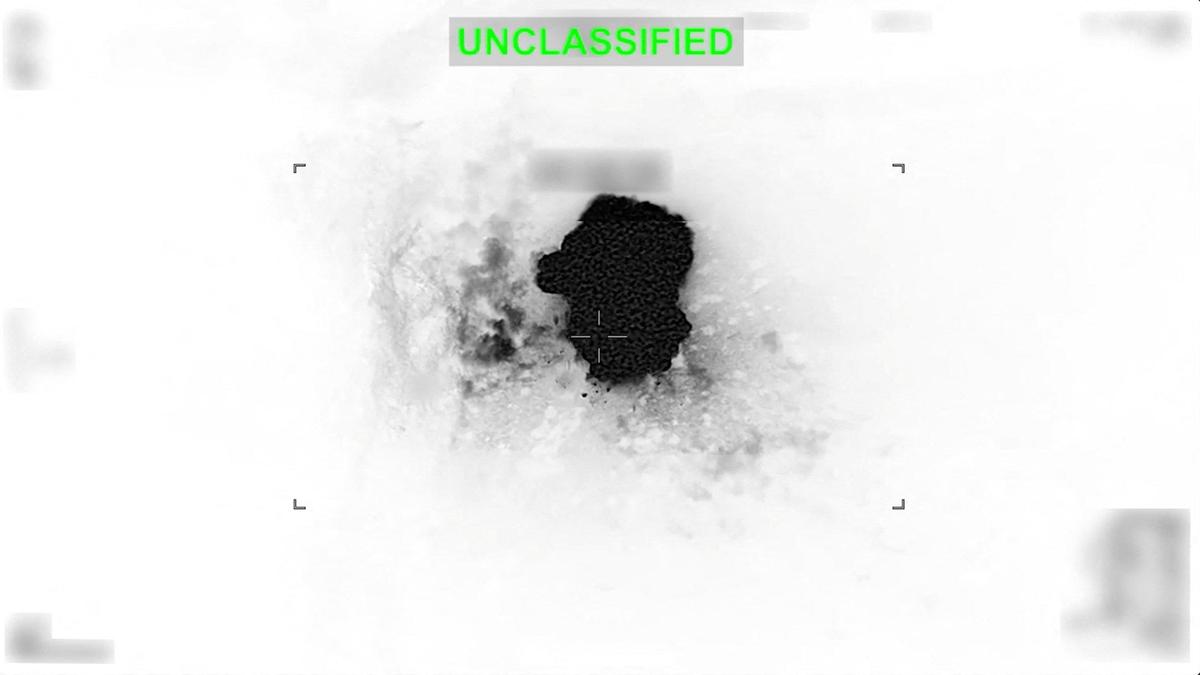
In a significant escalation of tensions, the United States has reimposed a naval blockade on Iranian ports. This decision comes less than a month after the signing of a Memorandum of Understanding aimed at fostering peace in the region. The United States Central Command (CENTCOM) announced on Wednesday that it has concluded its latest series of strikes against Iran, responding to attacks from Iran on ships in the strategically important Strait of Hormuz.
The blockade officially restricts maritime traffic to and from Iranian coastal areas, although Iranian authorities maintain that their control over the Strait of Hormuz will remain intact. In a show of force, the Islamic Revolutionary Guard Corps (IRGC) reportedly launched drone and missile strikes targeting U.S. military assets located in Bahrain, Kuwait, and Jordan overnight.
A recap of the situation highlights a series of military actions taken by both sides. CENTCOM confirmed that at approximately 02:00 GMT on Wednesday, it initiated another wave of attacks on Iranian military installations. The operation lasted for seven hours, with U.S. fighter aircraft, drones, and naval vessels targeting various military assets along Iran's coastline. Reports from Iranian media indicate that U.S. strikes damaged a civilian maritime watchtower in the city of Chabahar, which serves as a vital facility for search-and-rescue operations.
According to Iranian health officials, over 260 individuals sustained injuries, with claims of more than 30 civilians losing their lives in these recent U.S. attacks. The Kuwaiti military has also confirmed retaliatory measures in response to Iranian missile strikes, urging the public to adhere to safety measures as four personnel were reported injured from an Iranian attack on a Kuwaiti Naval Force vessel.
In Bahrain, air raid alerts were issued, advising residents to seek safe locations. The Jordanian military reported successfully intercepting and destroying four Iranian ballistic missiles that had crossed into its airspace.
Following the reimposition of the U.S. blockade, Iranian Deputy Foreign Minister Kazem Gharibabadi declared the memorandum with the U.S. void. In further provocative statements, the IRGC threatened to obstruct energy exports from the Middle East, declaring that the region's oil and gas supplies will be available either for everyone or for no one.
The U.S. Treasury Department has taken additional sanctions measures, recently freezing more than $130 million linked to cryptocurrency wallets associated with the Central Bank of Iran. In related diplomatic manoeuvres, U.S. Defense Secretary Pete Hegseth met with Iraqi Prime Minister Ali al-Zaidi to outline conditions for a closer partnership, emphasising the need for Iraq to assert sovereignty and disarm Iran-aligned militias.
Amir-Saeid Iravani, Iran's permanent representative to the United Nations, expressed strong condemnation of U.S. actions, characterising America as the aggressor. This viewpoint is further supported by a statement from the Iranian news agency IRNA, wherein Iravani condemned the U.S. for undermining the recent agreements soon after their inception. Amid all this tension, both military actions and diplomatic rhetoric showcase how volatile the situation remains in the Gulf, with potential implications for regional stability and international relations.

Kerala Initiates Probe into 2006 Suicide Case Involving CEC

Extradition of Sheikh Hasina Feasible, Says Indian High Commissioner

Punjabi Makeup Artist Mad Sandhu Shot Dead in Amritsar

India Achieves Fourth Place at Asian Games 2026 Through Late Success