US Military Stockpiles Diminished Amid Ongoing Iran Conflict


The military campaign launched by the United States in Iran has initiated noticeable strains on its operational capabilities. Internal assessments within the Pentagon indicate a swift decline in critical high-end munitions due to the conflict that commenced in late February. This situation has necessitated heavy drawing from stockpiles that were primarily prepared for potential conflicts with nations such as China and Russia.
Key data points reveal that the United States has deployed around 1,100 Joint Air-to-Surface Standoff Missile-Extended Range (JASSM-ER) cruise missiles, which are stealth weapons crafted for long-range use. This represents a significant depletion of a total inventory that stood at approximately 2,600, leaving only about 1,500 in reserve, according to classified Pentagon documents cited by the New York Times.
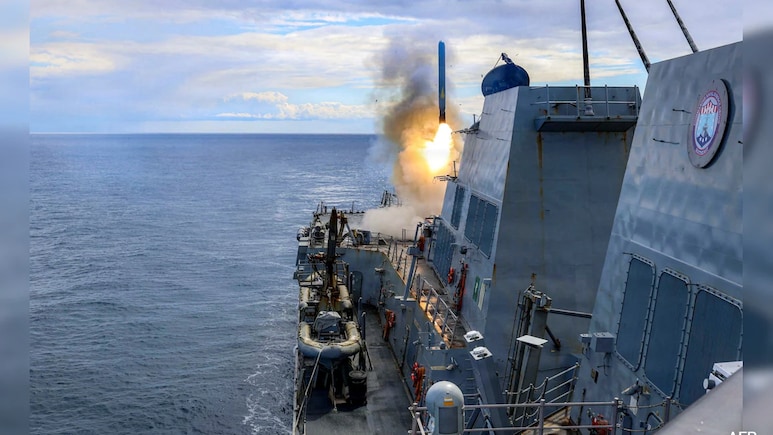
Furthermore, the military has unleashed over 1,000 Tomahawk cruise missiles, a figure that far exceeds the annual procurement rate by tenfold. Each Tomahawk missile carries a hefty price tag of about USD 3.6 million, intensifying the financial implications of sustained military operations. In conjunction with this, the Pentagon has used more than 1,200 Patriot interceptor missiles, each valued at nearly USD 4 million, while only around 600 were produced throughout 2025.
The emergency measures taken also include ground systems such as Precision Strike Missiles and Army Tactical Missile Systems (ATACMS), which have been utilized extensively, amplifying the drain on reserves. Officials have voiced concerns that the current rate of usage significantly surpasses the existing production capabilities, indicating potential gaps in America's global defence posture in the foreseeable future.
Financially, the conflict has incurred staggering costs. According to independent estimates issued by various groups, including the American Enterprise Institute, total expenses for the operation are projected between USD 28 billion and USD 35 billion, which translates to an almost daily expenditure of approximately USD 1 billion. Reports suggest that US forces expended nearly USD 5.6 billion worth of munitions in the conflict's opening two days.
The Pentagon's publicly stated figures indicate over 13,000 targets have been struck during the 38-day operation. However, analysts argue that this number underestimates the total munitions used, as many targets necessitated multiple strikes. The military operations have also incurred unexpected equipment losses. During a rescue mission involving Navy SEAL Team 6, the destruction of two MC-130 cargo planes and at least three MH-6 helicopters was executed to avert sensitive technology from being captured by Iranian forces, accumulating losses estimated at USD 275 million.
In a major operational shift, the demand for ammunition has forced the United States to redirect military resources from other strategic regions, thus compromising its global defence posture. Reports highlight that equipment and supplies have been reallocated from both Europe and Asia to reinforce operations managed under US Central Command. Concerns among European officials indicate that diminished stockpiles pose risks to the North Atlantic Treaty Organization's (NATO) defence against potential threats from Russia.
Training exercises have seen reductions, and shortages in both surveillance and attack drones have impaired operational capabilities in various theatres, especially in the Indo-Pacific region. The USS Abraham Lincoln carrier strike group was redeployed from the South China Sea to the Middle East, and two Marine Expeditionary Units were also redirected from the Pacific. Additionally, advanced missile defence systems, including Patriot and Terminal High Altitude Area Defense (THAAD) systems stationed in South Korea, have been reassigned, prompting worries regarding US preparedness against North Korea.
Admiral Samuel J. Paparo Jr. has acknowledged during a Senate hearing the limitations posed by dwindling inventories, stating that “there are finite limits to the magazine.” Senator Jack Reed echoed these concerns, emphasising that replenishing the expended resources could take years at the current rates of production.
Historically, the Pentagon had negotiated long-term contracts with defence manufacturers, such as Lockheed Martin, intending to boost the output of missile systems and precision-guided munitions. However, officials now indicate that production enhancements have stalled owing to delays in congressional funding approvals. Consequently, the military finds itself in a precarious situation, maintaining rapid munitions expenditure with insufficient financial support to augment production efforts.
While discussions regarding military preparedness continue within Washington, the White House has downplayed the gravity of the situation, asserting that the US military remains “fully loaded” and capable of fulfilling its homeland defence responsibilities. The Pentagon has refrained from providing specific details on stockpile levels due to operational security considerations.
Analysts, including Mark F. Cancian, are cautiously optimistic, noting that although the US possesses many munitions with solid inventories, some crucial ground-attack and missile-defense systems were already in short supply prior to the conflict—and are now even scarcer.
The Iran war raises questions about the US military's long-term sustainability in heightened conflict scenarios. While the United States retains a formidable arsenal, the rapid depletion of key munitions, compounded by production constraints and escalating costs, introduces strategic vulnerabilities that may influence future operations.

Kerala Initiates Probe into 2006 Suicide Case Involving CEC

Extradition of Sheikh Hasina Feasible, Says Indian High Commissioner

Punjabi Makeup Artist Mad Sandhu Shot Dead in Amritsar

India Achieves Fourth Place at Asian Games 2026 Through Late Success