US Military Disables Merchant Vessel Amid Ongoing Iran Blockade


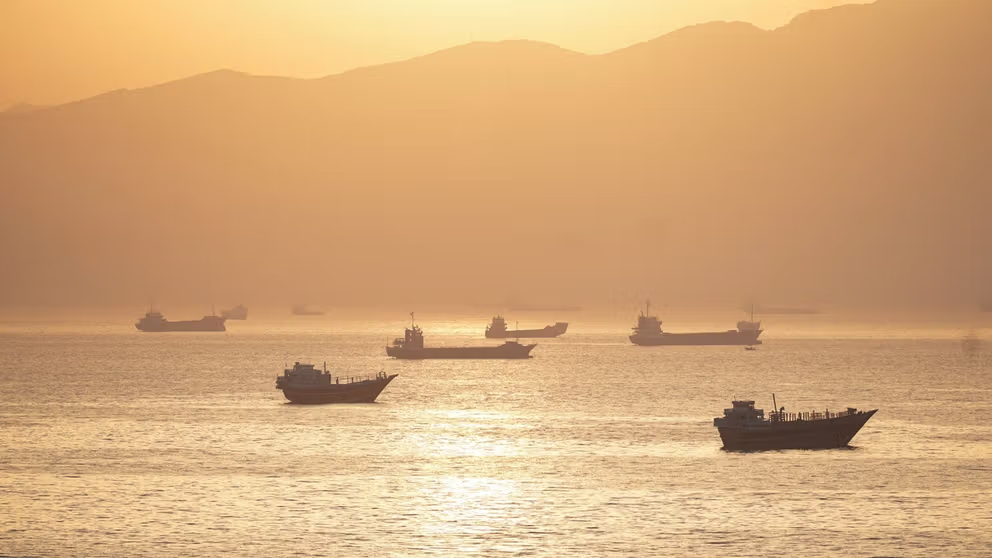
The United States military disabled a merchant vessel attempting to enter an Iranian port, as reported by The Associated Press. This action took place despite an ongoing American naval blockade aimed at restricting Iran's maritime activities. Secretary of War Pete Hegseth reiterated that the blockade remains effective, as discussions about a potential Iran deal proceed without a conclusive agreement.
Differences between US and Iranian narratives regarding the prospective agreement have emerged. Iranian media outlets linked to the Islamic Revolutionary Guard Corps (IRGC) claimed that no final deal exists, directly opposing statements from US officials. The Strait of Hormuz, a crucial waterway for global oil shipments, continues to feature prominently in discussions. Iranian authorities mention that around 20 ships traverse the strait daily, an operation coordinated by the IRGC, while US and UK forces have issued warnings about military actions occurring in the vicinity.
The situation in Iran has prompted internal strife, with news of intensified hardship. Reports indicate shortages of medicine and job cuts, alongside a resurgence of morality patrols. This context of societal pressure seems to complicate ongoing negotiations further, leading to warnings from hardliners within Iran against trusting discussions with the US, particularly concerning nuclear issues.
On the operational side, the US military disabled the Gambia-flagged bulk carrier Lian Star after it disregarded multiple warnings while heading toward an Iranian port. A US official, who spoke on condition of anonymity, confirmed that US aircraft rendered the vessel inoperative in the Gulf of Oman. Thus far, the US military has prevented six ships from entering Iranian waters, with one previously allowed to proceed.
In a related development, Iranian political prisoner Benyamin Naqdi, a martial arts champion, received a death sentence for his alleged involvement in protests held in Shiraz. His lawyer remarked that Naqdi faced severe allegations, including membership in groups that allegedly disrupt national security. While some charges were dropped, the Revolutionary Court ultimately classified the remaining counts under the jurisdiction of ‘corruption on earth’—a charge punishable by death in Iran.
Iran’s Khatam al-Anbiya Central Headquarters issued a stern warning that commercial vessels and oil tankers must adhere to designated routes within the Strait of Hormuz and receive permission from the IRGC Navy. Any attempt to disregard these regulations will be met with serious consequences, potentially escalating tensions in the maritime arena. The command stressed that military vessels disrupting the management of the strait would be treated aggressively by Iranian armed forces.
Oman’s Maritime Security Center also alerted navigators to exercise caution following reports of a floating object, believed to be a naval mine, spotted in the region. The ongoing conflict has seemingly left the Islamic Republic in a weaker position, raising questions about whether the United States will exploit this vulnerability to create diplomatic leverage or permit Iran space to recuperate through negotiations.
As perspectives diverge on the effectiveness of military versus diplomatic approaches, some officials in Washington believe a new deal could be on the horizon. President Donald Trump has indicated that progress is possible, yet major differences between the two nations remain unresolved. Hegseth remarked during his comments in Singapore that any agreement or continued military pressure must ensure the Strait of Hormuz remains open and free of tolls.
He emphasized the importance of this strategic waterway, asserting that while Iran claims control, US military presence significantly shapes the dynamics of the negotiations. "Everything behind the scenes shows that we are in control when it comes to that," Hegseth stated, reinforcing the role of US military pressure in upcoming discussions on Iran’s nuclear program.
Trump, Putin, and Xi to Meet at APEC Summit in Shenzhen, China
Congress Criticises Adani for Dramatic Cost Cut in Maharashtra Project

Urban Infrastructure Crucial for India's Manufacturing Growth

India Extends Ban on Zakir Naik's Islamic Research Foundation