Trump and Iraq's Prime Minister Discuss Economic Ties at White House


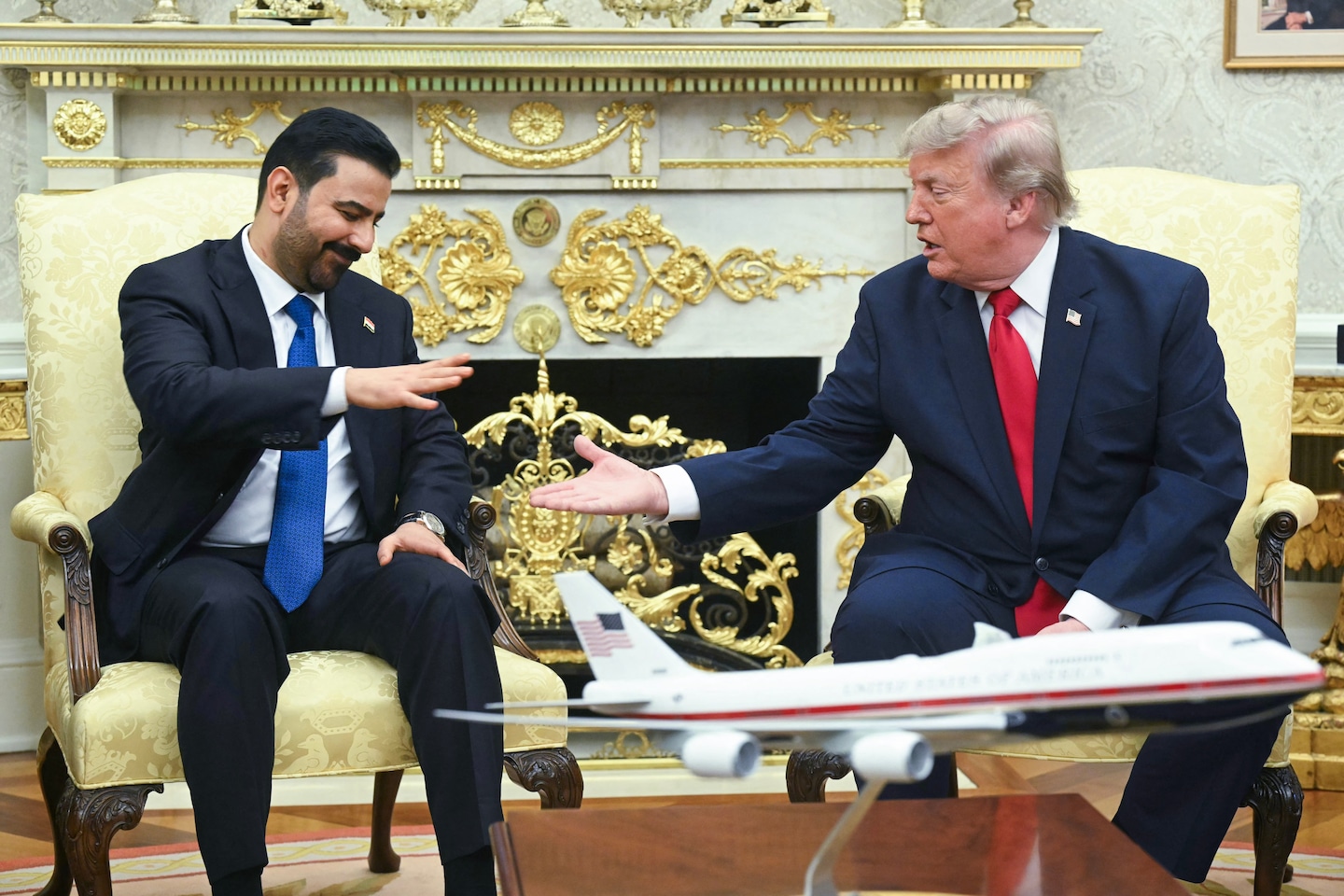
United States President Donald Trump and Iraqi Prime Minister Ali al-Zaidi met at the White House to discuss enhancing economic ties between their nations. This meeting took place in Washington, DC, and both leaders expressed intentions to increase Iraq's oil output. The encounter follows Trump’s endorsement of al-Zaidi, a businessman without prior political experience, while previously opposing the former Prime Minister Nouri al-Maliki, who has connections to Iran.
During the meeting, President Trump referred to al-Zaidi as 'a fantastic champion, a new champion.' He emphasised Iraq’s potential, highlighting its oil reserves while asserting, 'We’re going to be doing a lot of deals.' Trump further stated, 'We’re going to create a lot of jobs for both countries, and we’re going to be taking out a lot of oil.'
Prime Minister al-Zaidi characterised the visit as a significant milestone, noting that it signalled the start of a new economic partnership between the United States and Iraq. He stated that US-Iraqi relations are transitioning from a militaristic focus to one centred on economic collaboration.
Both leaders confirmed that the remaining US forces in Iraq, currently estimated to number fewer than 2,000, are set to withdraw by September 30. This date coincides with al-Zaidi’s commitment to disarm the multiple armed factions operating throughout Iraq.
Iraq has long been influenced by both the United States and Iran, leading to complex dynamics within its domestic politics. This meeting also came against a backdrop of ongoing tension stemming from the presence of US troops in Iraq, initially deployed to combat the Islamic State group. In his inaugural speech to parliament, al-Zaidi vowed to disarm the various paramilitary groups that have gained prominence since the US-led invasion in 2003. However, he has not disclosed specific strategies for this challenging undertaking.
Shortly before al-Zaidi's arrival in the United States, the Islamic Resistance in Iraq, an alliance of Iran-aligned armed groups, publicly rejected any potential outcomes from his visit.
Besides military considerations, al-Zaidi underscored economic challenges facing Iraq, particularly due to significant pressures from Iran. He called for a more substantial share of oil production from the Organization of the Petroleum Exporting Countries (OPEC), which he argues is necessary for rebuilding the nation. Iraq’s oil industry has faced severe setbacks, with 90 percent of its daily exports of approximately 3.4 million barrels passing through the strategically crucial Strait of Hormuz.
The prime minister referenced the devastating toll of the war against the Islamic State, stating, 'The damage suffered by Iraq exceeds $400 billion, and to this day, some Iraqis still have destroyed homes and are living in camps.' He affirmed, 'I have a plan to return them to their homes, and that is why I want a fair share for Iraq in OPEC.'
Kerala Initiates Probe into 2006 Suicide Case Involving CEC
Extradition of Sheikh Hasina Feasible, Says Indian High Commissioner

Punjabi Makeup Artist Mad Sandhu Shot Dead in Amritsar

India Achieves Fourth Place at Asian Games 2026 Through Late Success