Trump Announces Progress on Iran Agreement Including Strait Deal


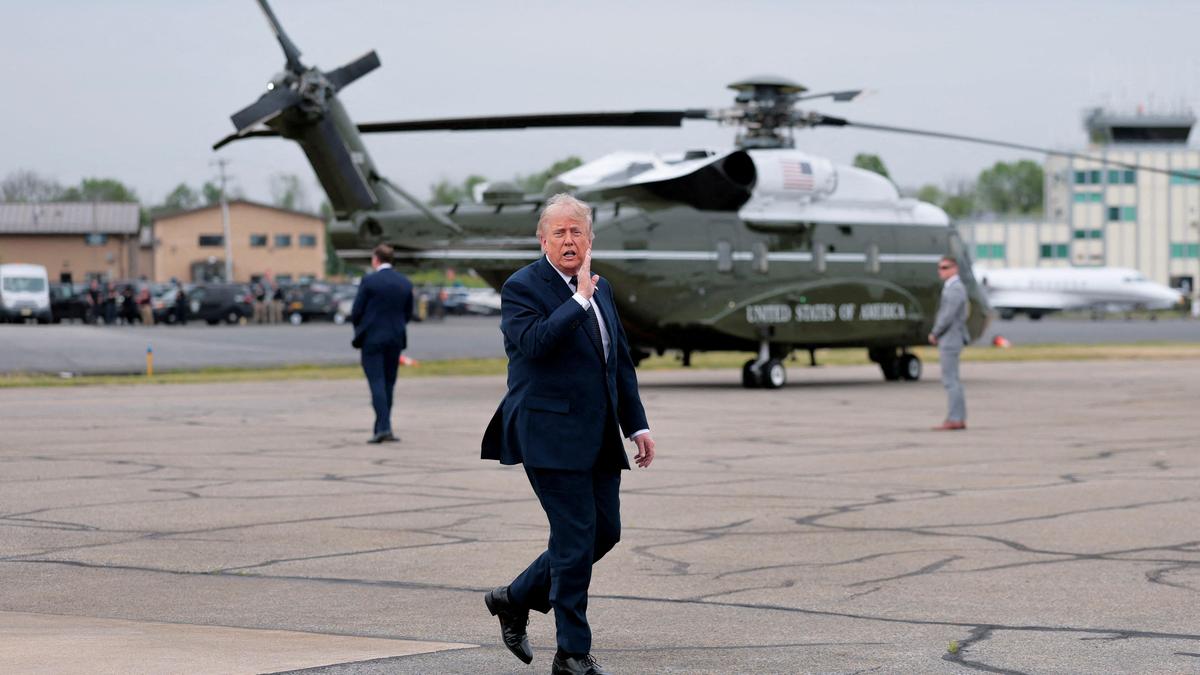
United States President Donald Trump announced on Saturday, May 23, 2026, that a potential agreement with Iran has been "largely negotiated". The proposed deal aims to address ongoing conflicts in the region and includes the opening of the crucial Strait of Hormuz, although the agreement remains subject to finalisation. Trump made the announcement on his Truth Social platform, indicating that discussions involved several nations, including Saudi Arabia, the United Arab Emirates, Qatar, and Pakistan.
The proposed memorandum of understanding reportedly addresses resolutions to various aspects of the conflict and seeks a formal end to the US-Israel war against Iran, which has continued since February. "An Agreement has been largely negotiated, subject to finalisation between the United States of America, the Islamic Republic of Iran, and the various other Countries," Trump stated.
Despite Trump's optimism, Iranian officials have cautioned that significant disagreements persist. The focus of the discussions has included the Strait of Hormuz, which remains vital for global oil transport, and Iran's nuclear programme. Iranian Foreign Ministry spokesman Esmaeil Baghaei remarked on a shift towards rapprochement but warned that the situation does not guarantee a comprehensive agreement.
The Iranian government states it is working on a detailed framework consisting of 14 clauses. Baghaei expressed hope that the final agreement details could be settled within a timeline of 30 to 60 days after the framework is completed. Iran's chief negotiator, Mohammad Bagher Ghalibaf, highlighted the potential for a robust response if hostilities were resumed by the United States.
The negotiations have unfolded against a backdrop of heightened tensions, including ongoing conflicts involving Iran-backed groups in Lebanon. Reports indicate that Israeli military actions have continued despite a ceasefire initiated in April 2026 after a US-Israeli strike triggered the broader conflict.
On the diplomatic front, Iranian officials have been in contact with various international partners, including discussions with Turkey, Iraq, Qatar, and Oman, highlighting the regional dynamics entwined in the negotiations. Additionally, calls for dialogue among Middle Eastern leaders illustrate the vested interest in achieving stability amid mounting pressures.
In a separate statement, Iranian officials reiterated that the agreement should allow Iran to manage the Strait of Hormuz, pushing back against US demands that may restrict their control over such a critical maritime route.
The negotiations are set against the backdrop of Iran's historical claims over the Strait, through which a substantial portion of the world's oil is transported. Iranian authorities maintain that they will only concede to arrangements that respect their territorial rights.
Should a formal deal be finalised, it may involve the reopening of the Strait of Hormuz for unrestricted shipping, while the US could relieve some economic sanctions on Iran, contingent upon Tehran's agreements regarding nuclear activities. The prospective deal remains tentative, presiding over significant geopolitical implications as both nations attempt to navigate through their longstanding discord.
Kerala Initiates Probe into 2006 Suicide Case Involving CEC
Extradition of Sheikh Hasina Feasible, Says Indian High Commissioner

Punjabi Makeup Artist Mad Sandhu Shot Dead in Amritsar

India Achieves Fourth Place at Asian Games 2026 Through Late Success