Three Indian Sailors Killed in US Airstrike on Gulf Tanker


Three Indian sailors have been reported dead following a US military airstrike on the MT Settebello in the Gulf of Oman. The attack was executed on Wednesday, with 24 Indian crew members aboard, of whom 21 were rescued. India's Shipping Minister Sarbananda Sonowal confirmed that the bodies of the deceased would be repatriated soon.
The US military has claimed that the tanker violated its blockade on Iranian ports, leading to the strike. This incident marks the third attack on vessels with Indian crew in the Gulf this week. Early on Thursday, it was confirmed that all 20 crew members aboard another vessel, the Jalveer, were safe after a separate attack near Oman. Three days prior, 24 crew members from the Marivex, another tanker under US sanctions, were rescued shortly before it sank.
The US Central Command reported that one of its aircraft deployed 'precision munitions' to strike the engine room of the Settebello, stating that the crew had repeatedly failed to comply with directives.
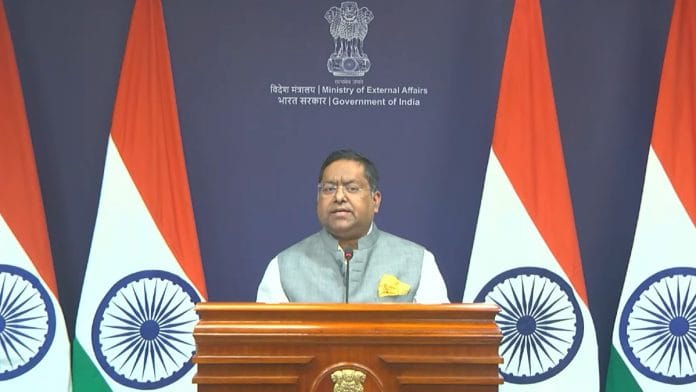
The situation intensified following the strikes on the Marivex on Monday and the Settebello. India's Ministry of External Affairs lodged an official complaint with the US, expressing severe concerns about these attacks. The Ministry's spokesperson, Randhir Jaiswal, stated that India requested the US Charge d'Affaires to discuss the matter urgently.
In a subsequent incident, another tanker, the Guinea-Bissau-flagged MT Jalveer, was attacked, with Royal Navy forces from Oman assisting in the crew's evacuation. Although the vessels are registered in different countries, a substantial number of crew members are Indian nationals.
Rajesh Sharma, the father of deceased sailor Aditya Sharma, expressed despair, saying the family awaited the return of his son's body. He questioned the decision-making behind the tanker’s proximity to the Strait of Hormuz, calling for an inquiry into the circumstances surrounding the incident. Sharma urged for accountability, stating, "Who is responsible for the deaths of the three Indian sailors? The circumstances that led to the deaths must be investigated."
The US has maintained a blockade on Iranian ports following accusations that Tehran attempted to close the strategically significant Strait of Hormuz, through which approximately 20% of the world’s oil and gas supplies are transported. Since enforcing the blockade, US operations have reportedly led to damaging eight vessels and redirecting 134 others.
The Indian government continues to advocate for an end to attacks on commercial shipping in the region. Manoj Yadav, General Secretary of the Forward Seamen's Union of India, stated that the union has reached out to affected families and expressed disbelief about the US’s claims of unawareness regarding the nationality of crew members on those ships.
India's shipping ministry reported that there are approximately 562 Indian seafarers onboard Indian-flagged vessels in the Gulf region, including 233 in the Gulf of Oman. Overall, more than 18,000 Indian seafarers operate within the larger Gulf area.
Tensions persist between Iran and the US, with recent exchanges of strikes exacerbating an already fragile ceasefire. The conflict escalated following a series of military actions, including a significant strike by the US and Israel that targeted Iran's leadership. President Donald Trump has warned Iran of severe consequences if the situation remains unresolved, asserting that negotiations are taking too long.
As the diplomatic landscape continues to evolve, the call for peace and stability in the region grows louder, with international dialogue focusing increasingly on maritime security in strategically important waters.

Kerala Initiates Probe into 2006 Suicide Case Involving CEC

Extradition of Sheikh Hasina Feasible, Says Indian High Commissioner

Punjabi Makeup Artist Mad Sandhu Shot Dead in Amritsar

India Achieves Fourth Place at Asian Games 2026 Through Late Success