Sonam Wangchuk Begins Hunger Strike Against Government Policies


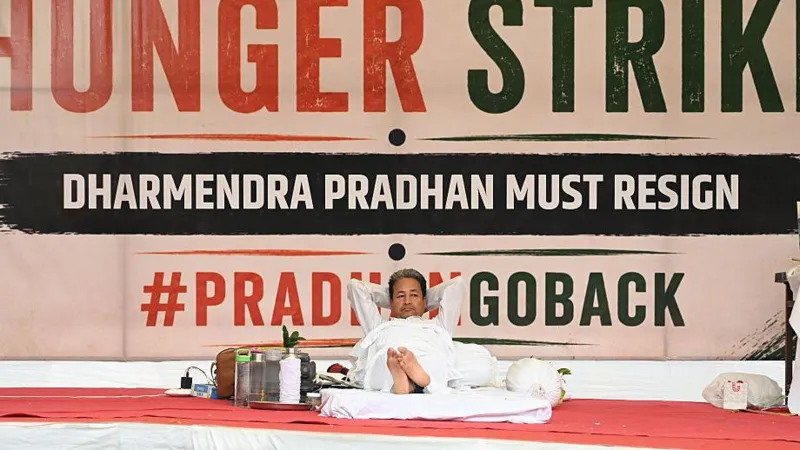
Sonam Wangchuk, a prominent activist known for his advocacy for the Ladakh region, has initiated a hunger strike at Jantar Mantar in New Delhi. This protest, which seeks to highlight the perceived failures of the government in addressing the unique challenges faced by Ladakh, has garnered significant attention from the public and media alike.
Wangchuk's protest commenced on July 17, 2026, and aims to draw focus to various pressing issues, including environmental degradation and the cultural impact of government decisions in Ladakh. The activist has consistently been vocal about the need for sustainable development practices that respect the local ecology and heritage.
The hunger strike aligns with calls for greater autonomy for Ladakh, a region that has seen substantial changes since its reorganisation in 2019. Since its transition to a Union Territory, there have been unresolved concerns from residents regarding the effective governance and representation of their interests.
In a statement made prior to the commencement of his protest, Wangchuk emphasised the importance of preserving the region's environmental biodiversity. He noted, “Ladakh is facing a crisis that cannot be ignored any longer. It is our responsibility to demand sustainable solutions that benefit both the people and the ecosystem.”
Wangchuk's hunger strike has also led to a gathering of supporters and fellow activists at the protest site, creating an atmosphere of solidarity and shared purpose. The events at Jantar Mantar come in a broader context of civil society activism in India, wherein citizens are increasingly demanding accountability from their government on various fronts.
Organisers have stated that the hunger strike is expected to continue until a satisfactory dialogue can be established with government officials regarding the issues raised. Members from various advocacy groups have pledged their support for Wangchuk, further amplifying the reach of the protest.
Activism in India has a long-standing history, often serving as a catalyst for significant policy changes. As this hunger strike unfolds, it is poised to contribute to the ongoing discourse surrounding governance, environmental protection, and cultural heritage in Ladakh. Wangchuk’s actions may highlight the growing need for reform and responsiveness from authorities concerning the region’s distinctive needs and aspirations.
Kerala Initiates Probe into 2006 Suicide Case Involving CEC

Extradition of Sheikh Hasina Feasible, Says Indian High Commissioner

Punjabi Makeup Artist Mad Sandhu Shot Dead in Amritsar

India Achieves Fourth Place at Asian Games 2026 Through Late Success