Saudi Arabia Faces Iranian Threat Amid Escalating Middle East War


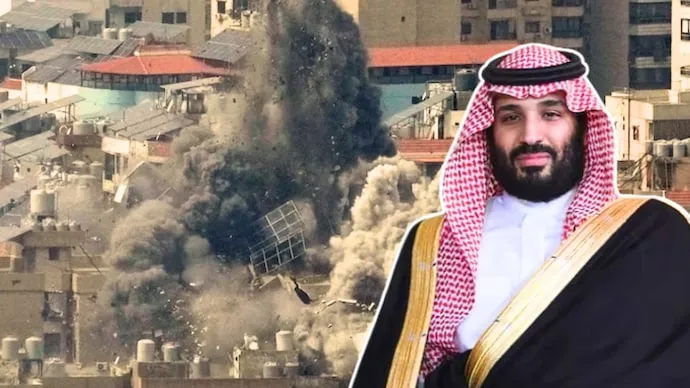
Foreign ministers from approximately a dozen nations, including Turkey, the United Arab Emirates (UAE), Jordan, Qatar, and Syria, held high-level discussions in Riyadh on Wednesday regarding the intensifying conflict in the Middle East. During this meeting, ballistic missiles launched from Iran targeted the Saudi capital, marking a significant escalation in hostilities that have previously spared Riyadh from direct attack. Analysts indicate that this new phase raises the peril of the ongoing war engulfing Saudi Arabia and invoking its defence agreement with Pakistan, potentially involving Islamabad in the conflict.
Reports have indicated that Saudi Arabia has sought continued military support from the United States to counter Iran’s actions. A Saudi expert conveyed to CBC News that the nation's defence pact with Pakistan effectively provides a ‘nuclear umbrella’ over Saudi Arabia, complicating regional security dynamics.
Mario Nawfal, an analyst based in Lebanon and Australia, described the Iranian missile strike on Riyadh as meticulously planned, suggesting it could serve as a pivotal moment in the conflict. Following the attack, Saudi Foreign Minister Prince Faisal bin Farhan expressed the kingdom’s growing impatience, stating that its patience was ‘not unlimited’ and that military actions could be considered if strikes persisted.
In his remarks, the minister noted that relations with Tehran had been severely damaged and that trust was almost irreparable unless the aggressive actions ceased immediately. Since late February, the war has concentrated on retaliatory actions between Iran and the coalition of the United States and Israel, yet Iranian hostility has increasingly focused on Gulf states, including the UAE, Bahrain, and Qatar. For the past weeks, Saudi Arabia has remained largely unscathed until now, as Iranian missiles aimed at critical infrastructure within Riyadh resulted in serious unrest within the city, echoing alarms for its residents who reported hearing explosions for the first time since the conflict started.
Saudi authorities confirmed that most incoming missiles were intercepted above Riyadh, but some debris from these interceptions fell near a key refinery, disrupting fuel supplies. The refinery in question processes approximately 130,000 barrels of oil daily for local use, and a Saudi official communicated these details to The Wall Street Journal.
The strikes occurred during a high-stakes diplomatic gathering, adding a layer of symbolism to the Iranian offensive. Interceptors were reportedly visible near the venue, illustrating the immediate impact of the hostile actions taking place. Prince Faisal commented on the precision and advanced planning evident in the attacks on Saudi infrastructure, contrasting with previous threats and emphasizing the significance of these developments.
Since the beginning of the conflict in late February, Iran has systematically targeted Saudi Arabia, aiming strikes at oil facilities and installations linked to American military presence. Previous provocations included missile attacks on the Prince Sultan Air Base and Riyadh airport, both of which were successfully intercepted, as well as drone assaults causing damage to other facilities.
The Iranian missile assault on Riyadh on Wednesday, however, marked a turning point as energy sites in both Qatar and the UAE were also hit. Iran justified these actions as retaliation against purported Israeli strikes on its critical oil and gas resources, including the South Pars gas field. Despite the escalating threats, Saudi Arabia has largely refrained from launching a significant military counteraction, maintaining a preference for diplomatic solutions and peaceful de-escalation efforts.
The latest statements from Saudi officials signal a shift in sentiment as the reality of Iranian threats becomes evident. Prince Faisal emphasised that the kingdom possesses formidable military capabilities that may be mobilised if necessary. He conveyed his concern that Iran may not possess the wisdom to recognise the severity of its actions. In comments aired by Qatari broadcaster Al Jazeera, he reiterated that Saudi Arabia’s patience has its limits and urged Iranian officials to recalibrate their approach promptly.
Experts concur that Wednesday's strikes fundamentally alter the notion of Riyadh's security, introducing a new, troubling dynamic to the hostilities in the region. Mario Nawfal expressed concern that the longstanding belief in the city's immunity to direct attacks from Iran has been fundamentally challenged. The situation continues to evolve, with stakes growing higher for involved nations.

Meta to Report Child Sexual Abuse Material to Indian Authorities
India Clarifies Bangladesh PM's BRICS Invitation Amid Confusion

Odisha Government Denies Premature Release of Dara Singh

BJP Selects Chandranath Rath's Mother for Nandigram Candidacy