Significance of Iran's South Pars and Qatar's Ras Laffan Gas Facilities


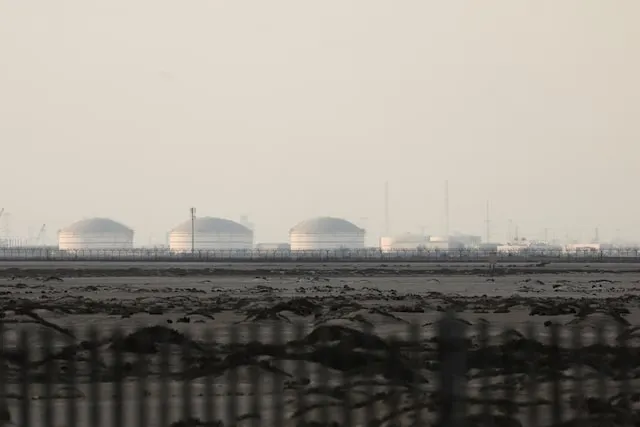
In a significant escalation in the ongoing conflict involving Iran, Israel launched an airstrike on Iran's strategic South Pars gasfield. This attack represents a notable development in the broader US-Israel military engagement with Iran, which intensified with the recent killing of Iranian leadership on February 28. Iran responded with missile strikes targeting energy installations across the Gulf, including the Ras Laffan liquefied natural gas (LNG) facility in Qatar.
The Iranian Revolutionary Guard Corps has issued a warning regarding potential further attacks on Gulf state energy infrastructure, which has already been severely impacted by the ongoing military conflict. On Wednesday, Iranian media confirmed that gas facilities associated with South Pars had faced aerial bombardment. This facility, shared between Iran and Qatar, is critical to both nations' energy supply chains.
Following the Iranian reprisals, smoke was reported rising from the Ras Laffan complex, prompting immediate responses from the Qatari government. Qatar's Ministry of Foreign Affairs condemned the Iranian strikes, which resulted in fires but, fortunately, no reported casualties. QatarEnergy, a key player in global LNG production, confirmed that personnel at the site were safe and that efforts to control the fires were underway. However, further statements indicated that several LNG facilities were impacted, leading to significant infrastructural damage.
In light of these events, Qatar expelled several Iranian military and diplomatic personnel, marking a significant diplomatic rift. Former US President Donald Trump stated on social media that neither the US nor Qatar had advance knowledge of Israel's actions and that Iran's subsequent attack was unjustified.
The escalating situation raises concerns within the Gulf region, prompting Saudi Arabia's Foreign Minister Prince Faisal bin Farhan Al Saud to caution that the Gulf states' tolerance of Iranian actions is not limitless, hinting at a possible military response if the attacks continue.
The South Pars gasfield is notable for being the largest natural gasfield globally. It spans approximately 9,700 square kilometres and is crucial for both Iranian and Qatari energy supplies. The Iranian segment, known as South Pars, accounts for 80 per cent of Iran's natural gas requirements. Despite the current military actions, experts suggest that the immediate impact on global energy supplies may be minimal, as Iran primarily consumes the gas domestically.
Conversely, the Ras Laffan facility accounts for about 20 per cent of the world's LNG output and is integral to balancing fuel demands in Asian and European markets. Early March saw a temporary suspension of LNG production at Ras Laffan due to previous hostilities, setting a precedent that may limit the current conflict's impact on the broader energy market.
Analysts indicate that while immediate supply disruptions may not occur, prolonged tensions could sustain high global LNG prices. Rachel Ziemba from the Center for a New American Security noted that the current production pause at Ras Laffan would not lead to an immediate crisis but could exacerbate regional energy pressures in the long term.
The intersection of military action and energy resource management highlights the fragile nature of geopolitical stability in the Gulf, with both countries at risk of exacerbating an already delicate energy landscape as the conflict continues.
Meta to Report Child Sexual Abuse Material to Indian Authorities
India Clarifies Bangladesh PM's BRICS Invitation Amid Confusion

Odisha Government Denies Premature Release of Dara Singh

BJP Selects Chandranath Rath's Mother for Nandigram Candidacy