Russian Tu-95MS Bombers Land in Vietnam Amid Regional Tensions


Two Tupolev Tu-95MS strategic bombers from Russia arrived at Da Nang International Airport in Vietnam on November 17. This event marks an unusual deployment of Russia's long-range aviation to Southeast Asia. The bombers were accompanied by two Ilyushin Il-76 military transport aircraft. Their arrival followed recent Russian aerial operations that triggered defensive measures from Japan, South Korea, and Taiwan.
The specific bombers involved were identified as RF-94202 and RF-94188, which were photographed approaching Da Nang. Satellite imagery confirmed that four Russian military aircraft were stationed at the airport. According to a report from Reuters, the bombers remained at Da Nang on November 18.
On November 16, five Tu-95MS aircraft took off from Ukrainka Air Base located in Russia’s Amur region. While three bombers undertook a separate training flight over the Sea of Japan, the remaining two continued their flight to Vietnam.
The accompanying aircraft, two transport variants of the Il-76, were identified as an Il-76MD and an Il-76MD-90A, rather than aerial refueling tankers. Heightened activity was observed in the region: on November 17, Japan reported that two Russian aircraft briefly entered its territorial airspace near Okinoshima. In response, Japanese fighter jets were deployed, and Tokyo filed a formal protest with Russia.
South Korea also responded by scrambling its fighters after detecting the Russian aircraft in its Air Defense Identification Zone, but reported that there was no breach of sovereign airspace. Taiwan, on the other hand, reported monitoring two Russian military aircraft passing east of the island before they headed south.
Despite the timing and reported routes suggesting a possible link to the bombers in Vietnam, regional authorities did not officially confirm that the aircraft involved in these earlier incidents were the same Tu-95MS bombers that landed in Da Nang. It's important to note that entering an Air Defense Identification Zone differs from violating territorial airspace.
This recent visit harkens back to the Cold War, when the Soviet Union utilised Cam Ranh Bay extensively. During that time, Soviet naval aviation operated from the Vietnamese base, including deploying the Tu-95RT maritime reconnaissance aircraft, which had distinct missions compared to the strategic missile carriers that have recently been seen.
After the Soviet Union vacated Cam Ranh, the facilities were revitalised in 2014 for Russian long-range bomber operations near Guam, but the strategic bombers did not land there during those missions. Security analyst Ian Storey informed Reuters that he is not aware of any similar operations after 2014.
Consequently, the arrival of the two Tu-95MS bombers at Da Nang represents a significant occurrence, although it does not indicate that Russia has restored permanent military access to Vietnamese facilities. This incident occurs just before a planned meeting on November 19 involving Russian President Vladimir Putin, Chinese President Xi Jinping, and U.S. President Donald Trump. Analysts perceive the flight as a possible display of Russia’s military capability in the region, particularly in light of its ongoing military conflict in Ukraine.
As of November 18, neither Russia nor Vietnam has publicly clarified the intent behind this deployment.

ICMR Survey Reveals Decline in Anaemia Prevalence Across India

Bollywood Star Salman Khan Supports Qazi Touqeer's Musical Career
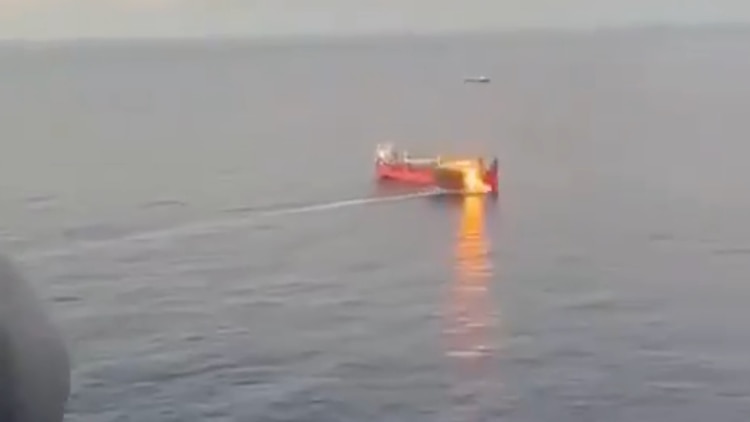
Ukraine Claims Naval Strike Against Russian Warship in Libya

Fatalities Rise to 12 Due to Contaminated Alcohol in Manipur