Russia's Su-57 Fighter Jet Completes Test Flight with New Engine


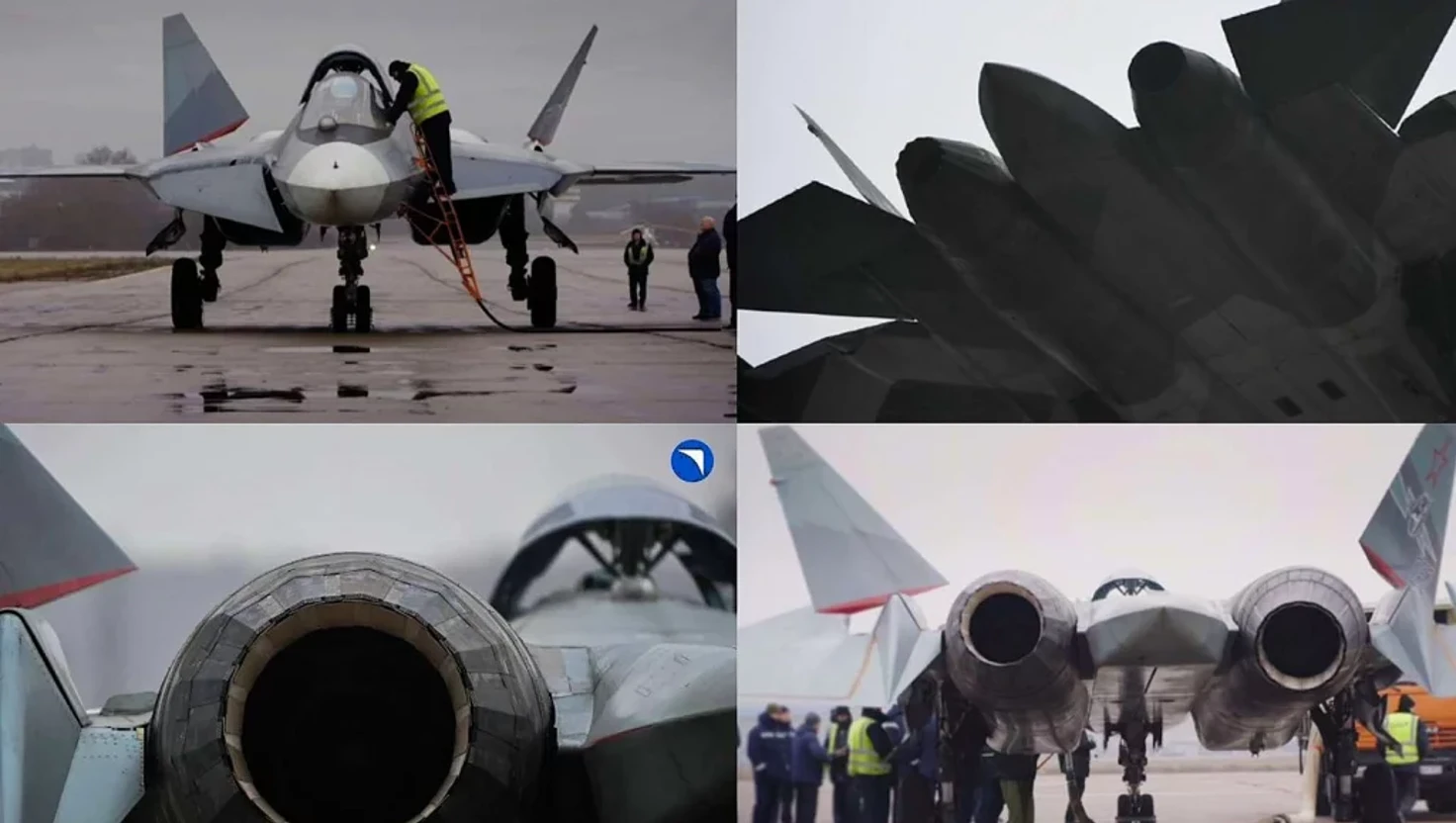
Russia's fifth-generation Sukhoi Su-57 fighter jet has successfully conducted its first flight powered by the new Product 177 engine, according to a statement from Rostec, the state-owned defence conglomerate. This significant development marks a crucial step in enhancing the capabilities of one of Russia's most advanced military aircraft.
The flight was piloted by Roman Kondratyev, a test pilot with extensive experience, and reportedly went smoothly. The new engine, designed specifically for the Su-57, is expected to offer improved thrust, fuel efficiency, and durability, which are vital for modern combat aircraft.
Rostec reported that the Product 177 engine can generate a maximum thrust of 16,000 kilograms-force, approximately 35,000 pounds. This enhancement is part of Russia's broader initiative to advance its military aviation technology, specifically in the realm of fifth-generation fighter jets. The engine incorporates advanced materials and design innovations aimed at improving the aircraft's overall performance.
According to Evgeny Marchukov, the General Designer–Director of the A. Lyulka Design Bureau, the test flight signifies the start of collaborative efforts between the United Aircraft Corporation (UAC) and engine developers to fully integrate the new powerplant into the Su-57 platform. Marchukov stated, "The first test flight marked the beginning of joint work... The new engine worked normally and showed reliable operation."
The Su-57, which first took to the skies in 2010, is designed for a variety of combat roles, including air superiority and ground attack. It features advanced stealth capabilities, allowing it to evade detection by enemy radar systems. Despite being touted as a highly capable aircraft, the Su-57's production has faced delays and challenges, leading to a limited number of units currently operational.
Previous iterations of the Su-57 were powered by the AL-51F engine, which has been the subject of criticism due to its performance limitations. The introduction of the Product 177 engine is seen as a crucial upgrade, addressing many of the shortcomings identified in earlier models. It is expected that the new engine will not only enhance the Su-57's performance but also extend its operational lifespan, making it a more viable option for both Russian forces and potential export customers.
Rostec has indicated that it is ramping up production of the Su-57 to increase the number of jets delivered to the Russian military and to promote an export variant, known as the Su-57E. This strategic move comes as Russia seeks to expand its defence exports amid international sanctions.
Several countries, including India and Algeria, have expressed interest in acquiring the Su-57, particularly in light of its advanced features and capabilities. Reports suggest that India has been offered the opportunity for full technology transfer, which would allow for local production of the aircraft.
As global competition in the fifth-generation fighter aircraft market intensifies, the successful flight of the Su-57 with the new Product 177 engine underscores Russia's commitment to advancing its military aviation technology. The continued development and potential export of the Su-57 could significantly impact the balance of power in the region and beyond.
In conclusion, the maiden flight of the Su-57 powered by the Product 177 engine highlights a pivotal moment for Russian aerospace. This advancement not only enhances the capabilities of the Su-57 but also positions Russia as a competitive player in the global military aviation market, particularly as it seeks to attract foreign buyers looking for modern stealth fighter options.
Kerala Initiates Probe into 2006 Suicide Case Involving CEC

Extradition of Sheikh Hasina Feasible, Says Indian High Commissioner

Punjabi Makeup Artist Mad Sandhu Shot Dead in Amritsar

India Achieves Fourth Place at Asian Games 2026 Through Late Success