Nvidia CEO Jensen Huang's Return Creates Ripples in AI Landscape


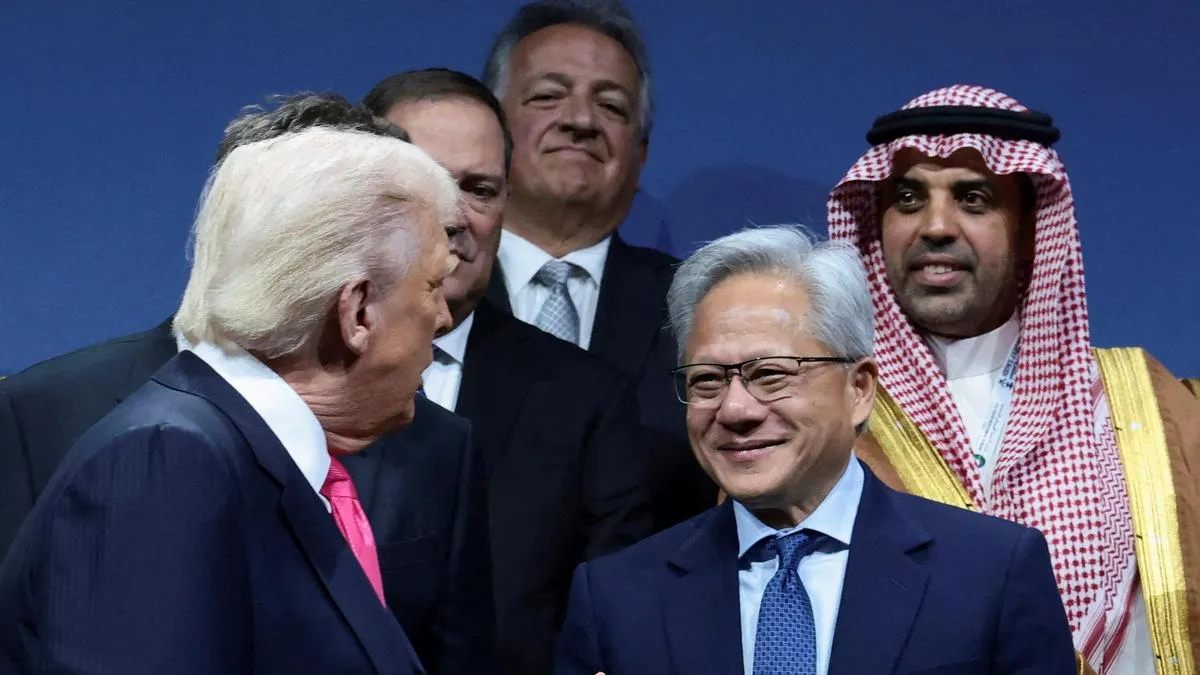
Jensen Huang's reappointment as the Chief Executive Officer of Nvidia has stirred significant activity in global financial markets, particularly affecting Asia's technology sector. The remarkable rise in Nvidia’s share price, nearing a trillion dollars, has had both positive and negative ramifications across stock indices in countries such as Japan, South Korea, and Taiwan.
Nvidia is regarded as a pivotal player in the artificial intelligence (AI) sector, with its innovations in chip manufacturing establishing it as a leader in the field. Dylan Loh, an international studies lecturer at Nanyang Technological University, remarked that the company serves as a 'symbolic bellwether' for the AI market, crucial for nations like South Korea, Taiwan, Singapore, and Malaysia.
The company’s ability to outsource the production of its chips rather than investing heavily in manufacturing facilities has contributed to its rapid growth. Currently, Nvidia collaborates with Taiwan Semiconductor Manufacturing Company (TSMC), underscoring Taiwan's vulnerable position due to its reliance on AI technology demand.
Paul Cavey, of East Asia Econ, pointed out that Taiwan has seen substantial economic growth, primarily driven by an increase in AI-related exports. Earlier this year, Nvidia announced plans to invest approximately $150 billion (£114.4 billion) in Taiwan, linking its growth trajectory directly to the island’s economic health.
Notably, South Korea and Japan also hold vital roles in the AI ecosystem, supplying essential components such as memory chips and testing equipment. Companies like Samsung and SK Hynix are instrumental in producing processors for Nvidia.
The significance of Nvidia extends beyond mere supply; it functions as a major financial backer for the supply chain's AI operations. Loh added, 'Asia isn't just a customer base for Nvidia. It is an indispensable engine of the company’s AI dominance because of East Asia's semiconductor manufacturing and memory ecosystems.'
Recent reports from CBRE indicate that the market for data centres, primarily powered by Nvidia’s technology, is experiencing unprecedented growth, with investment anticipated to reach $11.6 billion (£8.85 billion) by 2025. This trend is evident in Southeast Asia, where Singapore-based Megaspeed, a significant buyer of Nvidia chips, finds itself in legal turmoil over allegations of smuggling components to China. The company maintains that it operates within legal parameters and is undertaking an internal investigation.
The US government's stance on AI technology exports has intensified, with indications that it may ban Megaspeed from engaging in business within the US market. This heightened scrutiny on AI technology poses challenges for countries in Southeast Asia that have enthusiastically invested in data centre developments catering to Chinese firms.
In a notable demonstration of the importance of AI technology in the region, Singapore on Monday raised its growth projection for the year, correlating its economic outlook with developments in the technology sector. Major tech companies, including Google, Microsoft, and Oracle, are projected to increase their expenditure on infrastructure in Asia by approximately 60% this year.
As Asia's technology landscape faces increasing pressure from US regulations, Huang's return has evoked mixed receptions. In Taiwan, investors celebrated the news, humourously referring to his return as a 'one man saves the village' narrative. However, some industry observers highlighted the need for a more robust examination of Taiwan's semiconductor supply chain, questioning reliance on a single entity like Nvidia.
Tighter export regulations imposed by the US have affected Nvidia's operations, as shipments to the Asia-Pacific region were reportedly halted. While Nvidia has not elaborated on whether this suspension is a temporary measure or a response to compliance with new rules, the ramifications for AI markets remain uncertain.
Huang is also expected to testify before Congress next week, amid criticism directed at Nvidia following comments made by former President Donald Trump regarding Huang's reinstatement. As Biden’s administration prepares to assume a stronger role in the House and Senate in the coming year, Huang may encounter further political and legal challenges as he leads Nvidia into a rapidly evolving sector.
US Warns of India's Reliance on China for Antibiotic Ingredients

Tata Trusts to Challenge N Chandrasekaran's Reappointment in Court
US Restrictions on Chips Impact Chinese Data Centre Financing

Mahanadi Coalfields IPO Makes Lacklustre Market Debut