Netanyahu and Modi's Political Tactics Amid Security Failures


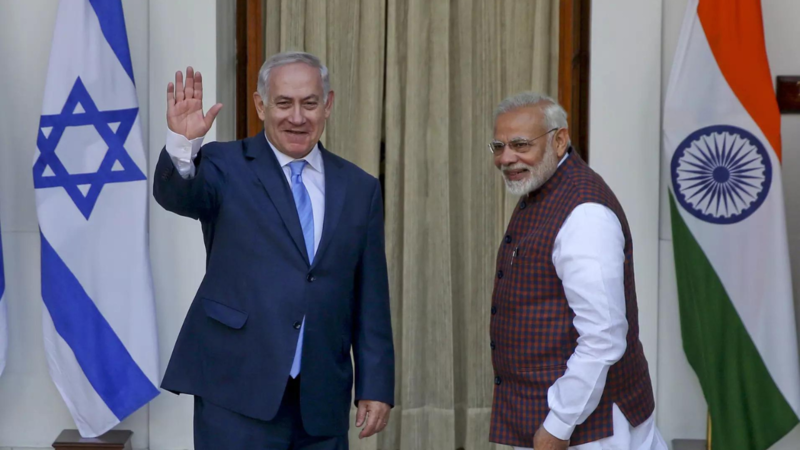
Political leaders Benjamin Netanyahu of Israel and Narendra Modi of India are drawing criticism for their responses to recent security failures, particularly in the aftermath of a violent incident aboard a Flydubai flight. The event, which involved a co-pilot attack, has raised questions about aviation safety protocols and governmental accountability.
On September 30, a Flydubai flight carrying Israeli citizens experienced a disturbance when the co-pilot allegedly attempted to harm the pilot with a weapon. The crew, including the injured pilot, managed to bring the situation under control, resulting in a safe landing in Saudi Arabia. Prime Minister Netanyahu was seen welcoming the passengers upon their return, portraying a narrative of successful intervention. However, this portrayal has overshadowed significant questions regarding the lapses in aviation security that allowed such an incident to occur.
Concerns have been raised about the Israeli government's role in ensuring passenger safety on foreign airlines. A recent report from the Israeli state comptroller had already highlighted deficiencies in security measures at airports. Former officials have pointed out that there were known issues regarding the co-pilot's background, which reportedly included prior suspensions for visiting radical sites. This brings to light the critical need for rigorous vetting processes that were seemingly inadequate in this situation.
As the government addresses the incident, Netanyahu's administration has attempted to shift focus away from its failures by emphasising the narrative of external threats. In the wake of the attack, there has been a drive to foster an image of unwavering vigilance against perceived national enemies, hence redirecting public anger towards minority groups and dissenting voices. This tactic mirrors Modi's approach to political dissent in India, where security issues are often used to justify an intensified crackdown on opposition.
Critics argue that such political manoeuvring serves to unite the ruling factions while inciting division within the populace, manipulating fear for electoral gain. By framing the attacker within a context of Islamist extremism, the conversation shifts away from accountability and governance toward societal mistrust and polarization.
Simultaneously, Saudi Arabia has initiated its own safety investigation to understand the implications of the Flydubai incident, which remains a part of broader discussions on aviation security. The complexities involved in international cooperation for safety investigations could provide valuable insights yet risk complicating diplomatic relations, particularly given Saudi Arabia and Israel's lack of formal ties.
Israel is keen to be involved in the Saudi-led safety probe, as the event has not only implications for passenger safety but also national reputations. However, it remains uncertain whether Israel will be granted participation, given the intricate geopolitical landscape.
The ongoing scrutiny into how these incidents are handled could bear significant ramifications for Netanyahu and Modi as they navigate their political landscapes post-crisis. The capacity to respond effectively to such emergencies often raises the stakes for domestic support and international perceptions.
In these precarious times, the importance of transparent communication and accountability becomes paramount in maintaining public trust, as both leaders grapple with the fallout from their security failures while attempting to maintain their political capital.

Trump, Putin, and Xi to Meet at APEC Summit in Shenzhen, China
Congress Criticises Adani for Dramatic Cost Cut in Maharashtra Project

Urban Infrastructure Crucial for India's Manufacturing Growth

India Extends Ban on Zakir Naik's Islamic Research Foundation