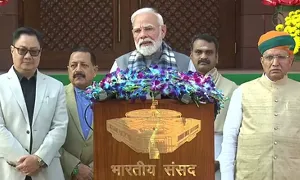
Nepal PM Balendra Shah to Hold Talks with India’s Modi



Nepal's Prime Minister Balendra Shah is set to embark on his first official trip to India, marking a significant moment for the new political landscape of Nepal. His visit, scheduled for this Sunday and lasting two days, is anticipated to foster a reset in bilateral relations between the two nations.
Shah’s arrival in New Delhi represents the first high-level dialogue between the leaders of Nepal's emerging political generation and its influential neighbour. This visit follows the rise of Shah's Rastriya Swatantra Party to power in March, shortly after a public uprising against corruption and nepotism led to the fall of former Prime Minister K P Sharma Oli's government.
During his stay in India, Shah is expected to meet Indian Prime Minister Narendra Modi as well as other senior officials. The discussions will likely encompass various topics, including economic and energy collaborations, the establishment of new air corridors, and financial assistance for reconstruction efforts following the devastating floods that impacted Nepal in August. These floods resulted in over 1,450 fatalities and left many others unaccounted for.
India and Nepal enjoy deep-rooted ties across ethnic, cultural, religious, and economic dimensions, underscored by a shared border that stretches more than 1,750 kilometres (1,080 miles). Given Nepal's geographical position between India and China, its stability is of particular concern to Indian security analysts.
The relationship has at times been fraught with tensions, largely due to longstanding territorial disputes, claims of political interference, and a perceived dominance from India, which many in Nepal interpret as a 'Big Brother' approach. However, experts view Shah's trip as a potential opportunity to recalibrate this relationship.
Ranjit Rae, a former Indian ambassador to Nepal, stated, "The new Nepali leadership claims they do not carry the political burdens of the past and intend to focus on development, diplomacy, and economic partnerships. They appear more pragmatic and less ideologically driven. I believe this is an optimistic moment."
Since Nepal transitioned to a democratic republic in 2008, the governance has been mainly dominated by three political parties. India has maintained strong ties with these parties, but recent years have seen growing closeness between Nepal's communist factions and China, leading to accusations of Chinese influence in Nepali affairs.
Despite these geopolitical challenges, the social fabric of Nepal and India is deeply intertwined. Families often reside on both sides of the border and engage in daily interactions. Bilateral trade currently exceeds $9 billion, although it remains heavily tilted in favour of India, a point of ongoing resentment in Kathmandu.
Additionally, India is a primary supplier of crucial goods, such as petroleum and food, for Nepal. Notably, India has sanctioned projects to import up to 1,200 megawatts of electricity from Nepal, with future expansion anticipated. Rae notes, "India experiences a significant demand for electricity, while Nepal possesses vast potential for generation through its abundant water resources. This relationship transcends bilateral arrangements, as Nepal also exports electricity to Bangladesh via India."
India has consistently offered assistance to Nepal during crises, including the 2015 earthquake and the recent floods. Despite these cooperative efforts, disagreements persist. Tensions heightened in 2019 when India released a map including disputed territories claimed by Nepal, prompting Kathmandu to publish its own version, further complicating the diplomatic landscape.
Political analyst Kanak Mani Dixit remarked that he hopes Shah addresses border concerns during his discussions in Delhi. While immediate resolutions may not be feasible, he emphasises the importance of initiating dialogue on these issues.
Additionally, Nepal has urged India to expand air routes, facilitating larger aircraft access to newly built airports in Bhairahawa and Pokhara. Greater access to Indian airspace could lead to shorter and more affordable flights, aiding the commercial viability of these airports. Some believe India might be hesitant to encourage these developments given that key airports were built with Chinese support.
Although Shah made a commitment to refrain from international travel during his first year in office, the aftermath of the August floods compelled a reassessment of this stance. The Nepali government estimates reconstruction efforts will require approximately $5 billion, while international pledges thus far have fallen short of expectations.
Some observers have raised concerns about Shah's preparedness for the pivotal journey. "Prime Minister Shah and his team are energetic and fresh, yet they exhibit a worrying lack of experience. This might hinder the requisite gravitas needed for diplomacy with such a significant neighbour," Dixit commented.
Shah's administration has been under scrutiny for various decisions, including the removal of police chief Dan Bahadur after he allegedly resisted orders from the Prime Minister's office. Accusations of impinging on press freedom emerged after police were dispatched to detain journalists covering these events.
The success of Shah's visit will likely hinge on securing concrete commitments from India regarding financial aid, which could serve to mitigate domestic criticism and enhance diplomatic standing upon his return to Kathmandu.
Bodies of 15 Indian Tourists Returned from Vietnam Boat Accident
Investigation Continues into Twisha Sharma's Death in Bhopal
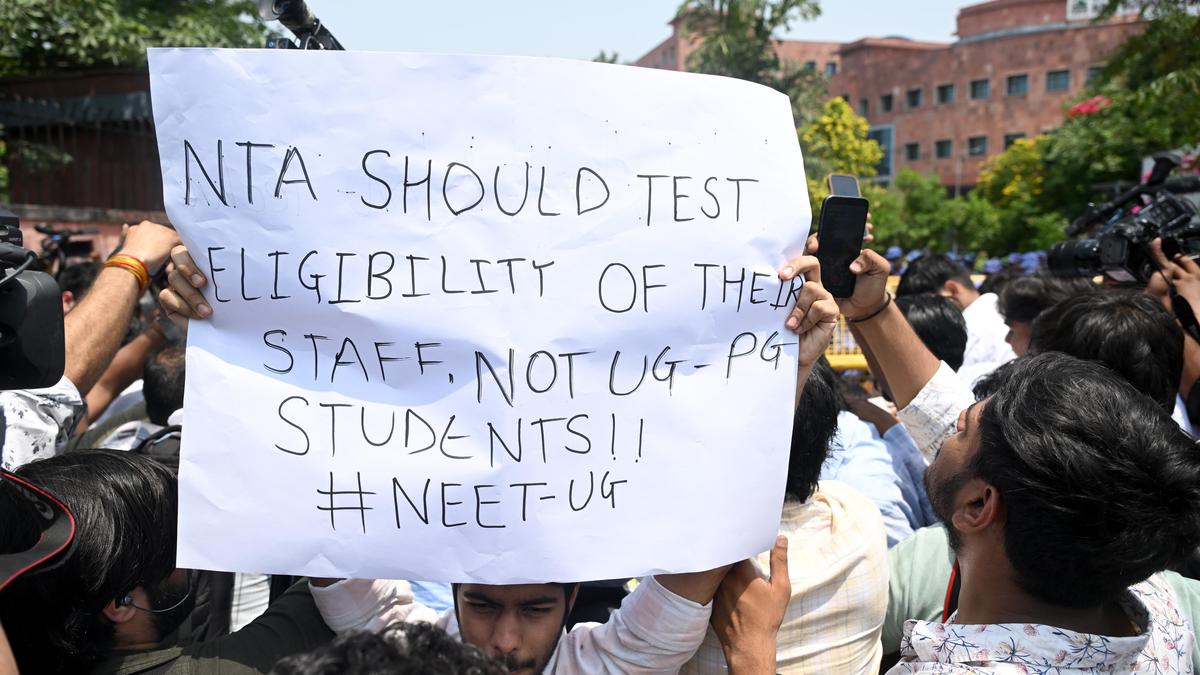
Supreme Court Receives Clarification on NEET Cancellation Plans
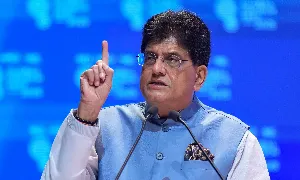
Piyush Goyal to Discuss Export Challenges with Industry Leaders