NATO Allies Reinforce Commitment to Collective Defence Amid Tensions


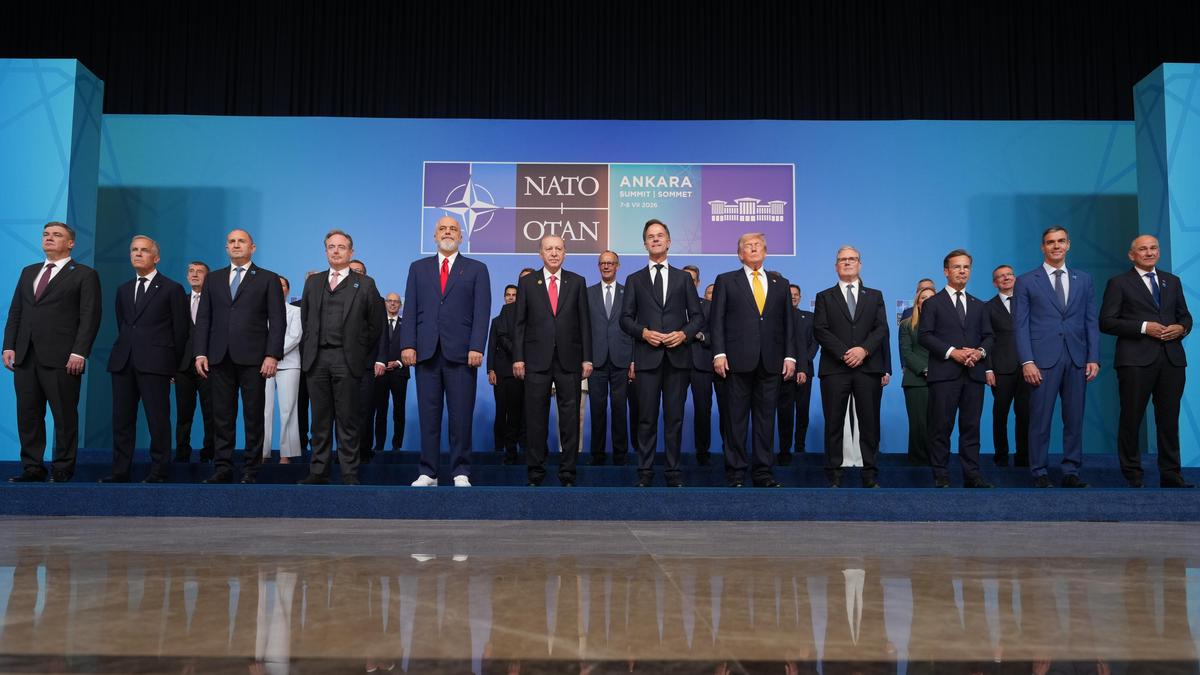
NATO leaders concluded a significant two-day summit in Ankara, Turkiye, under the shadow of rising tensions within the alliance. The summit focused on defence budgets and support for Ukraine, while also highlighting both unity and discord among member states, particularly influenced by comments from United States President Donald Trump.
During the meeting, NATO officials underscored their 'ironclad commitment' to the mutual assistance clause outlined in Article 5 of the alliance treaty. This commitment has historically been a reassuring element for member countries, although President Trump has previously questioned its significance, suggesting that the US might reconsider its support during international crises.
European leaders used the summit to illustrate their increased defence spending, aiming to reassure Trump regarding their commitment to taking more responsibility for their national security. The NATO declaration indicated that member nations had generated more than $50 billion in new military procurements, demonstrating an effort to meet defence spending targets.
However, NATO data reveals that only a small fraction of its 32 members are projected to meet the alliance's goal of spending 3.5 percent of their gross domestic product (GDP) on defence by 2026.
In a notable move, NATO leaders pledged around 70 billion euros (approximately $80 billion) in support for Ukraine, reflecting a consolidated approach to countering Russian advances. Jolyon Howorth, emeritus professor of European politics at the University of Bath, remarked on the paradox of unity over Ukraine while noting the discord among member states regarding long-term strategies.
While President Trump described the summit as 'tremendously successful' and resplendent with unity, his comments towards Spain revealed underlying tensions. He announced a trade embargo against Spain due to dissatisfaction with its defence expenditure, signalling possible fractures within the alliance. The US Treasury Department is expected to propose a range of Spanish products for the embargo, which could potentially be partial.
In addition to the trade restrictions, Trump's comments regarding Greenland and dissatisfaction with NATO's support during conflicts, such as the war with Iran, further indicate his essentialist view of the alliance's role. Howorth noted that these issues highlight ongoing challenges for NATO's unity, as diverse historical and geographical contexts influence member states' interests.
Despite the tensions, the summit also featured agreements such as the potential resumption of F-35 jet sales to Turkiye, previously halted due to Turkiye's purchase of Russian military technology. Trump's meeting with Turkish President Recep Tayyip Erdogan indicated a shift in US policy, with a consideration to lift sanctions on Turkiye.
In a separate development, NATO also plans to enhance military capabilities, with British and Dutch forces collaborating on a 2.4 billion-pound ($3.2 billion) maritime partnership, focusing on new amphibious transport ships to support elite forces. This partnership aims to strengthen NATO through combined industrial expertise.
The summit thus underscored both the alliance's commitment to collective defence and the imperative to address internal divisions arising from differing national interests. As NATO navigates these complexities, it faces a challenging path ahead in maintaining cohesion while responding to evolving security threats.
Kerala Initiates Probe into 2006 Suicide Case Involving CEC
Extradition of Sheikh Hasina Feasible, Says Indian High Commissioner

Punjabi Makeup Artist Mad Sandhu Shot Dead in Amritsar

India Achieves Fourth Place at Asian Games 2026 Through Late Success