Maharashtra Implements Water Cuts and Borewell Ban Amid Drought


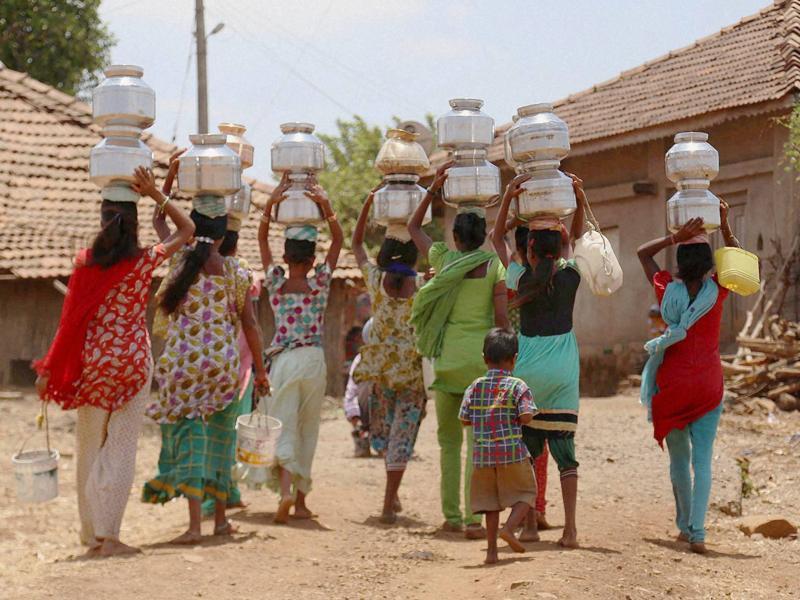
In Maharashtra, nearly 75 per cent of the talukas have been classified as drought-affected, leading state officials to enforce water restrictions across various districts. Starting from October 15, Pune will experience suspended water supply every Thursday as part of efforts to manage water reserves and ensure availability until August 2027.
Meanwhile, Nagpur has enacted a ban on the drilling of new borewells and the deepening of existing ones. This step aims to safeguard groundwater resources crucial for public use, particularly in light of the ongoing scarcity.
In the Marathwada region, authorities are prioritising drinking water over agricultural irrigation, instructing industries to reuse a minimum of 30 per cent of their water consumption. Statistics reveal that major irrigation projects in this region currently hold only 21.12 per cent of their capacity, a significant decline compared to 76.23 per cent during the corresponding period last year.
The water supply restrictions will apply across various cities and districts, with municipal bodies directed to implement a minimum 10 per cent cut in water supply beginning October 16. In September, the Maharashtra government had declared 265 out of 358 talukas drought-affected, affecting approximately 74 per cent of the state.
The Pune Municipal Corporation (PMC) has established Thursday as a day for water supply suspension, underscoring that this measure is essential for maintaining the existing water reserves. As of October 13, the Khadakwasla reservoir, a primary water source for Pune, contained 38.78 thousand million cubic feet (TMC) of water, sharply lower than the storage level of 95 per cent recorded in the same period last year.
To further aid conservation efforts, the PMC has issued guidelines for residents, businesses, and other institutions. These include prohibiting the use of drinking water for construction activities and urging local households to repair leaks in pipes and flush tanks promptly.
In Nagpur, the District Disaster Management Authority has prohibited the drilling of new borewells and tubewells, along with the deepening of existing wells, as a precautionary measure against potential drinking water shortages. The official statement noted, "The order applies throughout the urban and rural zones of the district and is effective immediately."
Existing borewells can continue to be utilised, but all new drilling and deepening operations are strictly banned until further notice. Local authorities are tasked with coordinating inspections and will enforce legal repercussions for any unauthorized drilling.
In the drought-stricken Chhatrapati Sambhajinagar district, authorities have mandated a retention buffer of at least 10 per cent of live storage in major reservoirs, giving priority to drinking water. Water releases for agricultural purposes have been restricted, and industries have been advised to reuse treated wastewater for various non-potable uses.
The Maharashtra Water Resources Department’s report from October 13 has highlighted a stark reduction in water storage across the region, with the major irrigation projects holding just 58.34 per cent of their capacity. Compared to the previous year, this marks a significant drop. The situation is dire, particularly in medium and minor irrigation schemes, which show even lower storage percentages, with figures of 21.12 per cent and 15.42 per cent respectively.
Several districts in the Marathwada region illustrate the severity of the crisis. Reports indicate that five out of eight dams in Beed district are without water, seven out of nine irrigation schemes in Dharashiv are dry, and in Nanded, six of nine projects have either minimal or no storage.
Outside Marathwada, the Raigad district reports water storage levels at 41.08 per cent, reflecting the widespread impact of the insufficient Southwest Monsoon this year. The Maharashtra government's series of measures aims to manage resources effectively in anticipation of the extended dry months ahead.
India Asserts Ladakh is Integral to Its Territory Amidst Chinese Claims

Katie Zacharia’s Chaotic Press Briefing Marks Troubling Debut

INS Mangrol: India's New Submarine Hunter Designed for Shallow Waters
FIRs Filed Against Aaditya and Amit Thackeray: Charges Explained