Legal Challenges for Families After Nepal Floods Leave Many Missing


In Kathmandu, at the Pashupatinath temple alongside the Bagmati River, Madan Lal Lawat gathered with families mourning loved ones lost in a flood that swept across the China-Nepal border last month. Due to Hindu customs, when a body is not recoverable, relatives create a symbolic effigy from sacred 'kusha' grass to represent the deceased, allowing them to perform the necessary funeral rites. Over 5,000 individuals remain unaccounted for, with the government concluding rescue efforts. For families like Lawat's, this ritual is one of the few means available to honour the deceased after such a tragic event.
Lawat's situation is particularly heart-wrenching, as he lost five relatives, including his brother. He had been driving a bus outside his village of Betrawati when disaster struck. Survivors reported that his brother Mangal perished while attempting to warn neighbours to evacuate. "I don't know how to start over. Police say they're still searching for the bodies, but I'm not sure they'll ever be found," expressed Lawat, who believes they are likely dead despite the lack of formal confirmation.
Legally, the status of missing individuals adds complexity. In Nepal, a person is presumed dead only after 12 years of absence, a stipulation mentioned in Section 40 of the Civil Code that does not cater to circumstances arising from natural disasters. The consequences for families are significant, particularly in securing a death certificate, essential for accessing flood-related compensation, property transfers, and inheritance rights.
Reparations can amount to up to 25,000 rupees (£122; $162) for funeral expenses, alongside 200,000 rupees (£981; $1,302) for the first confirmed death and 100,000 rupees (£491; $651) for subsequent losses. However, none of this aid can be processed without a death certificate in hand, leaving many families in a bureaucratic quagmire.
"In view of the current disaster, the law is outdated," stated constitutional law scholar Bipin Adhikari. He noted that the legal framework was originally designed for individuals travelling abroad and uncontacted for years, arguing that advancements in communication technology warrant a modernisation of these regulations.
Lawat is grappling with the legal intricacies after recently being turned away from a local municipality office while seeking a death certificate. Officials informed him that discussions regarding the process are ongoing. "We aren't sure what to do now. There's so much uncertainty," he lamented.
Recovery efforts are further hampered by the challenge of identifying the deceased. More than 1,400 bodies have been retrieved, but Nepal's capacity for large-scale DNA processing is limited. In some situations, DNA samples have been collected from deceased individuals, with bodies buried and marked for future identification by families.
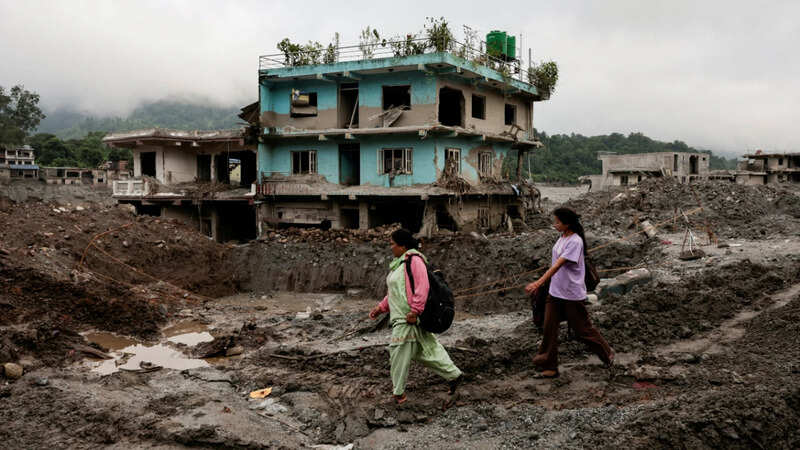
Despite the overwhelming need for financial compensation, the government estimates indicate severe damage. Approximately 7,570 private structures were either damaged or completely destroyed, affecting around 33,000 individuals based on census data. The BBC reported on Lawat's village shortly after the disaster; it had been isolated from Kathmandu, confronting shortages of food and fuel. The destruction in Betrawati was profound; homes and schools lay in ruins, with the landscape transformed into hardened mud and silt after the flood.
As part of the Bidur municipality, Betrawati witnessed the highest destruction, with estimates suggesting over 3,000 properties damaged. Local officials are appealing for assistance in resolving the death confirmation dilemma. Bidur's Mayor, Rajan Shrestha, explained the troubling timeframe for families: "It could take up to 12 years for relatives to access the funds they are entitled to. Everything is on hold."
Amid the assessments, the government has acknowledged the economic burden placed on affected households, estimating losses related to personal belongings at £123 million ($165 million) across over 8,300 households. Although the average losses are projected at around £14,800 ($20,000) per household, these figures are merely estimates and may not fully capture individual family losses.
The quest for financial recompense renders death certificates all the more crucial for families striving to recover. Mayor Shrestha has urged the federal government to address these issues as a matter of urgency. "We understand the emotional pain for families who have already performed funeral rituals, but officials must work within legal boundaries to avoid future liabilities," he advised.
The government has communicated its awareness of the legislative difficulties faced by families in exceptional circumstances like natural disasters and has indicated that it may consider amending the law. Nepal now confronts a substantial reconstruction challenge, which officials estimate could reach £3.6 billion ($4.8 billion). Prime Minister Balen Shah represented the country at the UN General Assembly, underscoring that rebuilding efforts will require more than 10% of the nation’s GDP, imposing a considerable strain on its fragile economy. The floods have obliterated dozens of public structures, including schools, health clinics, and essential infrastructure. In light of these challenges, Shah is advocating for grant-based international aid rather than incurring additional loans.

Dipika Damerla Utilises Bollywood Song in Mississauga Mayoral Bid

Wisconsin Couple Turns Down $131,000 for Controversial Power Line
Delhi Prepares for Major Protests with Heavy Security Deployment
Indian Prime Minister Calls for Enhanced Focus on Girls' Health