Kangana Ranaut Responds to Sharmila Tagore on Vande Mataram Debate


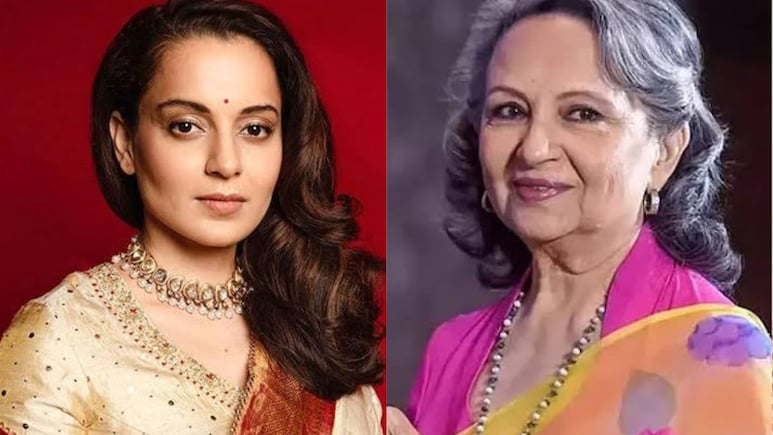
The controversy surrounding India's national song, Vande Mataram, has intensified after actor Kangana Ranaut publicly challenged comments made by veteran actress Sharmila Tagore regarding its interpretation. Sharmila Tagore suggested that only the initial two stanzas of Vande Mataram should be preserved, suggesting that later verses referencing Hindu deities may alienate followers of monotheistic faiths. Kangana Ranaut, sharing footage of Tagore's remarks on her Instagram Stories, acknowledged the veteran actress's perspective but firmly disagreed with her interpretation. Ranaut argued that artistic expressions should not be constrained to religious interpretations, explaining that metaphors are integral to the literary and poetic experience.
The debate over Vande Mataram's lyrics, which were composed by Bankim Chandra Chatterjee in the late 19th century, has gained traction in light of ongoing discussions about the song's relevance to India's diverse religious populace. During an interview with IANS, Tagore articulated her concerns, stating that some later verses in Vande Mataram could present challenges for individuals who adhere to a singular faith. She commented, "There are many religious people who believe in one single God, not many Gods. In Vande Mataram, there is a stanza which says that many Gods are mentioned in Vande Mataram. It is difficult for those who believe in one religion to say, 'Vande Kali, Vande Durga.' Therefore, if we take all the religious people in India together, the first two stanzas are very good."
Kangana Ranaut responded to Tagore's sentiments by defending the artistic essence of Vande Mataram. In her Instagram post, Ranaut stated, "I appreciate that Sharmila ji has spoken about her reservation on Vande Mataram, but I am shocked as an artist at how limiting and contrived her views on art and poetry can be. In poetry or song, words are metaphors, an artist uses imagination to bring about the desired effect. Vande Mataram is the spirit of the freedom struggle, compelling the nation to awaken the Shakti within. How can you reduce such a great piece of art to mere religious practice?" She further elucidated that references to Shakti can be interpreted as symbols of strength, transcending religious limitations.
The discussion around Vande Mataram has been revived amidst a broader political debate about its performance at official functions. The Congress Working Committee reiterated its stance from 1937 that only the first two stanzas should be recited at party events. As the issue gains momentum, public figures in the entertainment industry have started voicing their opinions.
Actor Mukesh Khanna also added to the heated discourse by calling for Vande Mataram to replace Jana Gana Mana as India's national anthem. He asserted that the latter was originally written in homage to Queen Elizabeth. Khanna has conveyed his belief that Vande Mataram, rich in its association with India's independence movement, should be celebrated as a national anthem. He applauded the rendition of Vande Mataram by legendary singer Lata Mangeshkar, informing audiences of his own recording of a seven-minute version of the song.
Vande Mataram, often closely linked to India’s freedom struggle, embraces themes of patriotism and national identity. The song's first two stanzas focus on the praise of the motherland, while the subsequent verses reference Hindu goddesses, making it a subject of contention among India's pluralistic society. Sharmila Tagore's remarks have ignited further discourse on how best to honour a cultural work intertwined with India's diverse religious heritage while maintaining inclusivity.
Kangana Ranaut's counter to Tagore’s remarks encapsulates the ongoing intellectual discourse surrounding artistic interpretation, national identity, and religious philosophy in contemporary India.
Kerala Initiates Probe into 2006 Suicide Case Involving CEC
Extradition of Sheikh Hasina Feasible, Says Indian High Commissioner

Punjabi Makeup Artist Mad Sandhu Shot Dead in Amritsar
India Achieves Fourth Place at Asian Games 2026 Through Late Success