Justice B.V. Nagarathna Emphasises Federal Equality in India


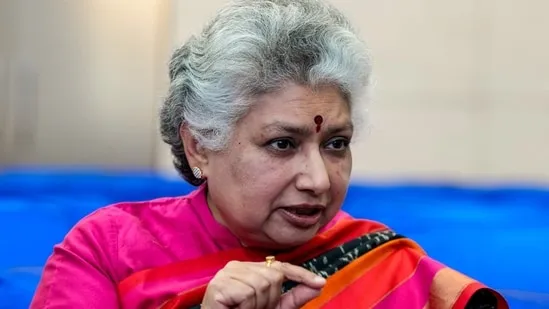
Justice B.V. Nagarathna, a judge of the Supreme Court, has articulated that the central government must consider states as equal partners within the federal system rather than as subordinates. Speaking at the Chanakya National Law University in Patna on April 4, 2026, she stressed that citizens should not face discrimination from the Centre based on the political parties in power at the state and national levels.
In her address themed 'Constitutionalism beyond Rights: Why Structure Matters,' Justice Nagarathna asserted that political differences should not hinder the equitable distribution of benefits under government welfare schemes. She articulated that citizens deserve fair treatment regardless of the governing party's ideology.
"Inter-party differences or distinct political ideologies have to be kept aside in the matter of Centre-State relations," said Justice Nagarathna. She underscored that the citizens in any state should receive the same benefits from both central and state governments, particularly in developmental programmes.
Justice Nagarathna further warned that an adversarial relationship between the central government and states could result in governance failures. She expressed concern over the increasing tendency of disputes escalating to the courts, urging that a mature federal democracy should prioritise dialogue and negotiation instead.
"When states begin filing suits against one another, or against the Centre, it reflects not strength but a weakening of cooperative federalism," she noted. The Supreme Court judge highlighted that it is crucial for the Centre to play a mediating role, promoting resolution over conflict.
She also pointed to the negative impact that disputes can have on the constitutional governance of the nation. "Increase in conflict between the states or between the Centre and the states does not augur well for the nation," she remarked, emphasising that the strength of India’s democracy rests on a solid constitutional foundation.
Justice Nagarathna, poised to become the first woman Chief Justice of India in 2027, reiterated that constitutional autonomy is essential not only for the states but also for institutions like the Election Commission. She called for these bodies to operate independently, free from political interference, affirming their vital role in safeguarding democracy in India.
Her remarks come at a time when political tensions are high and the relationship between various states and the central government is under scrutiny. Justice Nagarathna’s emphasis on the need for cooperation, mutual respect, and a collaborative approach to governance has resonated with calls for a reassessment of Indian federalism.
Her lecture highlighted the fundamental principles of constitutionalism, asserting that effective governance relies heavily on maintaining structural integrity within political institutions, ensuring no branch oversteps its bounds, and fostering an environment where democratic processes can function properly without undue influence.

Social Media Celebrates Mumbai Pilot Captain Smit Machchhar

Flydubai Co-Pilot's Iran Allegations Involve Trump and Netanyahu

France's Student Protests Escalate into Nationwide Unrest
Mamata Banerjee Criticises Election Chief Over Poll Irregularities