Indian Rupee Faces Pressure Amid Economic Growth Reports


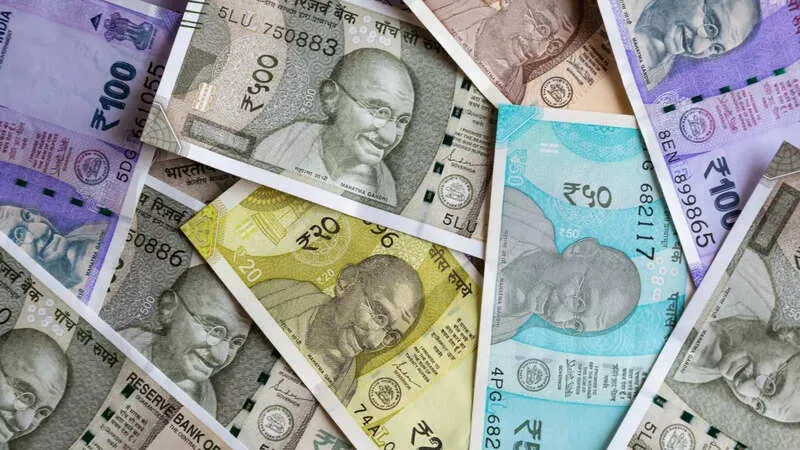
The Indian rupee has recently experienced significant depreciation, falling by 0.3% on a day that should have marked a celebration of the country’s robust economic performance, which reported an impressive 8.2% growth in Gross Domestic Product (GDP) for the second quarter of the fiscal year. This decline has surprised many, especially as the rupee has emerged as one of the poorer-performing currencies among its peers in the BRICS and ASEAN countries.
The downturn in the rupee occurred on the first trading day following the GDP announcement, which had initially buoyed the Nifty 50 index to a new all-time high of 26,300 before reversing direction. Analysts are now examining the underlying factors contributing to the rupee's struggles, particularly in light of India's economic growth trajectory.
Despite a series of impressive GDP growth figures—7.4% for January to March, 7.8% for April to June, and now 8.2% for July to September—corporate earnings have not kept pace. The earnings per share for the Nifty 50 index have seen modest growth in the low-to-mid single digits over the past six quarters. This stagnation in corporate profitability has led to high market valuations, raising concerns among investors.
The lack of foreign portfolio investment (FPI) has also been a contributing factor to the rupee's decline. India has faced net FPI outflows totalling $15 billion in the fiscal year 2025 and over $16 billion in 2026 thus far, resulting in a capital account deficit for the country for two consecutive years. Historically, capital flows have been sufficient to cover the current account deficit, but this trend has changed, leading to unprecedented back-to-back balance of payments deficits since the rupee was allowed to float in the market.
Additionally, global market trends have compounded the situation. The absence of artificial intelligence investment opportunities in India, which have attracted considerable attention from international investors, is another reason for the rupee's decline. Countries like China, South Korea, and Taiwan remain more appealing in this regard, while India has lagged behind in forging trade agreements that could enhance its economic standing.
Several recent developments have further exacerbated the rupee's challenges. The expected trade deal with the United States, anticipated to be finalised in November, has been delayed, leading to disappointment in financial markets. The October trade deficit, which reached an unprecedented $41 billion, has also led economists to revise the current account deficit forecasts upward to between 1.2% and 1.4% of GDP. This is concerning for market participants, as they had previously anticipated a deficit of around 0.7%.
Moreover, the speculation surrounding the availability of discounted Russian crude oil has also added to the bearish sentiment regarding the rupee. Investors have expressed caution given that lower nominal GDP growth of 8.7% for the second quarter is the lowest in several years, fuelling fears that corporate earnings may come under pressure moving forward.
Despite these challenges, some analysts, including those from Goldman Sachs and Morgan Stanley, believe that Indian equities are becoming increasingly attractive at current price levels, suggesting that the rupee may be undervalued. A potential reversal could be on the horizon, presenting opportunities for investors.
In a related development, the rupee hit an all-time low against the US dollar, closing at 89.95, just shy of the critical 90-per-dollar mark. This decline, which has seen the rupee depreciate over 4% this year alone, has raised concerns among market observers about the currency's volatility.
Market experts attribute the recent fall to a combination of domestic and external factors, including a strong US dollar, persistent demand from importers, and ongoing delays in the US-India trade agreement. Dharmakirti Joshi, chief economist at CRISIL Limited, noted that if a trade deal is eventually secured, there could be a rebound in the rupee's value.
Analysts have warned that the 90 mark is a significant psychological threshold, and if the rupee stabilises below this level, it may prevent further erosion of confidence in the currency. Overall, the coming weeks will be critical for the Indian rupee as it navigates both domestic economic conditions and global financial trends.

Kerala Initiates Probe into 2006 Suicide Case Involving CEC

Extradition of Sheikh Hasina Feasible, Says Indian High Commissioner

Punjabi Makeup Artist Mad Sandhu Shot Dead in Amritsar

India Achieves Fourth Place at Asian Games 2026 Through Late Success