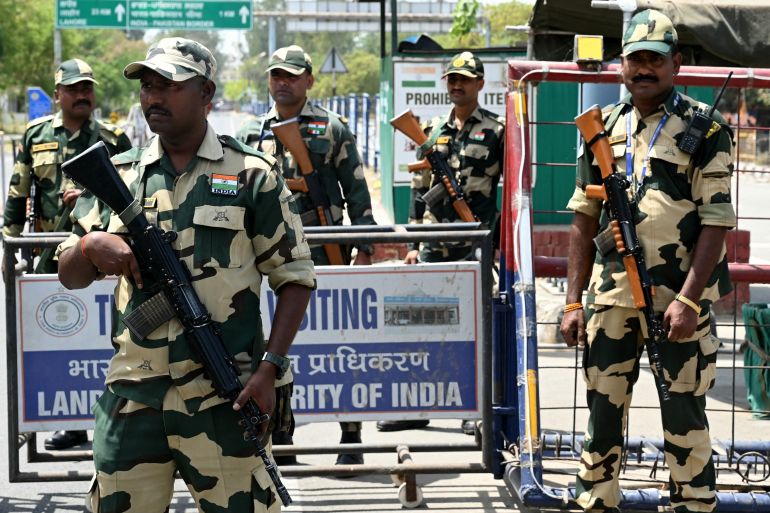
Indian Army Chief Discusses Timing and Strategy of Operation Sindoor


Indian Army Chief Upendra Dwivedi has elaborated on the strategic planning that underpinned Operation Sindoor, reflecting on how timing played a crucial role in its execution. During remarks at the 'Ran Samvad' forum in Bengaluru, he emphasised that the armed forces deliberately chose not to conduct operations during prayer times at terror camps.
When discussing the operational planning, Dwivedi stated, "When we were preparing to strike these targets, the timing could have been 2 o'clock, 4 o'clock — at any hour. However, we ensured that we would not act at a time when people on the other side might be offering Namaz at the terrorist camps." He summed up this approach with the phrase "sabka malik ek hai" (There is one God for all), indicating a moral consideration in military decision-making.
Operation Sindoor, which commenced in May 2022 following a deadly terror attack in Jammu and Kashmir's Pahalgam that resulted in 26 fatalities, predominantly among tourists, was a prompt response by Indian forces targeting suspected terror launchpads across the border.
In the aftermath of Operation Sindoor, Pakistan escalated tensions with military responses that included drone incursions and artillery shelling. The Pakistani military reportedly attempted to launch drones towards India, most of which were intercepted by Indian forces, although some drones managed to inflict damage along the border. Following these escalations, on May 10, 2022, military officials from both nations reached an agreement to cease all military actions across land, air, and sea routes.
Expounding on the significance of Operation Sindoor, Dwivedi characterised it as pivotal to India's military evolution, particularly regarding joint operations across different military domains. He noted, "Operation Sindoor was India's most powerful tool of progression towards domain jointness. But we need to achieve domain integration and fusion."
Dwivedi placed particular emphasis on the growing importance of non-kinetic operations in contemporary warfare. He highlighted that around 15 per cent of military efforts during the operation focused on managing disinformation campaigns, indicating the parallel information warfare that complemented military actions. Following the operation, the Indian Army has made strides to enhance its capabilities in this area, which includes establishing an information warfare organisation and a psychological defence division.
Despite these advancements, Dwivedi acknowledged ongoing challenges, particularly relating to synchronising military actions at strategic, operational, and tactical levels. He cautioned that modern conflicts increasingly exploit grey-zone tactics, which are typically below conventional military thresholds and aim to exploit vulnerabilities of adversaries.
Kerala Initiates Probe into 2006 Suicide Case Involving CEC

Extradition of Sheikh Hasina Feasible, Says Indian High Commissioner

Punjabi Makeup Artist Mad Sandhu Shot Dead in Amritsar

India Achieves Fourth Place at Asian Games 2026 Through Late Success