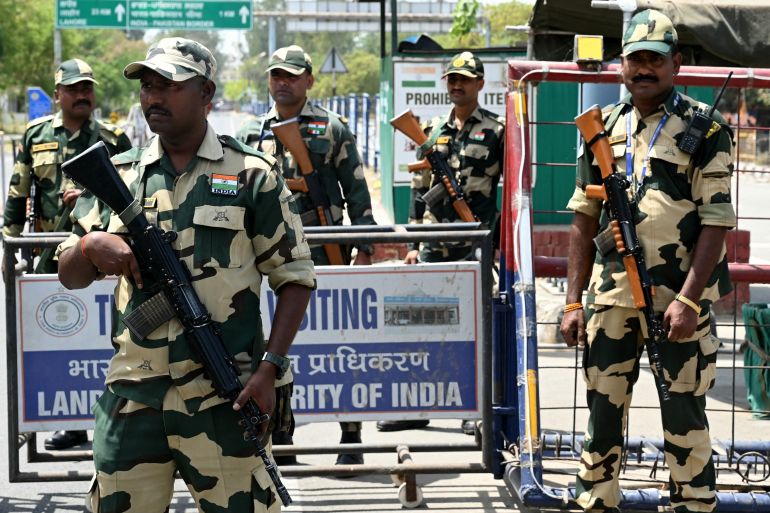
India's Policy Shift: Adopting Israeli Tactics in Kashmir


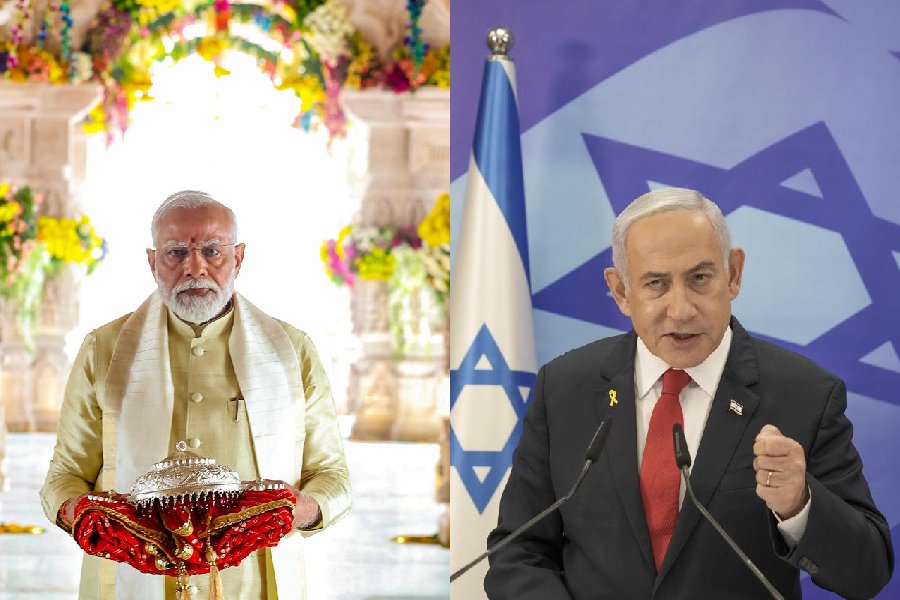
India's strategy in Kashmir appears to reflect a shift towards adopting Israeli methods, particularly under Prime Minister Narendra Modi's leadership. This alignment has raised questions about governance and the treatment of Muslim communities within the nation.
The suggestion of adopting an 'Israeli model' in Kashmir was made by Sandeep Chakravorty, who was India's consul general in New York, at a private event in November 2019. Amid ongoing military lockdowns and communications blackouts in Kashmir, Chakravorty referenced the settlement of Kashmiri Hindus who fled during the 1989 exodus, following an armed rebellion against Indian governance. His statement indicated a determination within the Modi government to replicate the Israeli approach to territorial settlement.
Currently, with Modi preparing for a visit to Israel on February 25, 2026, the ties between the two nations extend beyond military and economic cooperation, raising concerns among analysts about the adoption of oppressive governance strategies.
Analysts argue that Modi's Bharatiya Janata Party (BJP) shares ideological similarities with Israel, as both governments pursue sovereign ideologies based on their respective national identities. For Modi's party, rooted in Hindutva philosophy, there is a pronounced intent to establish India as a Hindu nation. This mirrors Israel's self-identification as a Jewish homeland, and such ideological common ground has influenced policies adopted in recent years.
Azad Essa, author of ‘Hostile Homelands: The New Alliance Between India and Israel’, commented on this relationship, stating, "The India-Israel relationship under Modi is a bond between two ideologies that see themselves as civilisational projects and Muslims as demographic and security threats." Essa's analysis highlights that both nations have instituted strategic partnerships, with India increasingly viewing Israel as a model for it to become a global power.
One manifest policy reflecting this ideological alignment is the demolition of properties belonging to Muslims, commonly referred to as 'bulldozer justice'. In BJP-ruled states, numerous homes and shops have been demolished without legal notices, often following religious conflicts or public protests. This practice has drawn parallels to Israel's destruction of Palestinian homes, often justified as a means to manage security threats and assert territorial claims.
Yogi Adityanath, the chief minister of Uttar Pradesh and a prominent BJP leader, has earned the nickname 'Bulldozer Baba' due to his administration’s approach to property demolitions, which critics argue disproportionately targets Muslims. This response to religious disputes reflects an increasingly aggressive stance reminiscent of policies enacted in Palestinian territories.
Political scientist Sumantra Bose described the relationship between Israel and India under Modi as rooted in a shared nationalist belief system, asserting that Hindu nationalists have long been drawn to the Israeli model. He stated, "Generations of [Rashtriya Swayam Sevak Sangh] cadres, Modi included, have been indoctrinated in this ideology and have imbibed the love of Israel."
The impact of these policies on Muslims in India has been far-reaching, with reports of social exclusion, harassment, and increased violence against community members. Despite a November 2024 ruling from India's Supreme Court mandating due legal process before demolishing properties, violations persist on the ground, showcasing a schism between legislative intent and practical implementation.
Essa further noted that the demolitions are employed as a tool to target populations, conveying messages about national belonging and exclusion. It reflects a broader strategy where both Indian and Israeli practices aim to establish a power dynamic within their respective societies.
The defence relationship between India and Israel remains robust, with India being a leading buyer of Israeli military equipment. This includes significant financial investments and collaborative military training, which have intensified since Modi took office. Israel's military provision extends beyond weaponry, introducing advanced technology in surveillance and defence systems to Indian forces.
This collaboration came to the forefront amid increased tensions following a terrorist attack in Kashmir, which resulted in significant military action and heightened conflict between India and Pakistan. The incidents underscore the ongoing volatile environment in the region and raise questions about the implications of adopting such a combative approach to governance.
As Modi's government strengthens ties with Israel, the emerging policies in India reflect a complex interplay between national identity, governance models, and the treatment of minority populations. With increasing scrutiny on these developments, the ramifications of adopting the 'Israeli model' in Indian-administered Kashmir and other regions may have profound implications for the country's socio-political landscape.
Kerala Initiates Probe into 2006 Suicide Case Involving CEC
Extradition of Sheikh Hasina Feasible, Says Indian High Commissioner

Punjabi Makeup Artist Mad Sandhu Shot Dead in Amritsar

India Achieves Fourth Place at Asian Games 2026 Through Late Success