India to Deploy Fifth S-400 Air Defence System Along LoC


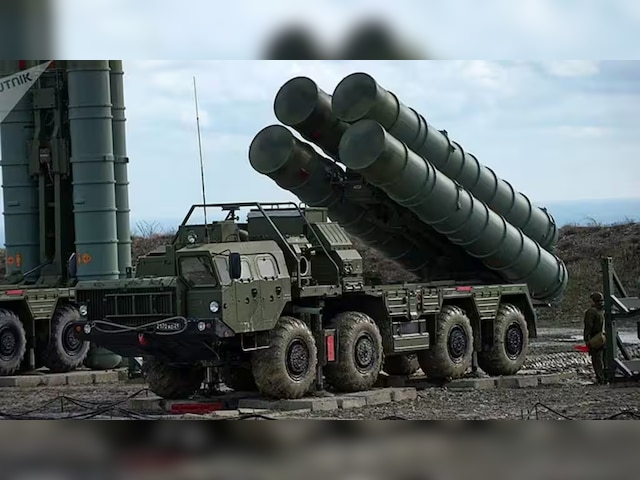
India is set to enhance its air defence capabilities by deploying a fifth S-400 air defence system to secure the 740 kilometre Line of Control (LoC) in Jammu and Kashmir. This decision comes amid ongoing military support for Pakistan from China, Turkey, the United States, and Saudi Arabia.
Current Military Context
The Indian government has made the move to fortify its western border, as officials cite concerns regarding Pakistan's military enhancements, supported by international allies. At present, India has three S-400 long-range systems stationed in Punjab, Rajasthan, and Gujarat, with a fourth system positioned in Assam to protect the 1,126 kilometre long Line of Actual Control in Arunachal Pradesh.
According to two senior officials familiar with the matter, the fifth S-400 system is expected to be ready for deployment by February 2027. An Indian Air Force inspection team is scheduled to visit Russia next month for a pre-dispatch evaluation of the system. The S-400 is capable of countering various aerial threats, including ballistic missiles, aircraft, unmanned combat aerial systems, kamikaze drones, and loitering munitions, operating within a range of 40 to 400 kilometres.
Previous Successes
The S-400 has already demonstrated its effectiveness during Operation Sindoor, where it successfully neutralised threats from Pakistan, ensuring that no ballistic missile or rocket fired by the adversary impacted Indian territory. The operation also saw the downing of Pakistani fighters and various aerial platforms.
Evolving Military Landscape
In light of developments such as China’s planned supply of J-35 fifth-generation fighter jets to Pakistan by 2027, India is keen on enhancing its long-range weapons production, which includes stand-off and loitering munitions. Officials noted that the Indian military assesses the need for advanced countermeasures against Chinese long-range air-to-air missiles, including the PL-15 E, and new air defence systems like the HQ-9BE.
Additionally, recent operations have notably involved the Pakistan Air Force using Chinese J-10 fighters in conjunction with Swedish Airborne Early Warning and Control systems to engage targets at significant distances, employing the twin-data-link PL-15 E missiles.
Strategic Insights
A high-ranking military officer commented on the changing dynamics of warfare: “We know that future confrontations will increasingly rely on stand-off weapons. The nation possessing longer-range missiles and superior anti-missile capabilities will hold an advantage.”
It is further reported that the Indian government is cognisant of the military enhancements being provided to Pakistan by its allies. While Pakistan seeks financial assistance from the International Monetary Fund, it continues to invest heavily in military assets, including the procurement of Yuan (Hangor)-class submarines from China, with one already operational since June 2026.
Moreover, Turkey is reportedly modernising its Agosta 90 B submarines and supplying long-range kamikaze drones to Pakistan, while China has reinforced its support by supplying armed Wing Loong II drones.
In response to these strategic shifts and the looming threat of cross-border terrorism, India is committed to bolstering not only its long-range missile capabilities but also improving its border infrastructure along the Line of Actual Control.
This expansion of military assets and infrastructure is viewed as a necessary response to the evolving nature of regional threats.

Severe Weather Disrupts Thanksgiving Travel Across the US

Donald Trump Invites Putin to G20 While Urging Peace in Europe

New Zealand Coalition Falls Short of Majority in Election Results

Bangladesh Opposition Leader Faces Media Scrutiny During Australia Visit