India Asserts Leadership in AI Amid Global Economic Discussions


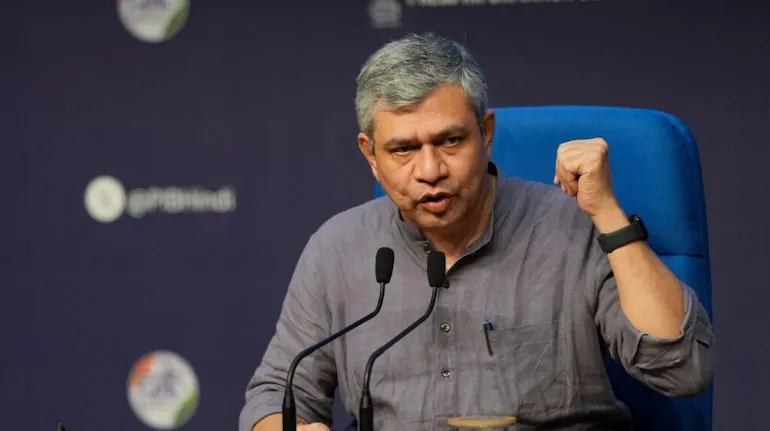
India has rejected the International Monetary Fund's (IMF) recent characterisation of its artificial intelligence (AI) capabilities as second-rate. Union Minister Ashwini Vaishnaw provided a robust defence of India's position during discussions at the World Economic Forum in Davos, Switzerland.
Vaishnaw emphasised that India should be recognised as a leading AI power, pointing to significant advancements made across various dimensions of the AI ecosystem. According to the Minister, India excels in five critical layers of AI development: applications, models, semiconductors, infrastructure, and energy. These components together ensure a strong foundation for the country's growth in the AI sector.
A notable element of India's strategy is its focus on practical applications of AI technology. The government is keen on highlighting how these developments can have real-world implications, particularly in boosting the economy and enhancing day-to-day life for citizens. The aim is to create an environment where AI solutions are not just theoretical but bring about tangible benefits.
Minister Vaishnaw also discussed the need for diverse AI models, advocating for flexibility in approach to cater to India's unique economic needs and challenges. The emphasis on a variety of models is intended to maximise the potential economic impact of AI across different sectors such as agriculture, healthcare, and services.
The assertions made at Davos come at a time when India is rapidly advancing its technologic capabilities. As part of this ambition, the country is investing heavily in AI education and research, signalling its commitment to remaining at the forefront of AI excellence on a global scale.
"We are not only consumers of technology, but we are also innovators and leaders in this field," Vaishnaw stated. He articulated a vision for India as a nation that not only embraces AI but actively shapes its development for its populations' benefit.
With its burgeoning startup ecosystem and a large pool of skilled professionals, India is positioning itself as an attractive hub for AI research and development. The government plans to work with various stakeholders, including private sectors and academic institutions, to promote and integrate AI into various facets of society.
In the aftermath of the discussions at Davos, the response from the international community is awaited. Industry leaders and policy-makers will no doubt scrutinise India's determination to redefine its role in the global AI landscape. Beyond technology, the implications of India's stance could influence international trade and partnerships, particularly in high-tech industries.
As India pursues this vision, the outcome of its aggressive AI agenda may set a precedent for other nations aspiring to strengthen their technological prowess. The unfolding narrative will be closely monitored by both global investors and regulatory entities worldwide.
Kerala Initiates Probe into 2006 Suicide Case Involving CEC

Extradition of Sheikh Hasina Feasible, Says Indian High Commissioner

Punjabi Makeup Artist Mad Sandhu Shot Dead in Amritsar

India Achieves Fourth Place at Asian Games 2026 Through Late Success